Places Foods Stories Newsletters
Loading...
Loading...
Loading...

No search results found for
“”

Make sure words are spelled correctly.

Try searching for a travel destination.

Places near me Random place

Popular Destinations

  • Paris
  • London
  • New York
  • Berlin
  • Rome
  • Los Angeles
Places Foods Stories Newsletters
Sign In Join
Places near me Random place
All the United States California Berkeley Lawrence Berkeley National Laboratory

Lawrence Berkeley National Laboratory

Where the alchemists dream of transmuting base metal into gold was actually achieved.

Berkeley, California

Email
Been Here
Want to go
Added to list
CAPTION
  http://www.flickr.com/photos/berkeleylab/2...
  http://www.flickr.com/photos/berkeleylab/2...
  http://goldismoney.info/forums/showthread....
In search of the philosophers stone   http://upload.wikimedia.org/wikipedia/comm...
Been Here
Want to go
Added to list

About

The philosophers stone also known as "the great work" was the search not so much for eternal life, or to turn lead into gold, but the search for perfection, for God.

Turning a human into an immortal represented a step closer to our original pre-fall condition, and turning lead into gold meant transmuting a base metal closer to perfection, gold being seen as the most perfect, the most god-like of all the metals. (Alchemists did in fact accidentally invent gold plating in the process.)

This search to turn lead into gold has, in modern times, become the symbol of the foolishness of the alchemists and of the middle ages in general... except they were absolutely right, metals can be transmuted and base metals can be turned into gold. Of course to do so, the alchemists would have needed a nuclear reactor.

The transmutation of metals is not uncommon. It happens in nuclear reactions both natural such as at the center of stars (the idea that lead can be turned to gold in the center of a star would have appealed greatly to the alchemists) and in man-made nuclear reactions such as in particle accelerators like the LHC and in conventional fission power reactors.

In 1980 at the Lawrence Berkeley Laboratory, Glenn T. Seaborg, a nobel prize winning chemist, achieved for the first confirmed time in history man-made transmutation of a base metal, bismuth, into gold. Granted it was only several thousand atoms, not even enough to see with the naked eye, and cost many many times more to create than it was worth, but nonetheless 'the great work' had been achieved. As it turns out, the philosophers stone is a well funded national laboratory.

(There is a rumor of a Soviet nuclear research facility, sometimes identified as the "Soviet nuclear center of Lake Baikal," where in 1972, an experimental reactor lead shielding was found to have been transmuted to gold. Unfortunately there is little in the way of documentation to support this story.)

There is a further irony, this time on the alchemists. It is in fact much easier to turn gold into lead, then the other way around and gold left in a nuclear reactor will eventually turn into lead.

But then, Alchemists promising to find a way to turn gold into lead just doesn't have the same ring to it.

Places

Discover your next amazing Atlas Place.

Get more unusual and extraordinary places each week with the Atlas Obscura Places newsletter.

Your newsletter subscriptions with us are subject to Atlas Obscura's Privacy Policy and Terms of Use.

Community Contributors

A ancorini profile photo M mbison profile photo

Edited By

ancorini, mbison

  • A ancorini profile photo ancorini
  • M mbison profile photo mbison

Published

December 17, 2009

Edit this listing

Make an Edit
Add Photos
Sources
  • http://chemistry.about.com/cs/generalchemistry/a/aa050601a.htm
  • http://en.wikipedia.org/wiki/Nuclear_transmutation#cite_note-3
  • http://goldismoney.info/forums/showthread.php?t=411228
  • http://en.wikipedia.org/wiki/Glenn_T._Seaborg#cite_note-18
  • http://en.wikipedia.org/wiki/Lawrence_Berkeley_Laboratory
  • http://en.wikipedia.org/wiki/Philosopher%27s_stone
Related Tags

Inventions Instruments Of Science Repositories Of Knowledge Nobel Prize
Lawrence Berkeley National Laboratory
1 Cyclotron Road
Berkeley, California, 94720
United States
37.874921, -122.2528
Get Directions

Nearby Events

Festival

After Dark: Creepatorium

Follow the evolution of fear through hands-on science exhibits, a cow eye dissection, and a Halloween dance floor.

Thu, Oct 29

Exploratorium — San Francisco

View More Events in San Francisco

Nearby Places

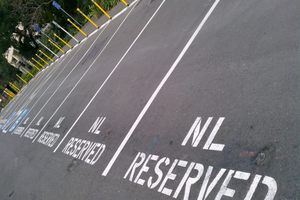
UC Berkeley's Nobel Laureate Parking Spaces

Berkeley, California

miles away

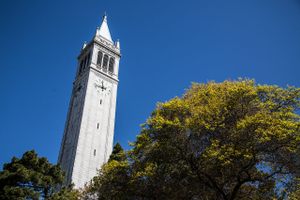
Sather Tower

Berkeley, California

miles away

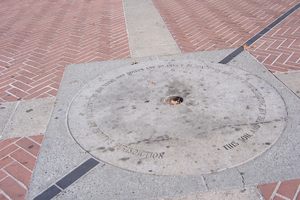
Free Speech Monument

Berkeley, California

miles away

Explore the Destination Guide

Photo of Berkeley

Berkeley

California

Places 26
Stories 7

Nearby Places

UC Berkeley's Nobel Laureate Parking Spaces

Berkeley, California

miles away

Sather Tower

Berkeley, California

miles away

Free Speech Monument

Berkeley, California

miles away

Explore the Destination Guide

Photo of Berkeley

Berkeley

California

Places 26
Stories 7

Related Places

  • The anechoic chamber

    Minneapolis, Minnesota

    Orfield Labs Quiet Chamber

    This lab's maddening silence is good for business but bad for sanity.

  • Titan Missile Museum

    Green Valley, Arizona

    Titan Missile Museum

    America's only nuclear missile silo open to the public.

  • Replica of the 7-foot telescope Herschel used to discover Uranus.

    Bath, England

    Herschel Museum of Astronomy

    Eighteenth-century home, where Herschel discovered the planet Uranus.

  • The coelostat seen with the dome open. Photo from Palomar Observatory blog.

    Pasadena, California

    Hale Solar Laboratory

    Suburban observatory was personal lab of the father of modern astrophysics.

  • Bell Labs water tower

    Holmdel, New Jersey

    Bell Laboratories Transistor Water Tower

    This water tower commemorates the invention of the transistor on this site in 1947.

  • Wilson Greatbatch's tool box.

    Clarence, New York

    Greatbatch Barn

    This exhibit pays tribute to the “humble tinkerer” who invented the implantable pacemaker.

  • Kirkaldy Testing Museum

    London, England

    Kirkaldy Testing Museum

    A collection of machines designed to break things for science.

  • IceCube Research Station

    Antarctica

    IceCube Research Station

    The world's largest neutrino telescope searches for secrets of the universe at the South Pole.

Aerial image of Vietnam, displaying the picturesque rice terraces, characterized by their layered, verdant fields.
Atlas Obscura Membership

Become an Atlas Obscura Member


Join our community of curious explorers.

Become a Member

Get Our Email Newsletter

Follow Us

Facebook YouTube TikTok Instagram Pinterest RSS Feed

Get the app

Download the App
Download on the Apple App Store Get it on Google Play
  • All Places
  • Latest Places
  • Most Popular
  • Places to Eat
  • Random
  • Nearby
  • Add a Place
  • Stories
  • Food & Drink
  • Itineraries
  • Lists
  • Video
  • Podcast
  • Newsletters
  • All Trips
  • Membership
  • Feedback & Ideas
  • Community Guidelines
  • Product Blog
  • Unique Gifts
  • Work With Us
  • About
  • FAQ
  • Advertise With Us
  • Advertising Guidelines
  • Privacy Policy
  • Cookie Policy
  • Terms of Use
Atlas Obscura

© 2026 Atlas Obscura. All Rights Reserved.