About
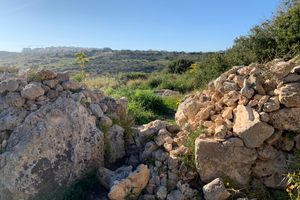
This cave dates back to the Neolithic period and possibly even into Roman times, and it was probably used for burials, following the ancient Maltese tradition of rock-cut tombs. Its stone entrance is impressive, resembling the design of Malta’s prehistoric temples.
One of the most captivating features of the cave is the graffiti on the door frame, which shows a war galley—a detailed carving that has puzzled historians and archaeologists for years. The presence of such imagery is unusual, particularly in a burial cave, as similar kinds of graffiti are typically found in Malta’s prehistoric temples. The depiction of the war galley is believed to have been an ex-voto, a form of offering made by a grateful individual who survived a dangerous ordeal at sea. In ancient times, it was common for sailors and navigators, after surviving pirate attacks, shipwrecks, or other perils, to commission paintings or engravings depicting the threat they had escaped. These images were often presented as offerings of thanks in churches or temples, symbolizing gratitude for divine intervention.
In the case of the Galley Cave, however, the engraving stands out because of its placement and context. Instead of being offered in a temple or church, this piece of ex-voto art was etched into the stone of a cave. This unusual choice has led to much speculation about its origin. Some suggest that the wealthy navigator or sailor who commissioned the image may have had a deep personal connection to the cave, perhaps seeing it as a place of spiritual significance. Others theorize that the cave itself may have been used for ritual purposes at some point, making it an appropriate location for an ex-voto offering.
Adding to the intrigue, the entrance of the cave also has an engraving of a pilgrim's cross, highlighting its spiritual and religious importance. The combination of the war galley and the pilgrim’s cross suggests that the cave has had different roles over time, starting as a burial site and later being associated with pilgrimage and personal devotion.
Its importance goes beyond being just a dwelling or burial site; it also features rare and peculiar engravings that have stood the test of time. These carvings provide insight into the beliefs, fears, and hopes of the people who lived in Malta, whether they were prehistoric inhabitants, Roman settlers, or medieval sailors.
Know Before You Go
As part of the Xemxija Heritage Trail, the Galley Cave is easy to find and well-signposted. It’s located within walking distance of other historical sites, such as the Burial Cave and the Punico-Roman Apiary. As with other parts of the Xemxija Heritage Trail, sturdy shoes are recommended for navigating the uneven terrain. A flashlight can be helpful for examining the interior details of the cave, including the engravings.
As the cave contains historical engravings, visitors are encouraged not to touch or disturb the markings to help preserve them for future generations. Be mindful of the cave's spiritual significance as well, considering its past use as a burial and ritual space.
Community Contributors

Added By
Published
June 19, 2026