About
An aerial view of the, former WW2, Winthorpe airfield near Newark, UK, shows that the main concrete runway is still intact. Today it is most often used for parking cars at the Newark Agricultural Showground but in February 1983 it was kept clear for the arrival of a very special aircraft.
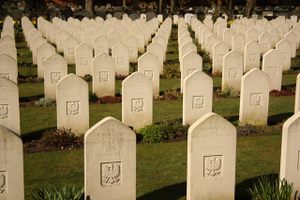
Between 1940 and 1942 Winthorpe airfield was operated only intermittently. It had a grass runway. Initially it served single engine light bombers (Fairy Battles) and later with twin engine medium bombers (mainly Wellingtons) (almost exclusively operated by Polish Squadrons and only when, nearby, RAF Swinderby was waterlogged). Two Polish aircrew, who were killed in a crash (following a raid on Bremen), are buried in Newark Cemetery ( https://www.atlasobscura.com/places/polish-war-graves-newark-cemetery). The remainder of the Wellington's crew were rescued by the farming couple who owned the field in which it crashed with both being awarded the British Empire Medal.
Local legend has it that Winthorpe's concrete runway was built in error in 1942 and never used operationally because the main runway was aligned such that a fully laden bomber, taking off for a mission, would pass, at low altitude, over the town of Newark and, more critically, directly over the Ransome and Marles ball bearing factory (now called Nippon Seiko K. and still in operation). At the time it was the biggest manufacturer of ball and roller bearings in any allied country. The importance of this factory is reflected in the fact that when it was bombed by the Luftwaffe in 1941, killing 41 people and seriously injuring 161, there was a massive government effort to rebuild the factory which was re-opened in 3 weeks.
Flying fully laden bombers off the airfield would thus lead to an increased risk of a catastrophic accident. With the reliance of the UK aircraft engine industry on Ransome and Marles bearings this could have been a serious blow to the war effort. Although the "mistake" was never officially acknowledged history supports the legend. The airfield was not used for operational flying after 1942.
The airfield was built in 1940 and has the distinction of being one of the few airfields in the English midlands to be "attacked". This was via a parachute mine late in 1940 although the Luftwaffe did use parachute mines to attack land targets, after October 1940, this may have been an attempt to mine the, navigable, River Trent. The weapon was seen coming down by some of the ground personnel. Thinking it was a parachutist/saboteur they began firing at it. On realising that it was a parachute mine they ran for their lives. The mine exploded on the south side of the airfield leaving a large crater and fortunately there was no loss of life or aircraft.
After installation of the concrete runway it was used as a base for a Heavy (bomber) Conversion Unit, i.e. a training base. Shortly before D-Day it was used as a storage site for gliders and then reverted to its training role until the end of the war. A memorial to the HCU is on the site and consists of a propeller boss from a crashed Short Stirling bomber, mounted on a stone plinth (the Stirlings was, at the time, rather dated, four engined bomber that had been largely relegated to training use and marine reconnaissance).Stirlings operated from Winthorpe until Feb 1945.
Flying ceased in 1945 and the airfield became fully inactive in 1959 after a brief period allocated to the United States Air Force for use as a hospital but which was never occupied.
The airfield site is now used by a number of users, notably the Newark and Nottinghamshire Agricultural Society (as an agricultural showground), Newark and Nottinghamshire Gliding Club and the, amazing, Newark air museum. On the 7th of February 1983, an iconic Avro Vulcan (I.D. XM594) strategic bomber was landed here for delivery to the museum. When it touched down it became the only Vulcan aircraft to have been flown into a non-licensed airfield in the UK.
Know Before You Go
Newark Air Museum is a good way to get sight of the airfield but attending an event at Newark Showground is even better. The museum is open 361 days a year and standard admission is £11 (£10 for seniors). It is worth arriving early. The NSK plant is about a mile from the airfield but now much reduced in size. However the 1940s buildings still stand. The rest of the massive site is now an industrial estate.
A great view of the main runway can be had from next to Starbucks on the A17.
Community Contributors

Added By
Published
November 29, 2024