About
In the Suffolk village of Woolpit stands a sign that depicts a wolf on one side, a steepled church in the middle and an unusual pair of green-coloured children.
This faintly folk horror-esque sign alludes to the fascinating Medieval story of the "green children of Woolpit," which has been told for centuries.
At some point in the 12th century, a shepherd from the village of Woolpit was startled to discover a pair of distressed children trapped at the bottom of a wolf pit (pitfall traps used to catch wolves, from which the village of Woolpit derives its name).
After rescuing the children from the pit, the villagers were shocked to see that these foundlings had an eerie green-coloured skin, spoke an incomprehensible language (neither English nor French) and refused all food offered to them but fava beans.
The children were soon adopted by a local aristocratic family in whose household their skin lost its green colour and they learned to speak English fluently and became culturally assimilated.
Upon being asked about their origins the pair were able to explain that they were siblings who had come from a strange land of perpetual twilight that existed close to a "St Martin's land" and that one day, after shepherding their father's cattle, they had become lost in some woods and fallen into the wolf pit.
Sadly, the male child was to die within a few years; however, the little girl (who took the name "Agnes") was to eventually marry a wealthy local diplomat, live to a ripe old age and was, according to the chronicles, quite a fiery character and a matriarch.
Due to the unusual appearance of the children with their green skin and their strange language and curious habits in modern times, there have been numerous bizarre and implausible modern "theories" put forward over the years.
Some of these "theories" posit that the children were actually "lost extraterrestrials" or "beings from a parallel universe" who somehow ended up in the rural Suffolk of Medieval England and at the bottom of a wolf pit.
However, a far more plausible theory suggests that these children may have actually been from a sizeable Flemish Belgian community called Fornham St Martin that had been established in Suffolk and was located approximately 2 miles from Woolpit.
According to this theory, the uncanny skin colour of the children was likely to have been the result of chronic malnutrition and a comorbid medical condition caused by near-starvation called chlorosis, which can sometimes in later stages cause the skin to develop an eerie greenish or yellow tinge.
Know Before You Go
The sign can be seen for free in the centre of Woolpit village.
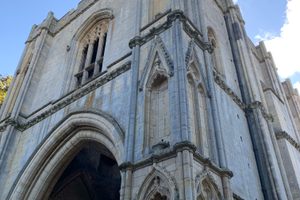
For those interested in the Medieval history of Europe, a trip to the village church (which dates from the same period as the "green children") is highly recommended.
Community Contributors

Added By
Published
August 7, 2026