Trips Places Foods Stories Newsletters
Loading...
Loading...
Loading...
Recent Stories
All Stories Video Podcast
Most Recent Stories
View All Stories »
A photograph of the burning mine taken during an excavation in 1969.
The Rebirth of Pennsylvania’s Infamous Burning Town
Caroline’s first Atlas Obscura place was the Lizzie Borden Bed and Breakfast Museum in Fall River, Massachusetts.
The Quest to Visit 1,000 Places
Sherman holds a bowl of pápa waháŋpi, a soup that “just connected to my soul.”
On 'Turtle Island,' Indigenous Food Is Not the Past—It’s the Future
The Trailing of Sheep is an annual festival marking the return of sheep from their high-mountain pastures.
Inside America’s First Destination Ski Town

No search results found for
“”

Make sure words are spelled correctly.

Try searching for a travel destination.

Places near me Random place

Popular Destinations

  • Paris
  • London
  • New York
  • Berlin
  • Rome
  • Los Angeles
Trips Places Foods Stories Newsletters
Sign In Join
Places near me Random place
All Australia East Arnhem Wurrwurrwuy Stone Arrangements
AO Edited

Wurrwurrwuy Stone Arrangements

This small but unique site depicts part of an arguably underrepresented part of Australia's early connections to the seafaring communities to its north.

East Arnhem, Australia

Added By
James Pilbrow
Email
Been Here
Want to go
Added to list
CAPTION
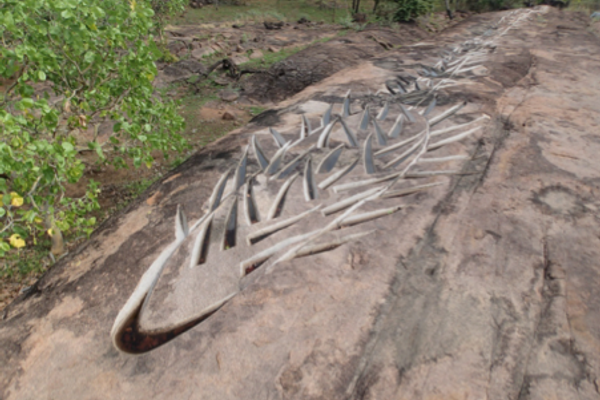
This image depicts a lepa-lepa dugout canoe.   jamespilbrow / Atlas Obscura User
This image depicts a Macassan storehouse, which would have been used for storing trepang as well as goods such as rice,   jamespilbrow / Atlas Obscura User
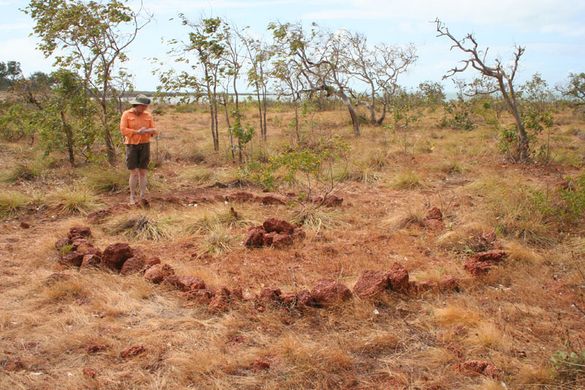
Macassan stone arrangement   Ray Norris / CC BY-SA 2.5
Been Here
Want to go
Added to list

About

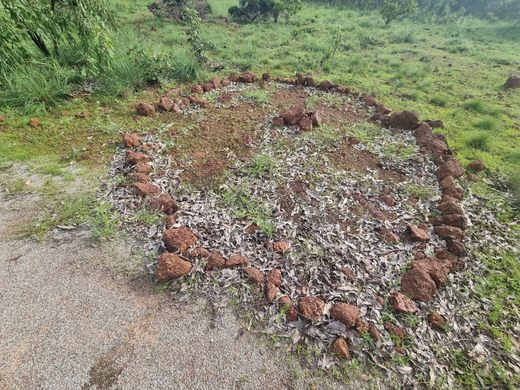
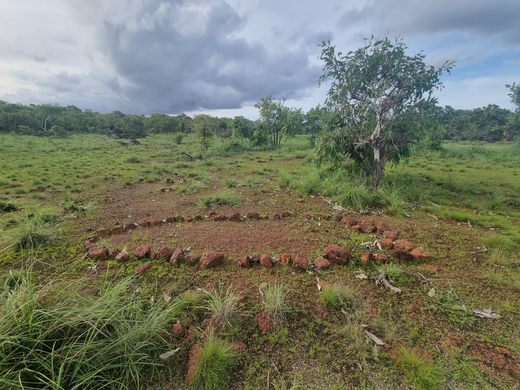
The Wurrwurrwuy stone arrangements, located at Garanhan, also called Macassan Beach, depict Yolŋu knowledge of the Maritime Southeast Asian trepang (sea cucumber) industry centred in Makassar, South Sulawesi. 

Trepangers, today collectively referred to as Macassans (based on their most common origin rather than their ethnicity) voyaged to Northern Australian shores from the mid-1700s until the early 1900s. Every year during this period, dozens of praus (small-ish sailing ships) journeyed south-eastwards from Sulawesi with the January monsoon rains and then spread along the Arnhem Land and Kimberley coasts to harvest and process trepang, which was in hot demand in China as a luxury foodstuff and aphrodisiac. They would return to Sulawesi to sell their produce mid-year, meaning that they interacted and traded with Yolŋu and other saltwater peoples for more than a century before there was any regular British presence on Australia's remote northern coasts. Australian archaeologist Campbell Macknight has called this connection "Australia's first modern industry."

The stone pictures were probably created in the late-19th Century and show Macassan praus, lepa-lepa (canoes), campsites, and various components of the trepang processing procedure. In 1999, extensive restoration was done on the pictures in an effort to preserve them for future generations. They were added to Australia's National Heritage List in 2013 and are the only remnant of Yolŋu-Macassan contact presently on this register. The listing notes that "unlike most Aboriginal stone arrangements, they depict historical objects rather than ceremonial or sacred images."

Places

Discover your next amazing Atlas Place.

Get more unusual and extraordinary places each week with the Atlas Obscura Places newsletter.

Your newsletter subscriptions with us are subject to Atlas Obscura's Privacy Policy and Terms of Use.

Related Tags

Aboriginal Indigenous Stone History & Culture Fishing

Know Before You Go

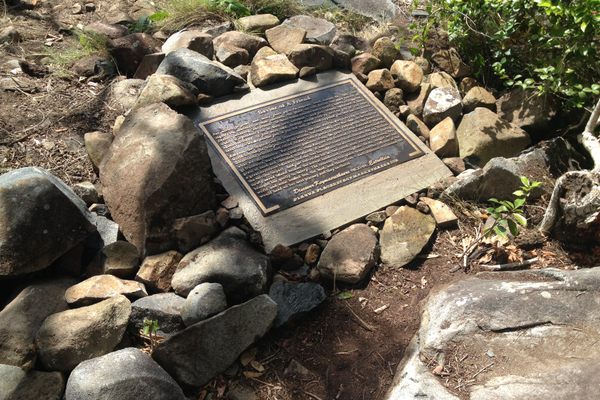
Garanhan is approximately 40 minutes by car from Nhulunbuy. You will need a 4WD vehicle to access this site and must purchase a permit from the Dhimmuru Aboriginal Corporation before you visit. At the site there are signs detailing the features of the pictures.

It is possible to camp at Garanhan for an additional fee on top of your permit, also from Dhimmuru Aboriginal Corporation. There is no potable water or facilities onsite.

In coastal parts of Arnhem Land and the Kimberley, you'll often see large tamarind trees. These aren't a native species; they were introduced by the Macassans, and large ones often mark where their camps and processing sites once stood. The Macassans brought tamarind for cooking and to ward off scurvy, much like Europeans did with citrus.

Community Contributors

Added By

jamespilbrow

Edited By

Michelle Cassidy

  • Michelle Cassidy

Published

February 8, 2023

Edit this listing

Make an Edit
Add Photos
Wurrwurrwuy Stone Arrangements
Macassan Beach
East Arnhem, 0822
Australia
-12.330849, 136.932849
Get Directions

Explore the Destination Guide

Photo of Australia

Australia

Oceania

Places 610
Stories 95

Explore the Destination Guide

Photo of Australia

Australia

Oceania

Places 610
Stories 95

Related Places

  • Nankoweap Granary

    North Rim, Arizona

    Nankoweap Granaries

    Hike up to this ancestral grain storage site, but don't touch.

  • Brewarrina Fish Traps

    Brewarrina, Australia

    Brewarrina Fish Traps

    These Aboriginal fish traps are among the oldest human constructions in the world.

  • The Blessing Stone

    St Dogmaels, Wales

    The Blessing Stone

    Since the Middle Ages, this stone has been used as a place to bless fishing boats moored at the nearby landing stage.

  • Ayacucho, Peru

    Museo de la Memoria (Museum of Memory)

    A house once used to feed orphans of a brutal conflict now serves as a museum honoring its victims.

  • Sami Gamme

    Norway

    Ceavccageađge

    Traces of a Sami settlement and sacrificial site dating back more than 9,000 years.

  • The giant kachina.

    Cave Creek, Arizona

    World's Largest Kachina Doll

    This 39-foot-tall version of a Hopi figure stands in Arizona.

  • Oxford, Massachusetts

    Oxford Huguenot Fort

    Solitary stone structures and a tale of tragedy are all that remains of a historic settlement built by French Protestant refugees.

  • Sarcophagus of Chrodoara

    Amay, Belgium

    Sarcophagus of Chrodoara

    Since its accidental discovery in 1977, this sarcophagus has been described as "the greatest masterpiece of Merovingian sculpture north of the Alps."

Aerial image of Vietnam, displaying the picturesque rice terraces, characterized by their layered, verdant fields.
Atlas Obscura Membership

Become an Atlas Obscura Member


Join our community of curious explorers.

Become a Member

Get Our Email Newsletter

Follow Us

Facebook YouTube TikTok Instagram Pinterest RSS Feed

Get the app

Download the App
Download on the Apple App Store Get it on Google Play
  • All Places
  • Latest Places
  • Most Popular
  • Places to Eat
  • Random
  • Nearby
  • Add a Place
  • Stories
  • Food & Drink
  • Itineraries
  • Lists
  • Video
  • Podcast
  • Newsletters
  • All Trips
  • FAQ
  • Membership
  • Feedback & Ideas
  • Community Guidelines
  • Product Blog
  • Unique Gifts
  • Work With Us
  • About
  • FAQ
  • Advertise With Us
  • Advertising Guidelines
  • Privacy Policy
  • Cookie Policy
  • Terms of Use
Atlas Obscura

© 2026 Atlas Obscura. All Rights Reserved.