Manolo Morales: Alright Dylan, so today we’re going to get a little bit personal. And I want you to be as honest as you want to be.

Dylan Thuras: Oh boy, okay. I’m appropriately nervous, so let’s get personal.

Manolo: So here it goes. Has anyone ever broken your heart?

Dylan: Oh man. I sort of, there was maybe, I would call it more of a mutual heartbreak. It was a high school girlfriend that lasted well into college actually. It was long distance. But it was a serious relationship. It was, you know, six—five or six years. The first sort of real love of my life, a woman named Catherine. You know, I went off to college. We kept the relationship going. We’d see each other in summers and on vacations. But it was hard to maintain that kind of relationship. And then she went off to college and she went to New York City. And like had new friends and a, you know, exciting city life. And she did what I think was a pretty reasonable thing. We had this phone call that I remember really well. She said like, “I don’t think we should see each other anymore.” And I said like, “You mean like not at all?” And she was like, “No, yeah, like not at all.” And I was like, “Okay, well, I guess I’ll never see you again. Goodbye.” And that was the last time I saw her for like a decade.

Manolo: Wow. Is there anything in particular, an object specifically, that reminds you about this relationship?

Dylan: What’s funny is because the relationship ended in the way it did, there was still stuff at my parents’ house and stuff at my house. And I still—and I’ve been meaning to send it back—but I still have some artwork and photos that Catherine took or drew, you know, mixed in with my artwork, like mixed in in a big folder. And it’s still in there in its own little bag.

Manolo: Would you be willing to perhaps one day donate this artwork to a museum?

Dylan: I would want us both to do it mutually. But what collection would I be sending this to?

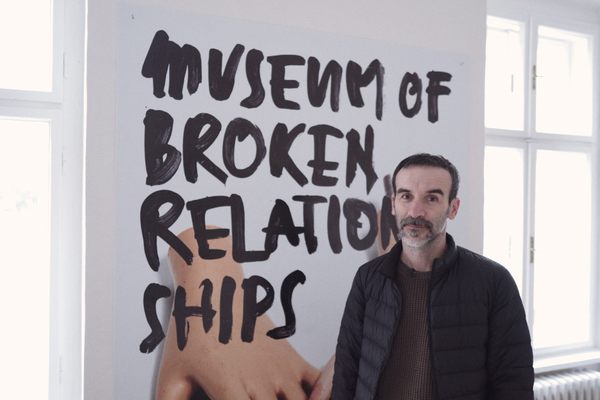
Manolo: So here’s where we cue the music. I’m Manolo Morales, and this is Atlas Obscura, a celebration of the world’s strange, incredible, and wondrous places. Today, we’re visiting the Museum of Broken Relationships, a museum in Croatia where the bits and pieces of broken hearts and relationships are on full display. And who knows, Dylan? Maybe there is a room in the collection for that bag of doodles and old photographs.

Dylan: Oh, man, this is all going to break my heart all over again, isn’t it?

Manolo: Yeah, possibly.

Dylan: All right.

This is an edited transcript of the Atlas Obscura Podcast: a celebration of the world’s strange, incredible, and wondrous places. Find the show on Apple Podcasts, Spotify, and all major podcast apps.

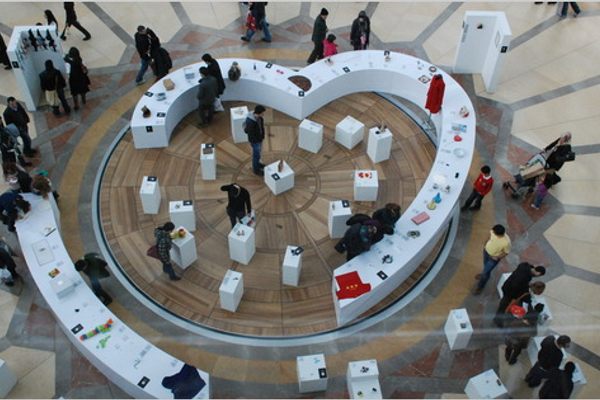
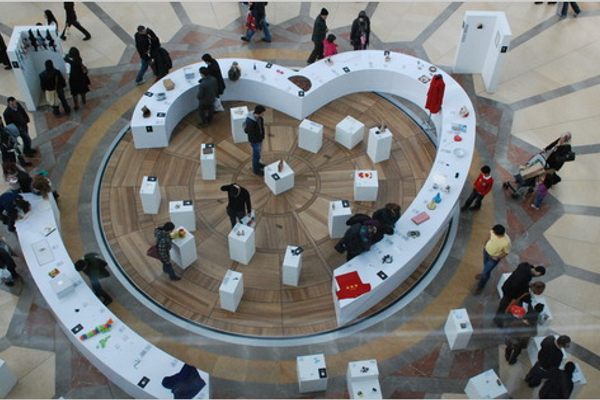
A woman looking at a backpack in the Museum of Broken Relationships.

Manolo: Once upon a time: The 1990s. Two artists met and fell in love.

Olinka Vištica: My name is Olinka Vištica.

Dražen Grubišić: And I’m Dražen, I’m the other one.

Manolo: Olinka is a film producer and Dražen is a set designer. They’re both artists in the capital of Croatia: Zagreb.

Olinka: Basically, we hang out in the same circles in Zagreb. So it’s a small, relatively small community. So we knew each other from clubs and bars.

Manolo: But then a creative collaboration brought Olinka and Dražen a little bit closer.

Olinka: And we were preparing a dance performance that was to be staged at a dance festival in Morocco. And I was looking for a set designer for the performance. And Dražen at that time was quite, can I say, famous? By his art projects, set design. So actually I approached him for work and we ended up as a couple.

Dražen: I was waiting for that call for cooperation for quite some time.

Manolo: Their romance lasted for about four years. But then it started to fall apart.

Olinka: We had, you know, these long conversations into the night. How to, you know, say goodbye. But at the same time, we were aware that the part of our lives that we spent together was so beautiful and important. And during one of these conversations, we were also talking about, you know, splitting the possessions.

Manolo: For Dražen and Olinka, that conversation about their shared possessions, it sparked something. An idea.

Olinka: I think that was the beginning of imagining that the objects that surrounded us were the witnesses of our lives. And that they had some kind of memory that can be preserved. Is there a way that we go separate ways, but at the same time that we keep alive these beautiful things we live together?

Manolo: Inspired by these talks, Olinka imagined a place where these objects and their stories could be preserved and displayed. She sat down and wrote an essay.

Olinka: And I think it was a two-pager. It was just imagining this space that would serve as a treasure trove of broken relationships. Of some, you know, loves that no longer existed.

Manolo: Olinka shared the essay with Dražen, but then she put it away. She and Dražen moved on. But two years later, her phone rang.

Olinka: Dražen called me and said that there was this call for projects. For this big art show. And then he said, “Do you remember that thing you wrote?” And I said, “Yes, of course.” And then he said, “We might really realize it.” I remember when we sent it, we were so, so happy that we did it. But when we got accepted, we kind of freaked out. Okay, it worked well on paper, but now we need to do it.

Manolo: And they needed to do it quickly. From the time their proposal was chosen, they only had two weeks to gather enough objects to create their exhibition. They knew if they were going to ask other people to share a vulnerable part of their lives, they had to be vulnerable too. Olinka and Dražen chose an object from their own broken relationship: A tiny mechanical bunny.

Olinka: The bunny was the object we started the museum with because we thought it was not too powerful. We didn’t want the museum to become the graveyard of our love. So we wanted to contribute something that would be like a symbol of a cheerful and sometimes banal nature of our relationship.

Manolo: Soon, the little mechanical bunny was surrounded by 40 other objects. This first version of the Museum of Broken Relationships happened in 2006. And even though it was just a temporary exhibition, the response was so positive that Olinka and Dražen decided to create an actual permanent museum. In 2010, the Museum of Broken Relationships opened its doors.

Olinka: In Zagreb, the museum is a very intimate space, and in Zagreb we have time to really ponder those objects and stories and kind of think about the themes that are important in relationships, that are important for people when we curate the display.

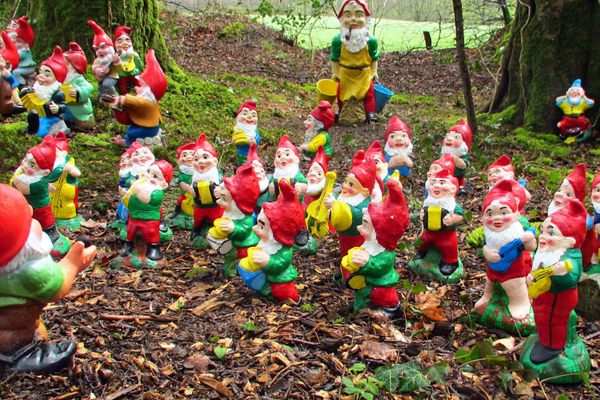
Manolo: Soon, donations poured in from all over the world. Items like old records, a garden gnome, lingerie, a wedding dress, a phone, and each item tells a love story. It’s true, these are broken love stories, but they’re still love stories. There’s a pair of size 10 basketball shoes. Nikes, blue and white, with a few dirt marks. The shoes were donated by a man in Seattle, Washington. Next to the shoes is a little card. It reads, “We played basketball together. He was straight, I wasn’t. He used to tell me about the girls he was seeing, and it killed me inside.” Olinka was the one who opened the box when the shoes arrived.

Olinka: I was imagining all these matches and winning and losing together and being in love with a person you know you cannot be with. So for me, it’s a very emotional one.

Manolo: Another object is a small plastic bottle shaped like the Virgin Mary. A bottle for carrying holy water. The cap is painted in gold. Mary’s hands are folded in prayer, and she stands on a tiny bed of clouds. There’s a small angel peeking out from the bottom of the cloud. This bottle was given to a woman in Amsterdam by her Peruvian lover. She treasured this gift. It seemed so unique. But when the lover left, she found a bag full of these same bottles under her bed. And then, there was a plain white toaster. The person who donated the toaster included one short note.

Dražen: “When I moved out across the country, I took the toaster. That will show you. How are you going to toast anything now?”

Manolo: The Museum of Broken Relationships has received an abundance of objects. Olinka says they currently house about 4,000 items in their archive. 4,000 stories. And while most of these items come from a broken romance, the Museum of Broken Relationships has started to expand beyond just romantic relationships. There’s now something called the family room. And in that family room, there’s a tape cassette.

Dražen: And on this recorder, there is a tape from some picnic or something. You can hear kids laughing and singing some song. And you can hear dad talking and mom. So it just really transports you to this idyllic picnic somewhere, sometime. The dad passed away, and this was the only memory they had of his voice.

Manolo: Sometimes, a relationship breaks because two people grow apart. And sometimes, a relationship breaks when one person dies. In both cases, there’s a feeling of loss. But there’s also memories. Memories of what it felt like to love. And for Olinka, that’s the power of the museum. These objects make us confront both love and loss at the same time, and the fact that we can’t have one without the other.

Olinka: Love for me, it’s beautiful and fragile at the same time. So I think that when you decide to kind of surrender to the other person, to take that risk again, although you were hurt, I think that fragility and the risk of your heart being broken is a necessary part of that. That’s where the excitement comes from.

Dylan: What an incredible museum, Manolo. What an amazing set of objects and stories. They all feel like they’re so incredibly personal. Thank you for taking us there. I have to ask, you know, fair is fair. What about you? Have you ever had your heart broken?

Manolo: This podcast is a co-production of Atlas Obscura and Witness Docs. Our production team includes …

Dylan: Uh-huh.

Listen and subscribe on Apple Podcasts, Spotify, and all major podcast apps.

Doug Baldinger, Chris Naka, Kameel Stanely, Sarah Wyman, Tracey Samuelson, John DeLore, Peter Clowney. Our technical director is Casey Holford. This episode was mixed by Luz Fleming. Our theme and end credit music is by Sam Tyndall.

Subscribe to our YouTube channel to explore more Atlas Obscura videos.

This story originally ran in 2019; it has been updated for 2025.