
From a trap door above the stage, a long blue and white swinging fabric descends. A woman, maybe 25 feet tall, cradling a baby, comes into focus and the fabric becomes her dress. Puppeteers from the above loft use rope while two more on the ground use long wooden dowels to give her life, moving her from side to side across the dirt-floor stage.
I'd been in the theatre for less than ten minutes, and everything I'd seen felt new to me. There were the larger-than-life puppets, of course, but also the dirt-floor theatre and the bandleader, who played more than ten instruments throughout the performance, including a bird whistle, saxophone, drum, gong, something resembling a potato flute, and, my favorite, a recorder.
If you can attend a performance at Bread & Puppet, I cannot recommend it more. If you arrive early, you may even get to join a guided tour of the dairy barn. Built in the mid-1800s, the barn is even bigger on the inside than it appears from the outside, with two floors housing retired papier-mâché stars from shows past.
If you don't get to enjoy the wonderful tour led by Maria, daughter of Bread & Puppet's founders (and a former performer, artist, and puppeteer herself with a warm and projecting voice), here are some of the highlights and background behind the theatre.
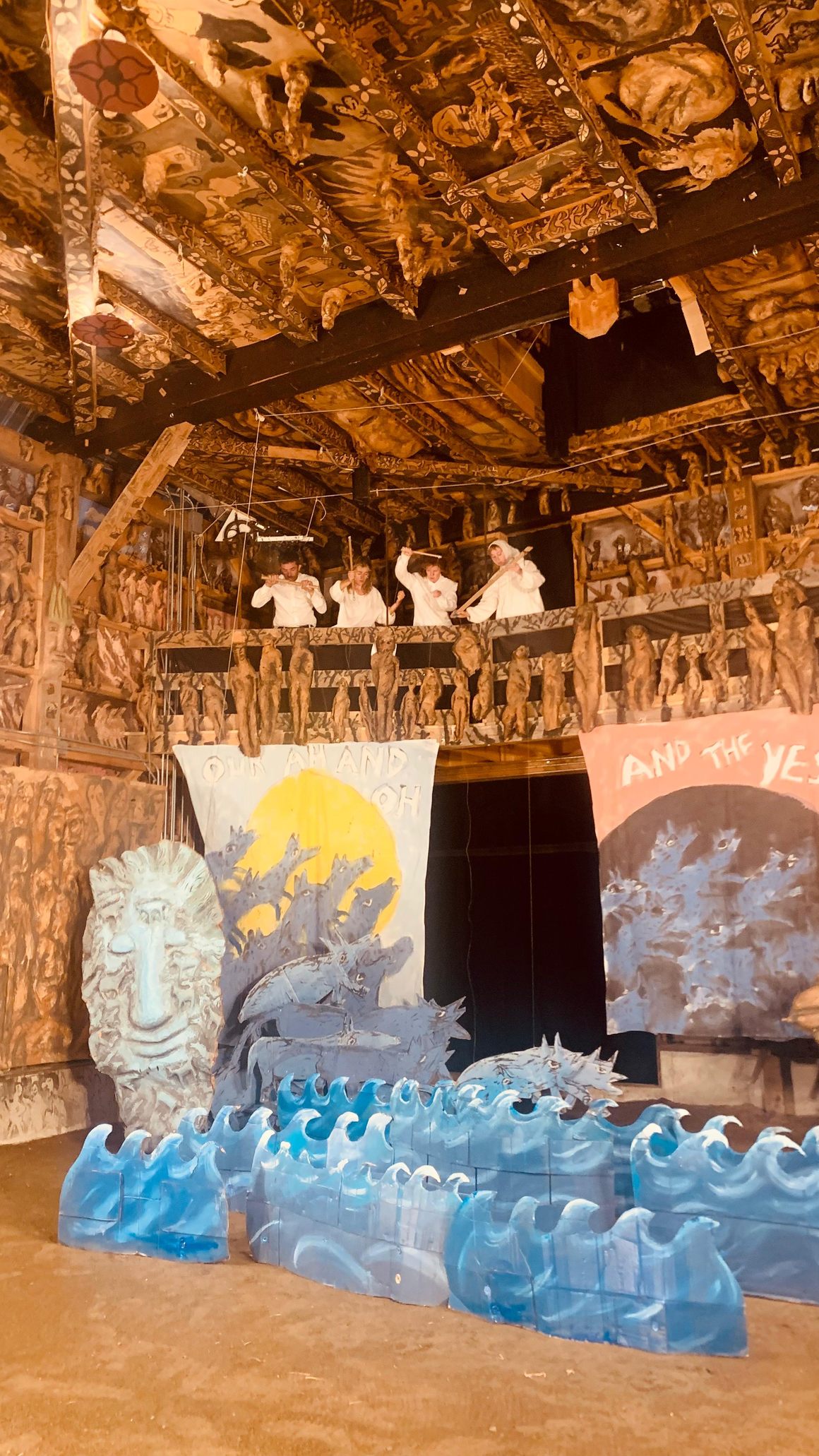
Peter Schumann, Maria’s father, grew up in Germany but fled with his family when their town was bombed. He, along with his four brothers and sisters became refugees, all under the age of 11. Before their journey, they were each told they could bring one thing. Peter brought puppets. One of his brothers brought Grimm’s Fairy Tales. These two prize possessions became their source of entertainment and a was the beginning of lifelong passion for Peter. At 92 years young, he’s still a prolific artist and creator.
Today, Bread & Puppet uses a wide variety of puppets, from hand puppets to medium-sized puppets operated by a single person to enormous creations like the mother puppet described at the beginning of this article. Through them, messages of anti-war, anti-imperialism, and standing up for marginalized groups are conveyed. Art, politics, community, and universal aspects of humanity like life, death, and hope, are all intertwined in the many pieces that make up a single Bread & Puppet performance.
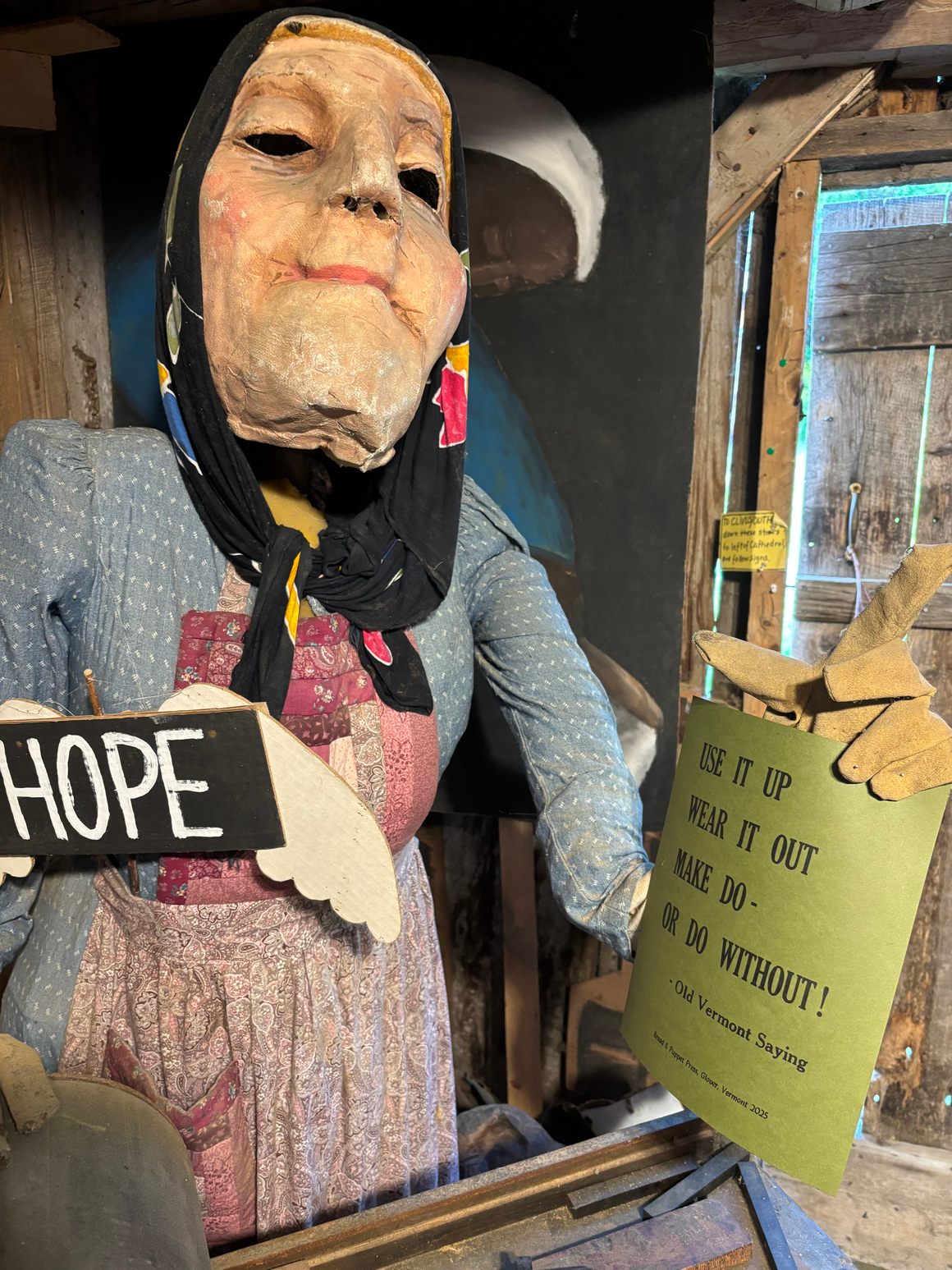
A note about the puppets: While Maria describes Bread & Puppet's signature style as a "junk aesthetic," papier-mâché is also a labor of love. Mice and raccoons inevitably get in and nibble away at the natural materials, but, as she puts it, these puppets will "go right back into the ground," unlike waterproof, more durable alternatives. The theatre troupe takes pride in creating art from inexpensive, everyday materials, keeping the focus on the message rather than the production budget.
That philosophy extends to their ticketing structure. Tickets typically cost around $15, but there's a note on their website that reads: "If you cannot afford a ticket, email us- we will not turn you away."
If you think this isn't your cup of tea- that it's too radical or too weird- Maria offers a thoughtful reminder. Folk art and cultures all over the world have long used masks and giant figures in rituals and celebrations. This isn't so different.
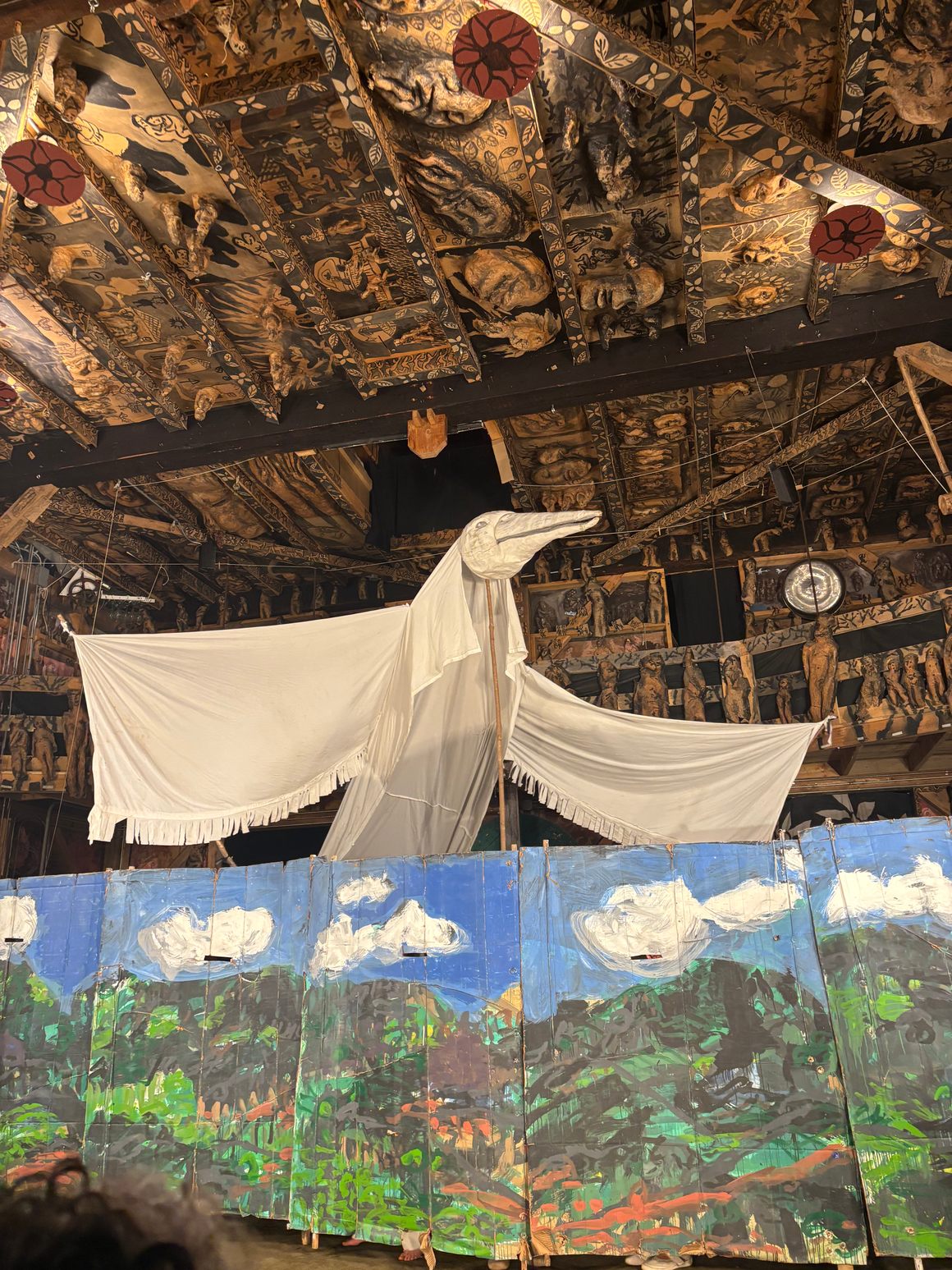
And if you're worried the show will go over your head, or that you won't know how to engage with it, I can assure you that is a possibility. But beneath the spectacle are stories we all understand and characters we all recognize. Bread & Puppet returns again and again to familiar archetypes: mothers watching their sons go to war, Vermont farm life, or the faceless businessman who sacrifices his humanity in pursuit of money and success. Because anti-war themes lie at the heart of the theatre, the destruction of natural resources as a consequence of war is also painfully enacted.
But What About the Bread?
Ah yes- the bread.
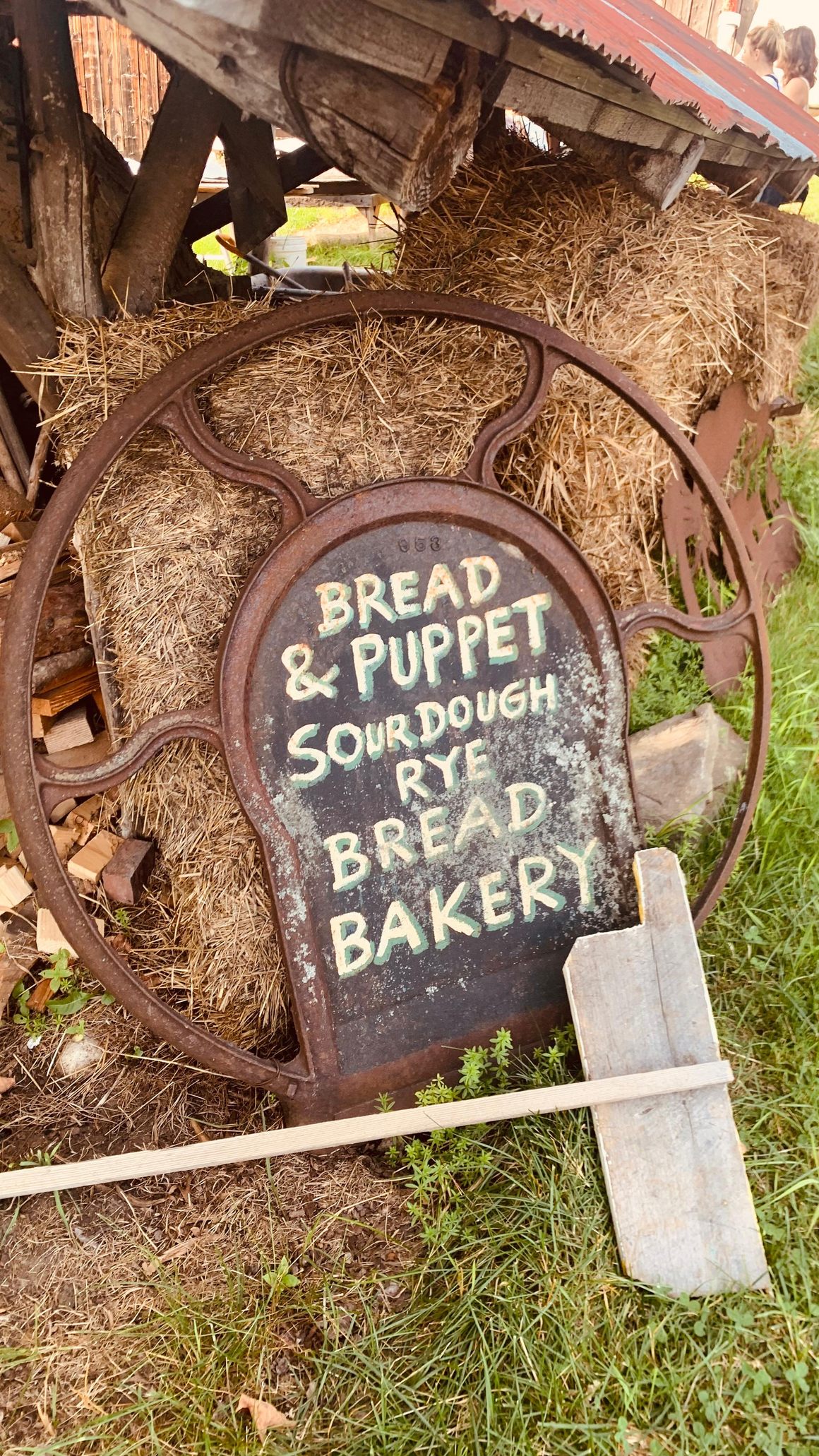
Bread is served at the end of every performance. Guests line up to receive a piece from the performers, stepping directly onto the dirt-floor stage. The divide between performer and spectator disappears as bread is broken together and community is formed.
Maria says that, like the show itself, "the bread is hard to chew." There are moments during the performance when you may find yourself wondering, What did I just watch? Then, a day later or a week later, a new interpretation strikes you, or you begin to feel something you didn't while you were sitting in the audience. And the bread, as Maria says, is no Wonder Bread- it is in fact hard to chew.
Peter Schumann learned to make sourdough from his mother, who learned from a Polish woman while they were refugees. Having very little, they would wait until the farmers finished their workdays and then follow behind them, gathering leftover grain from the fields. Peter's mother ground the rye in a coffee grinder before baking rye sourdough, which she took to a communal brick oven. Because many families baked in the same oven, each marked their loaves with a symbol to tell them apart. Peter's loaves still bear a sun today.
If you aren’t able to see a show but you can pop into the museum, it’s still worth the trip to Glover, Vermont. Get to know the puppets in the old dairy barn and buy some, ¨cheap art¨ as it’s advertised in the shop. The sale of art is one of the main income streams that keeps this epic show and troupe at work creating these masterpieces for our entertainment and education.


