
The Harriet Tubman Lawn Memorial transforms a once-violent monument site into a living, ephemeral portrait of freedom, carved from nothing more than grass and memory.
The Place
In Charlottesville’s Market Street Park, an ordinary rectangle of lawn marks the former pedestal of the Robert E. Lee equestrian statue, a Confederate monument that towered over the city for nearly a century. The statue, once a flashpoint for the deadly “Unite the Right” rally in 2017, was removed in 2021 and later melted down, its bronze recast into ingots awaiting a future, more honest work of public art. Today, the space it occupied is a subtle scar in the grass—an off-color patch that remembers weight, even after the metal is gone.wikipedia+2
On Juneteenth 2026, Charlottesville native Jake Van Yahres arrived at this patch of ground carrying only tools, turf, and a different kind of history. Working in the early morning, he cut and laid sod to shape a large, unmistakable face: Harriet Tubman’s, rendered in contour lines of living grass against the sunburnt lawn. At the bottom, a simple white placard, almost modest among the blades, declares: “Heroes Live On.”
The Installation
At first glance, the portrait looks like a glitch in the park’s landscaping—a miswatered patch or an overzealous repair job. Walk closer, and the shapes resolve into Tubman’s gaze, nose, and jawline, as if she is emerging from the earth itself. The work is temporary by design: weather, footsteps, and the slow creep of summer will soften the edges, blur the features, and eventually erase her likeness back into undifferentiated grass. In a city where bronze once promised permanence and instead delivered conflict, this memorial insists that the most enduring monuments can be the ones that admit they won’t last.
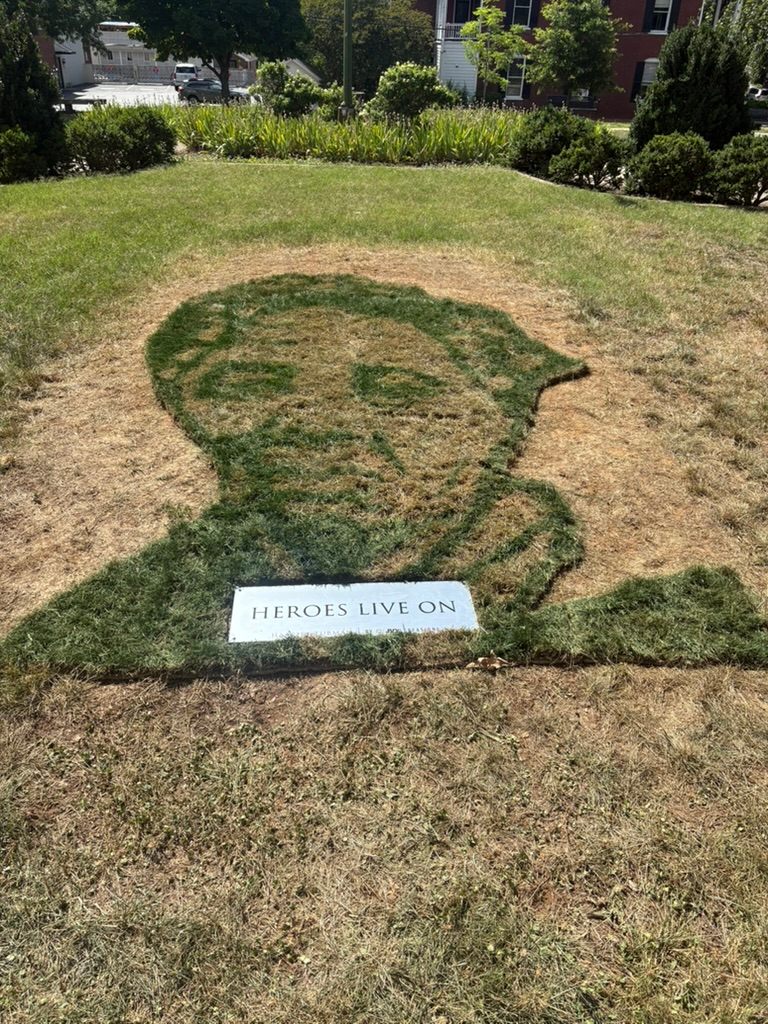
Van Yahres has described the piece as an answer to the “dead patch of grass” left behind when the Lee statue came down. He aimed for a quiet reclamation of space in honor of the Underground Railroad conductor who led enslaved people to freedom under the cover of night. Installed on the very coordinates where a general of the Confederacy once loomed, Tubman’s face turns the park into a kind of open-air palimpsest: the story of oppression overwritten by the story of resistance, written not in stone but in soil and chlorophyll.
A Juneteenth Reframing
Juneteenth commemorates the day in 1865 when news of emancipation finally reached enslaved people in Texas, years after the Emancipation Proclamation. In Charlottesville, the holiday now includes concerts, heritage festivals, and museum programs, but this lawn memorial may be the city’s most understated observance: no stage, no speeches, just a familiar park suddenly inhabited by a different kind of presence.
Visiting the Harriet Tubman Lawn Memorial
Market Street Park sits in downtown Charlottesville, bound by Market, Jefferson, 1st, and 2nd streets NE, and remains a common thoroughfare for office workers, tourists, and residents heading to the courthouse district. The Harriet Tubman lawn portrait is ephemeral and tied to Juneteenth, so visitors may find the image fading or gone as the season advances; the park, however, remains a layered site of memory, from the long-standing Lee monument to its removal and melting, and now to this living, breathing tribute.
