
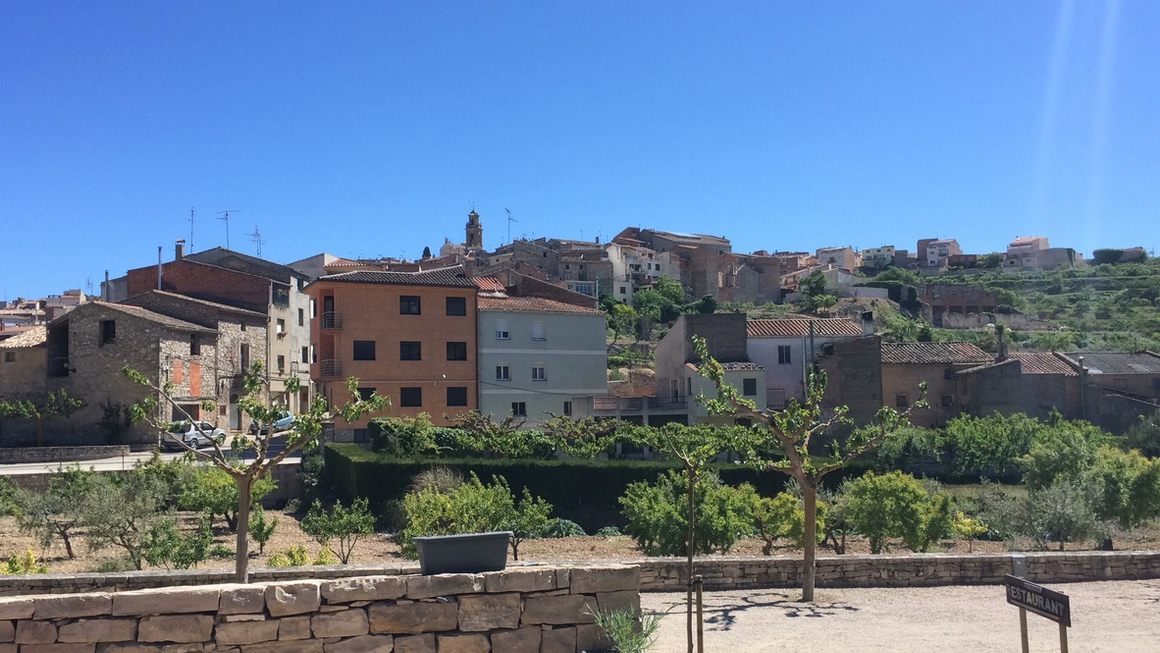
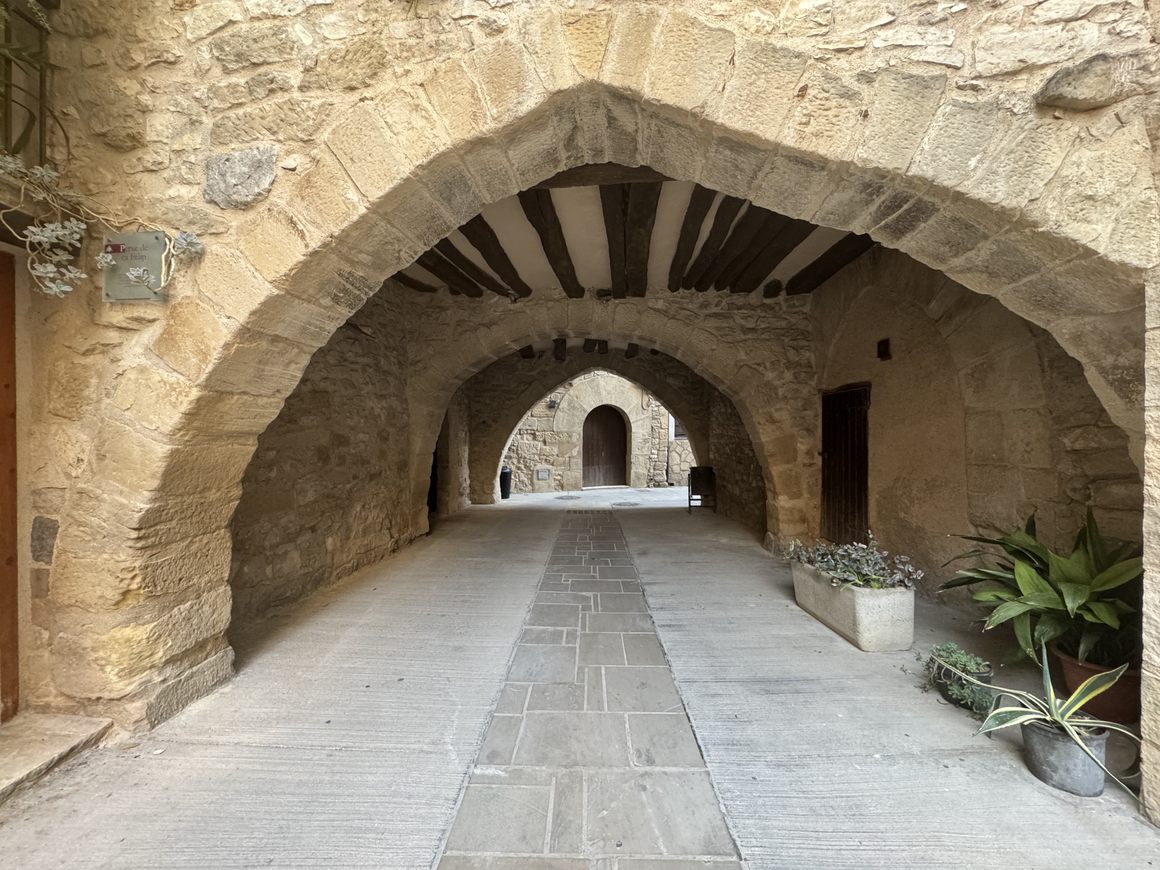
In La Fatarella, a village in Catalonia’s Terra Alta, the streets occasionally seem to have forgotten that they are supposed to be open to the sky. Wander through the old quarter and you will encounter narrow, twisting lanes that suddenly slip beneath houses, emerging again a few meters later in pools of sunlight. These covered passages, known locally as perxes, are among the village’s most distinctive architectural features—and they turn an ordinary stroll into something resembling a journey through a medieval maze.
The origins of La Fatarella’s old quarter date to the Middle Ages, when the settlement was established under the authority of the Knights Templar. A charter granted in 1228 placed the village under Templar rule, later passing to the Knights Hospitaller after the Templars were suppressed in 1317.
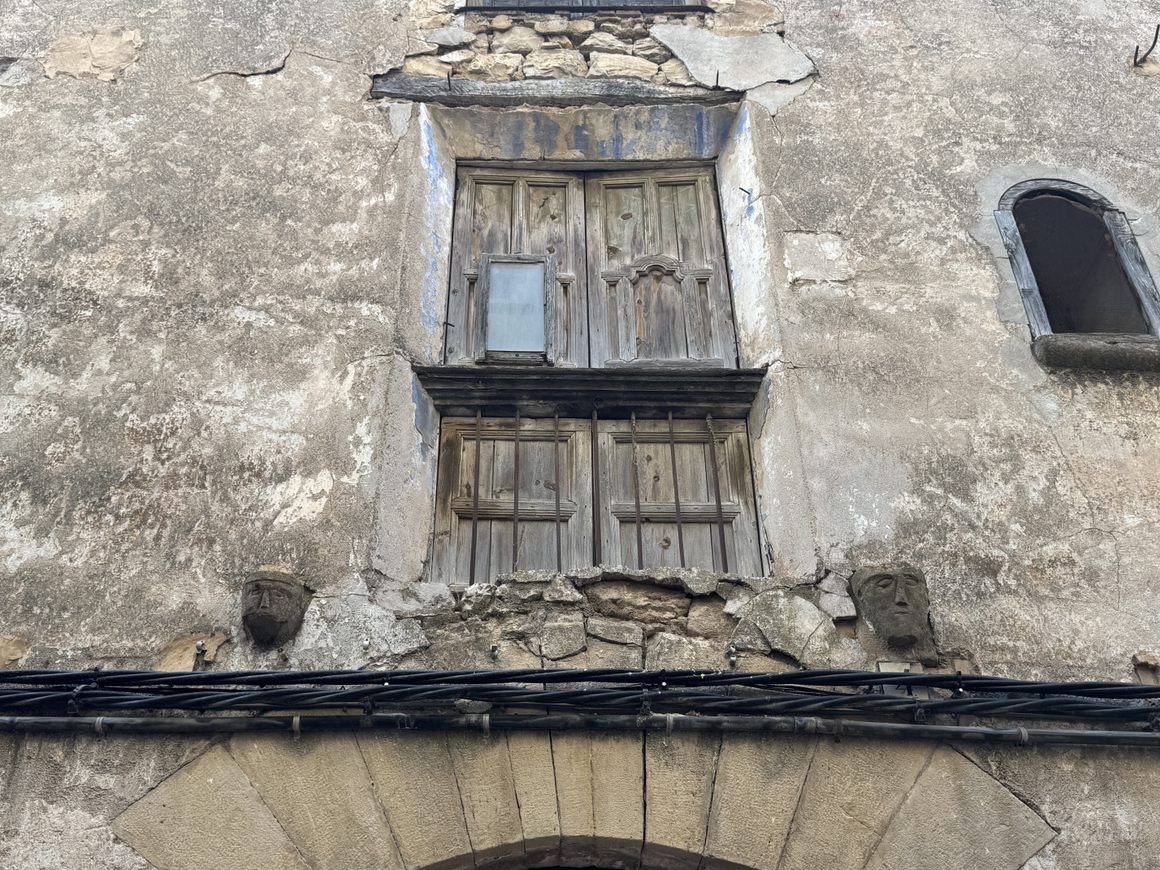
By the 16th century, La Fatarella was still a walled settlement, entered through three original gates. Those gates have disappeared, although later entrances were added, including the surviving portal of Ca Bo. A defensive tower once stood near the present-day Sanctuary of Misericòrdia, completing a settlement designed as much for protection as for habitation.
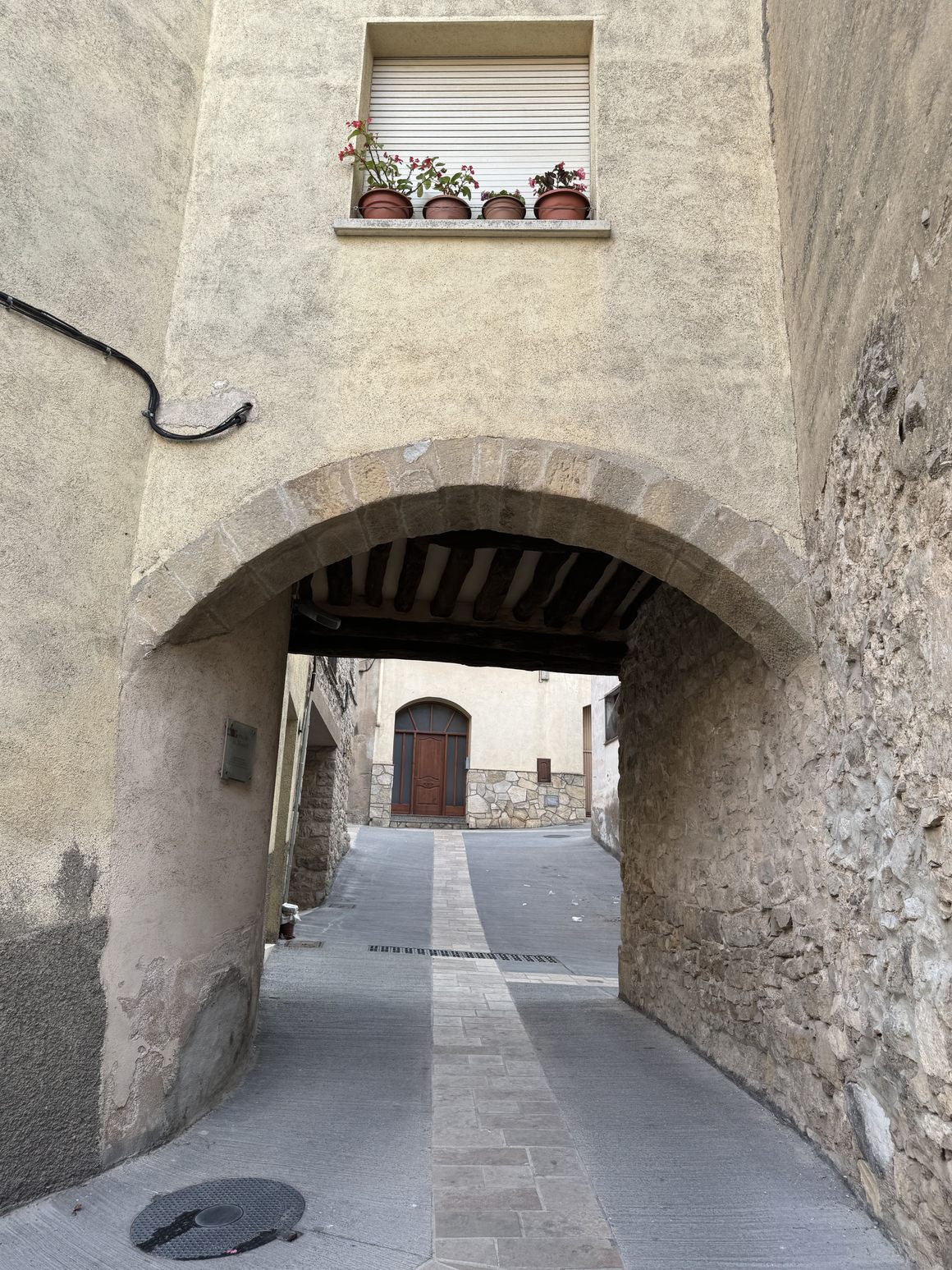
The perxes appeared as the village expanded upwards and houses were built over existing streets. Stone arches—some pointed, some semicircular, others more unusual in shape—support wooden beams and the homes above them. Each passage has its own personality. The Perxe de Ca Belart features pointed arches and substantial wooden reinforcement.
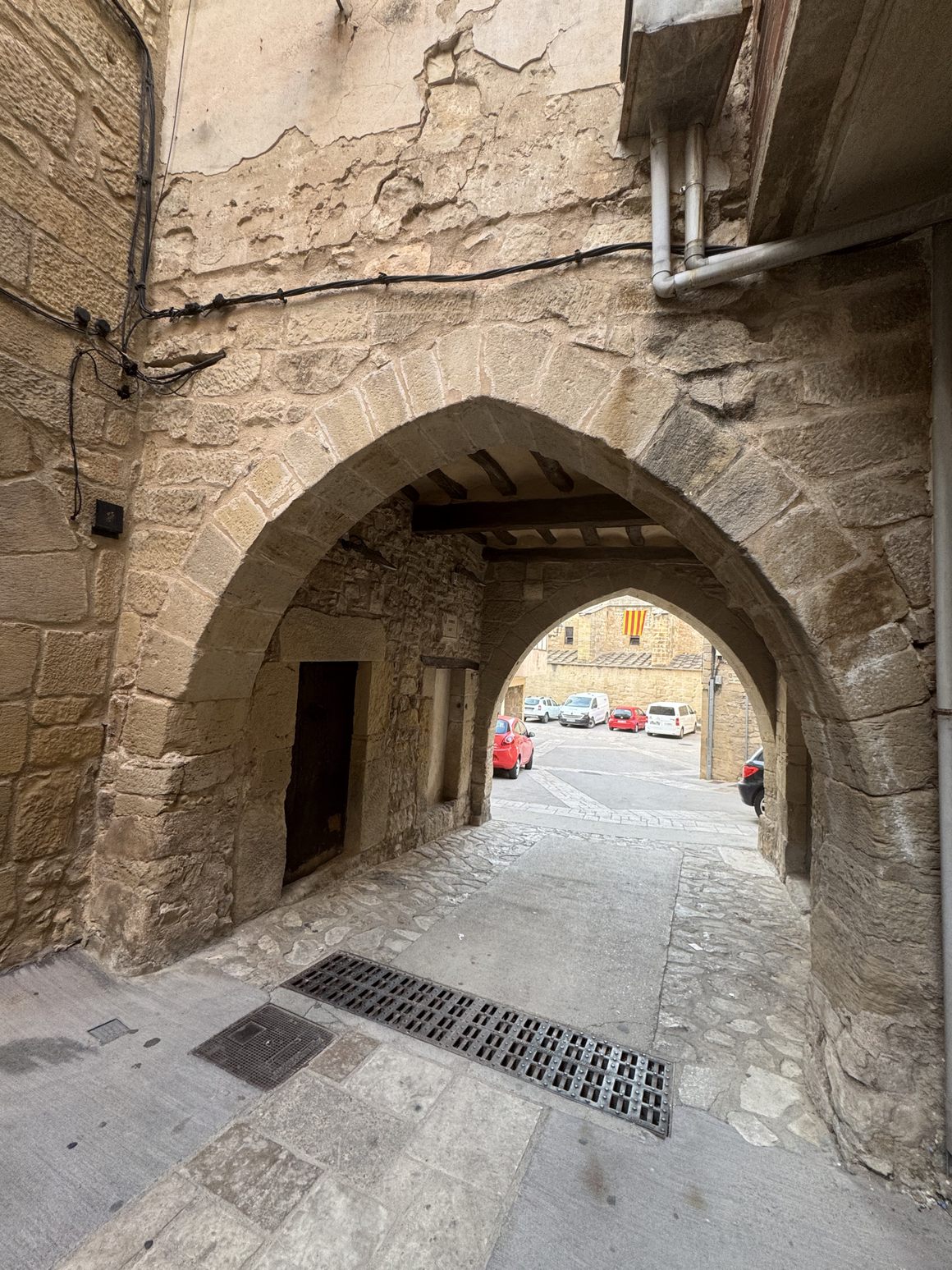
Ca la Nieves combines three different arches along a sloping passage.
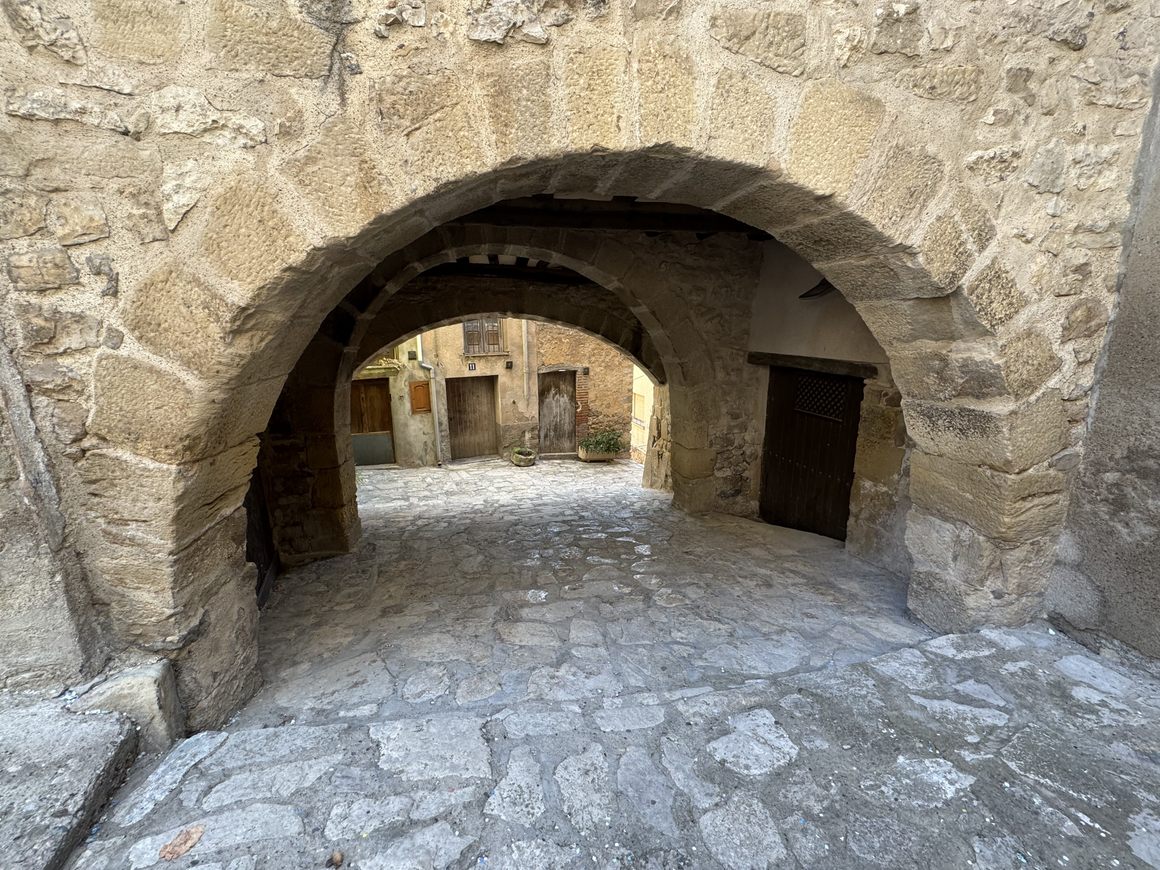
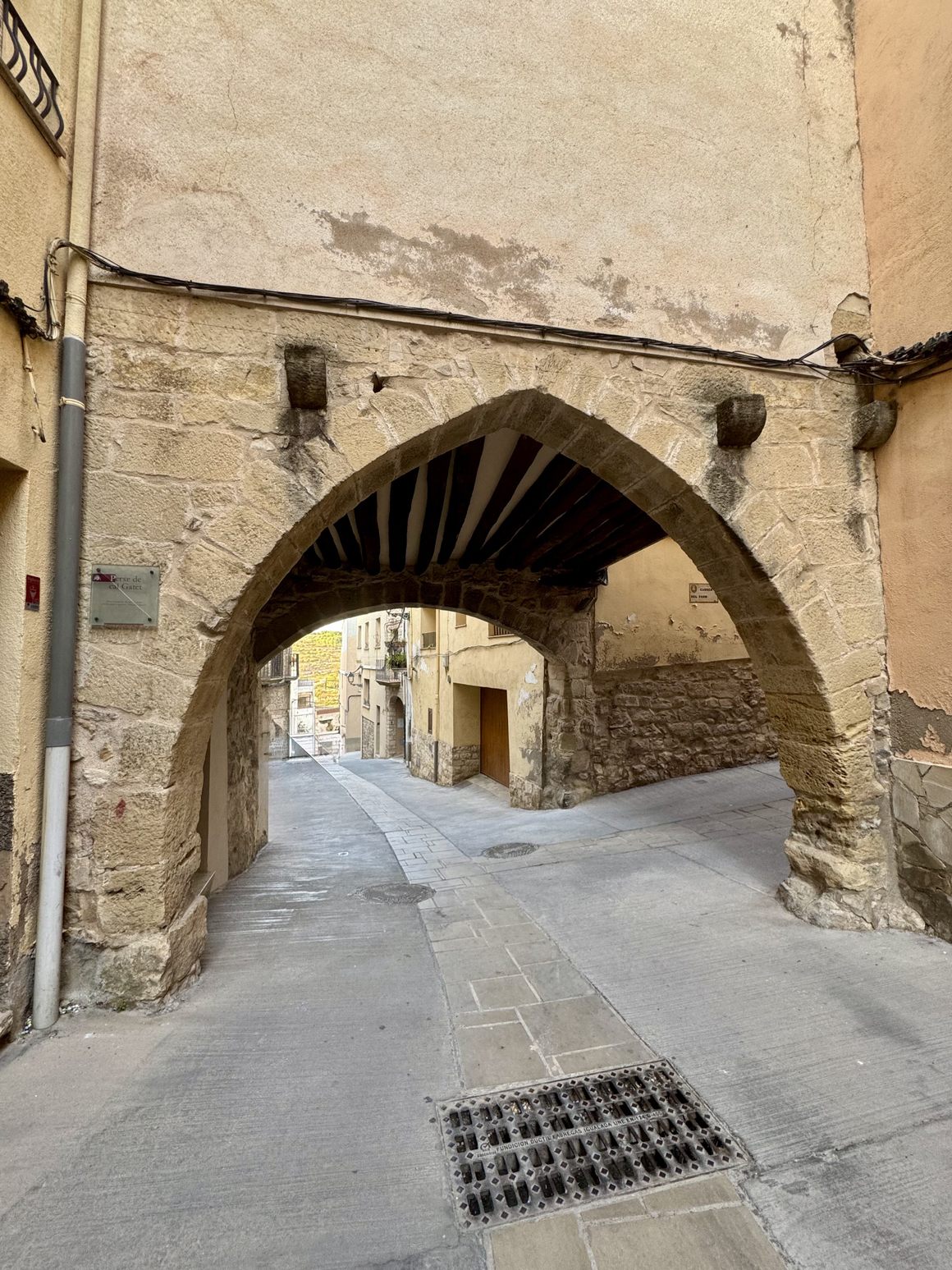
Perxe de Ca Felip extends for an impressive 54 square metres beneath a house built of stone. At Ca Gatet, two contrasting arches support the timber structure, close to the site of a medieval gateway that has long since vanished. The passages are not merely picturesque curiosities: they reveal how a compact, defensive medieval settlement adapted to the pressures of growing vertically rather than outward.
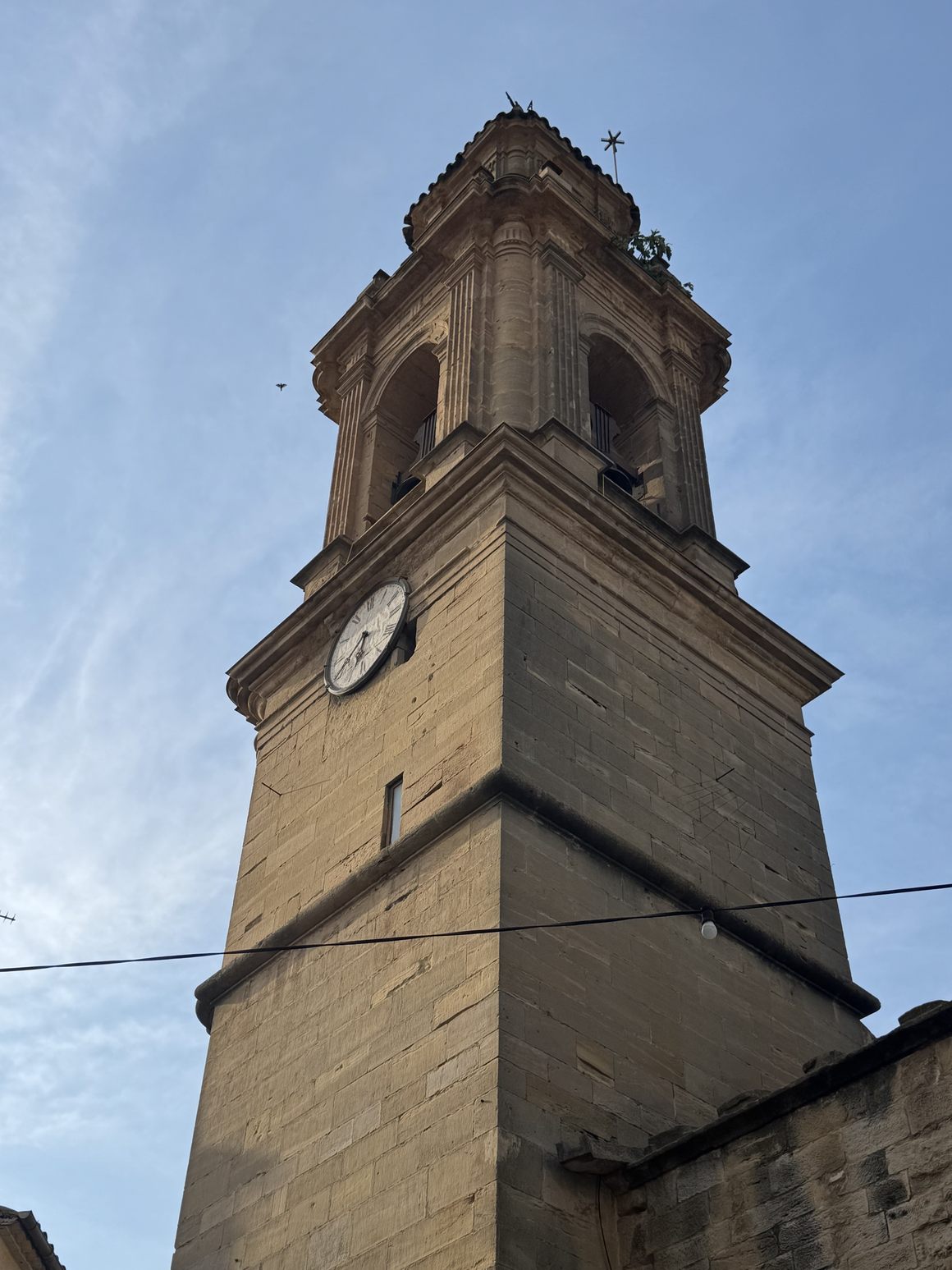
And then there are the sundials. Scattered among the old buildings, these modest instruments once turned sunlight into the most basic of human technologies: time. La Fatarella’s church tower takes the idea particularly seriously, with two sundials rather than one—one designed to tell the time before noon and another for the afternoon. It is a wonderfully practical solution to the movement of the sun, and a reminder that telling time once required architectural planning, sunlight, and a little patience. Other historic sundials can be found around the village, including a catalogued example beside a dry-stone perxe at Casa Xoximot. Together, they add another layer to the village’s architectural puzzle: while the perxes manipulate space, the sundials measure what passes above them.
Today, walking the signposted perxes route is a chance to experience La Fatarella at human speed. Look up, look down, and occasionally check the sun: in this corner of Terra Alta, the old town has devised several ingenious ways of reminding visitors that streets can be buildings, walls can become roofs, and clocks do not always need hands.
