
On Alexandria, Virginia’s riverfront, a building designed for mechanized warfare now hums with pottery wheels, printmaking presses, jeweler’s tools, and conversations between artists and curious strangers.
Construction on the Torpedo Factory began on November 12, 1918, one day after the armistice ended World War I. Torpedoes began rolling off its production line in 1920. The complex expanded during World War II, then spent years as federal storage space, holding objects ranging from congressional records to surplus dinosaur bones.
The City of Alexandria purchased the property in 1969. Its massive walls, built to contain an accidental explosion, reportedly made the main building difficult to demolish without risking damage to the surrounding historic neighborhood. That risk of widespread destruction, in this case, led to a generational effort to preserve the building.
In 1974, artist and civic leader Marian Van Landingham proposed turning the abandoned factory into working studios for Alexandria’s bicentennial. The experiment was expected to last only a few years. Instead, it transformed a relic of industrial war into one of the country’s largest collections of publicly accessible working-artist studios under one roof.
Visitors can wander through three floors and enter studios with open doors. Painters, sculptors, photographers, ceramicists, jewelers, fiber artists, printmakers, and glass artists often work within view, making the center feel less like a conventional museum than an enormous, continually changing workshop.
That workshop is now changing again.
As part of Alexandria’s Vibrancy Initiative, the Art Center is expanding public programs, hands-on experiences, contemporary exhibitions, and opportunities for visitors to interact with artists. The initiative aims to retain working artists at the building’s center while making the former factory more accessible, diverse, and active throughout the day and evening.
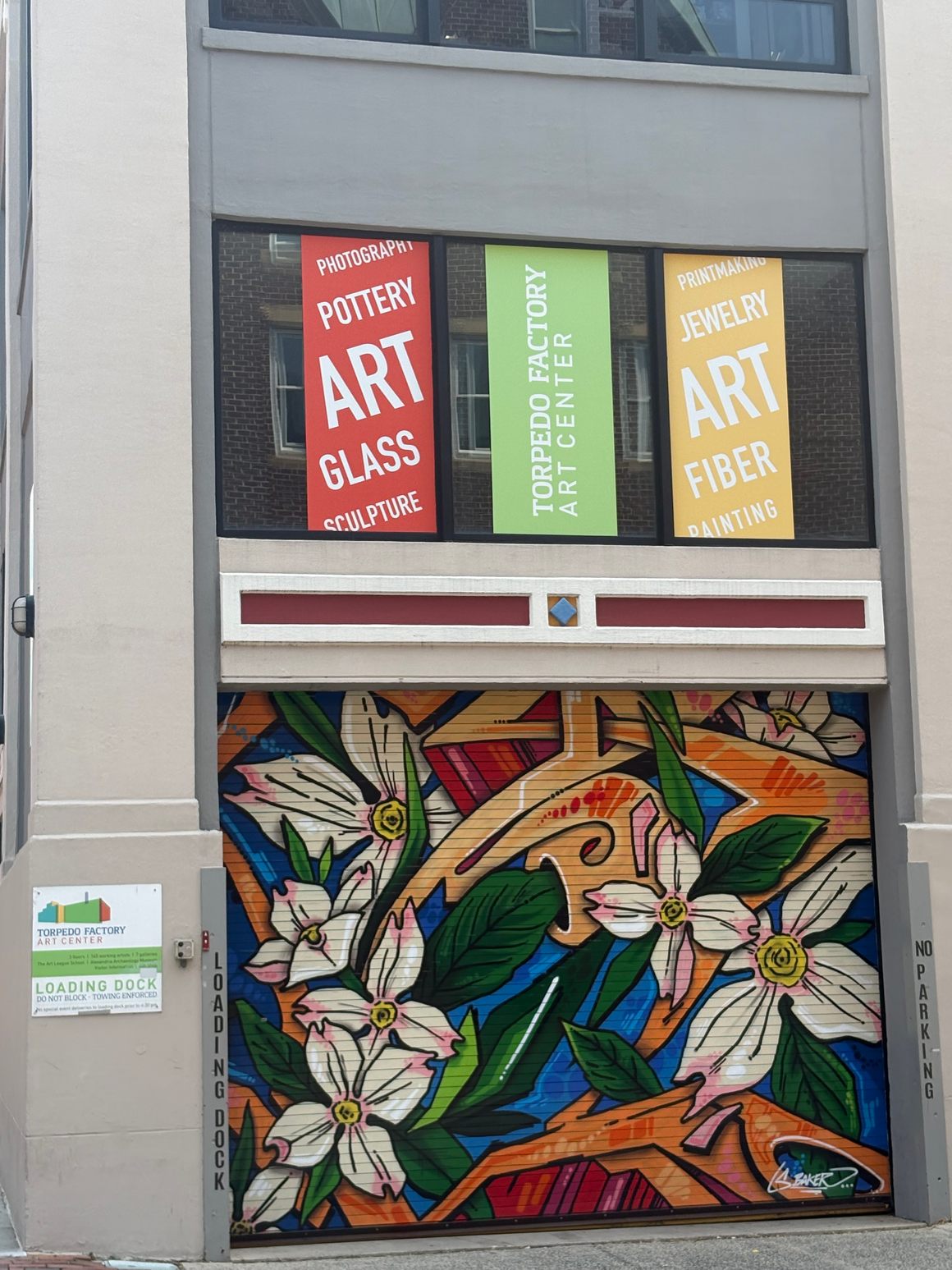
In 2026, the Torpedo Factory also joined Handwork 2026, a nationwide celebration presented by Craft in America. More than 250 participating arts organizations are using exhibitions and events to examine the role of handmade objects in American history and contemporary life. At the factory, the program highlights crafts ranging from traditional quilts, weaving, ceramics, and metalwork to fiber pieces incorporating glass, wood, clay, and other unexpected materials.
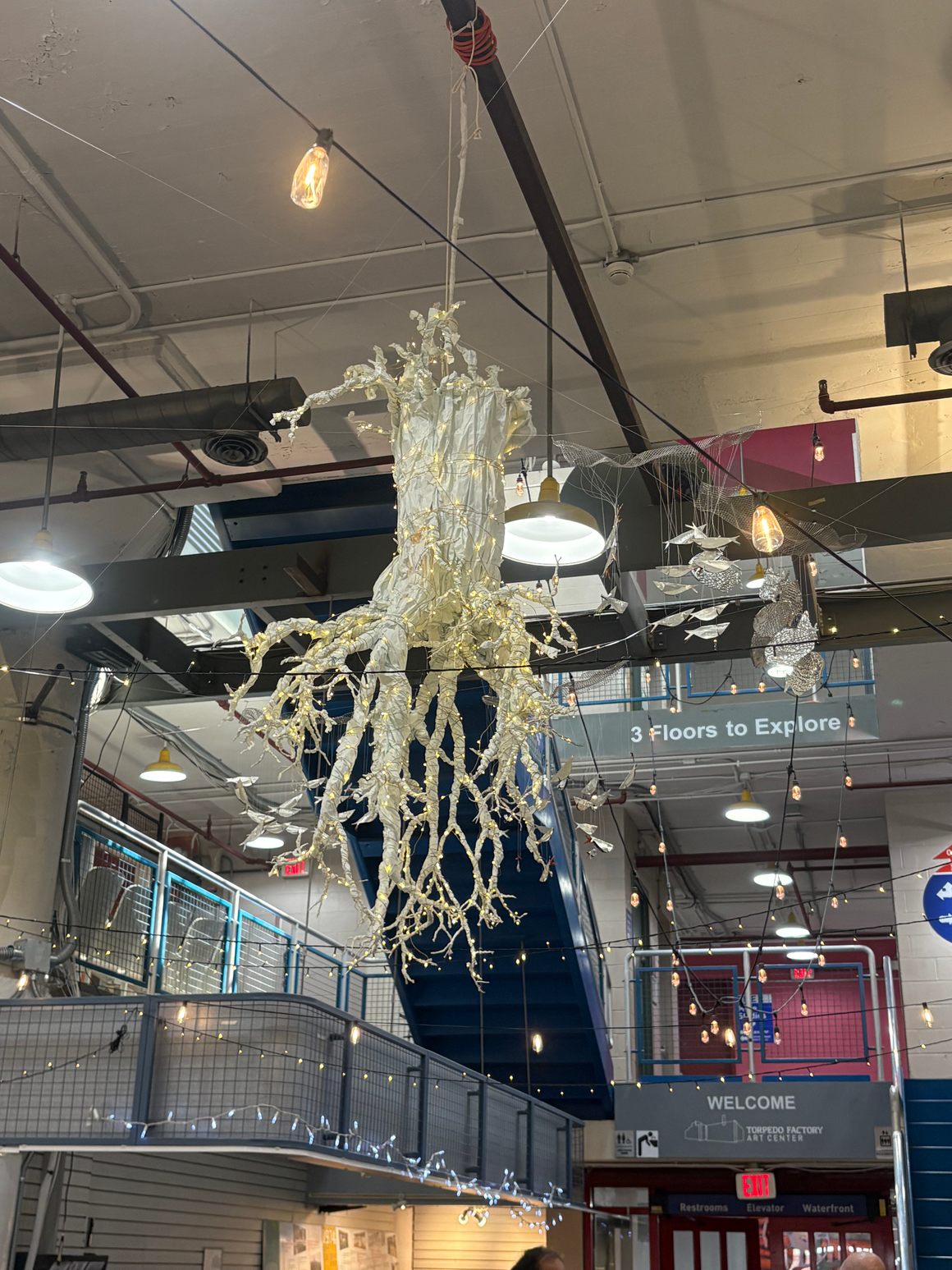
The building’s Second Friday Late Nights offer another way to experience the transformation. On every second Friday through October 2026, the factory stays open late with three floors of open studios, live music, artist encounters, and hands-on public workshops. The events turn the old industrial space into something resembling a nighttime art village, complete with glowing installations suspended among the exposed pipes and steel beams.
A century ago, the factory sent carefully engineered weapons into the world. Today, its artists send out bowls, prints, paintings, jewelry, sculptures, and stranger things that resist easy classification. The machinery has changed, but the building remains devoted to making.
Know Before You Go
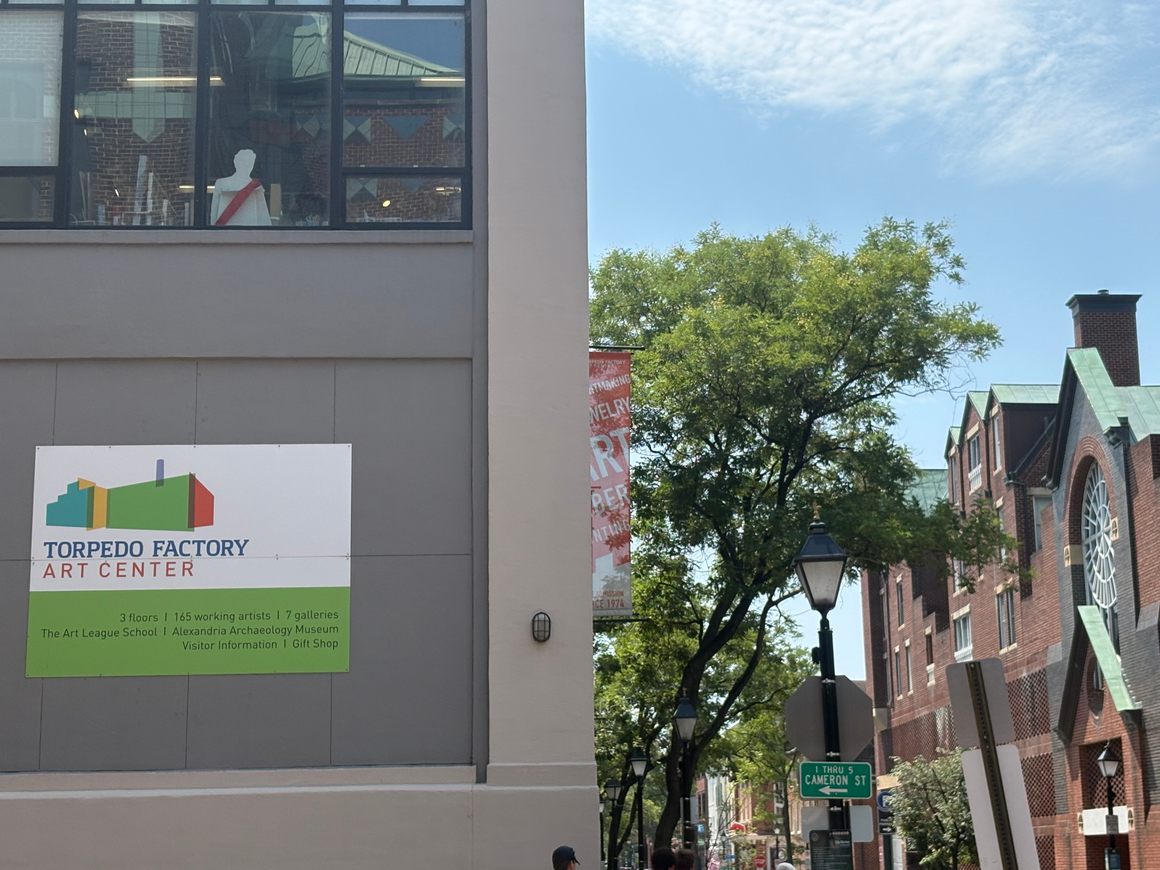
The Torpedo Factory Art Center is located at 105 North Union Street on Alexandria’s waterfront. It is generally open daily from 10 a.m. to 6 p.m., although it occasionally closes at 5 p.m. for private events. Admission is free.
Individual artists set their own studio hours. Visit later in the week or confirm availability in advance if you hope to meet a particular artist.
Second Friday Late Nights continue through October 2026. Programs are free and generally include open studios, music, special activities, and public artmaking. Check the Art Center’s event calendar before visiting for that month’s schedule and theme.
How To Get There
Take Metrorail to King Street–Old Town or VRE/Amtrak to Alexandria, then ride the free King Street Trolley toward the waterfront. Paid garages and limited street parking are available nearby. The Potomac Water Taxi docks immediately outside the waterfront entrance. An accessible entrance is located on the waterfront side of the building.


