Appia Antica in Itri
This stretch of the ancient Roman road is preserved in a valley that witnessed many battles and legendary highwaymen.

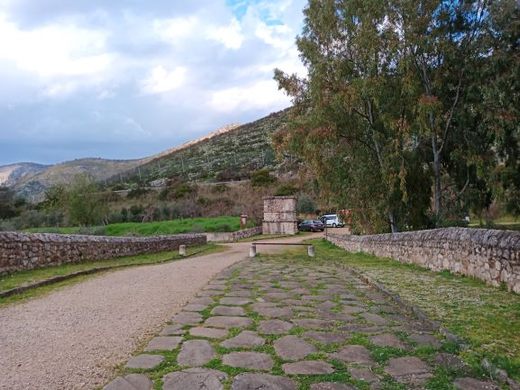
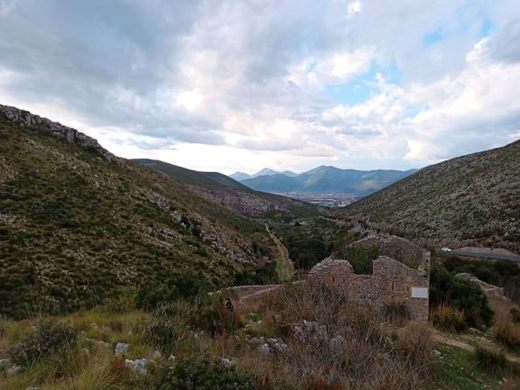
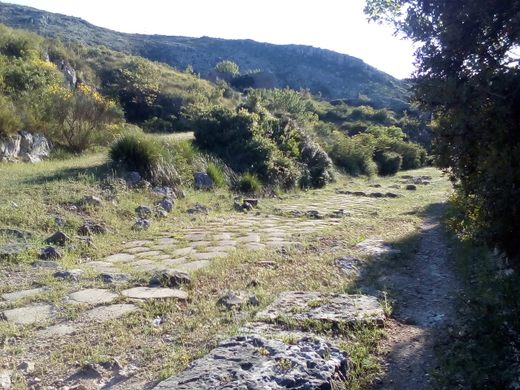
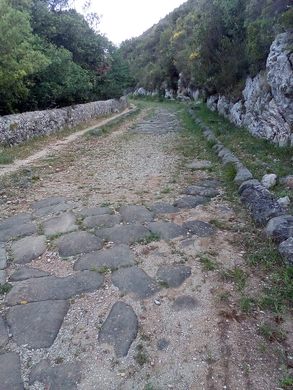

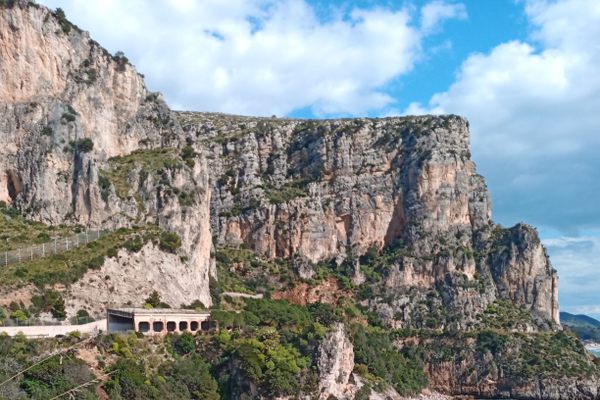
Between the towns of Itri and Fondi, in southern Lazio, the valley of Sant’Andrea provided a natural passage through the harsh and wild Aurunci Mountains, now a protected area. In this valley you can find the remains of a section the original route of the Via Appia Antica.
Consul Cladius Appius Caecus built the famous Roman road in 312 B.C., connecting Rome with Brindisi, on the southeastern Italian coast. One of the best preserved stretches of the Appia Antica is the stretch in this valley, which was used until the beginning of the 20th century to connect north and south. Pilgrims, armies, and highwaymen all left their traces on this extraordinary open-air archaeological site.
The road we see today is largely the result of three phases of reconstruction. The large basalt stones were placed during the reign of Emperor Caracalla in 216. In 1568 Perafan de Ribera, the Viceroy of Naples, rebuilt the road with smaller volcanic stones and built the bridge that one crosses when approaching Fondi. Between 1767 and 1768, Ferdinand of Bourbon ordered additional restoration works for this main road into his kingdom (at the time, the town of Fondi was a border town between the Papal States and the Kingdom of the Two Sicilies).
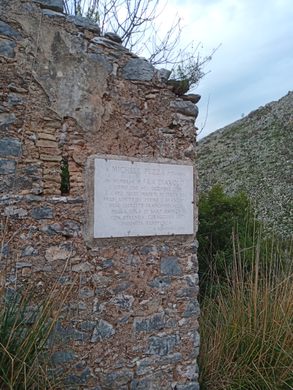
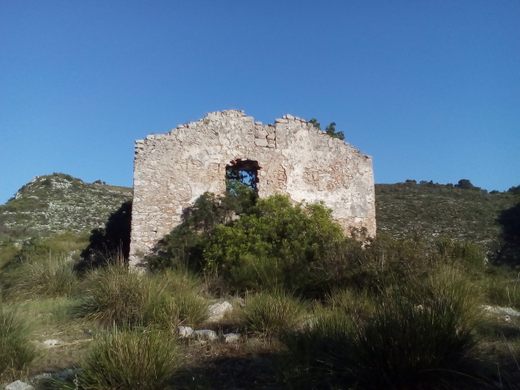
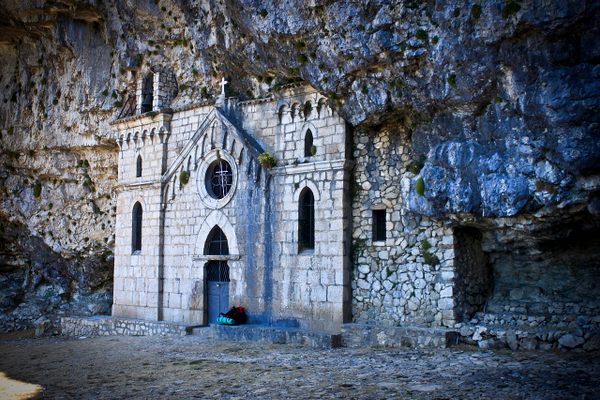
One of the most interesting sites on this itinerary is the so-called Sant’Andrea Fort (Fortino di Sant’Andrea), which was built by Joachim Murat, king of Naples during the Napoleonic age, to prevent the Austrians from entering his kingdom through the Aurunci Mountains.
However, the history of the fort is much more ancient: the fort was built on the podium of a Roman temple to Apollo (the polygonal walls and the walls in opus incertum provide an indication as to how large this religious building truly was) dating perhaps back to the fourth century B.C.
In the sixth century a chapel to Saint Andrew was built on the ruins of the temple, whose structure would have been radically altered by the need to place the fort’s heavy artillery in the early 19th century.
Before the time of Murat, however, the valley had witnessed a significant number of battles and warfare. Starting in the 1500s, the wars over the Kingdom of Naples and of the Two Sicilies drew a significant number of Italian and foreign armies into this valley: Neapolitan, Papal, French, Spanish, Austrian and German armies all marched on the basalt stones of the Appia Antica. (In 1734, the Austrian army fortified the valley to stop the Spanish troops of Charles of Bourbon.)
At the same time, the famous briganti (highwaymen) took control of the Valley at different times, leading to constant reprisals and violence and playing a significant role in the conflicts over Southern Italy. During Masianello’s rebellion in Naples in 1647, highwaymen led by Papone and D’Arezzo of Itri blocked the mountain pass to halt the Spanish troops who had been sent to take the city back.
Napoleon’s troops found a worthy enemy in the most famous highwayman of the region: Fra’ Diavolo (brother Devil). In 1798, serving as a Bourbon officer, he held the mountain pass with a small troop and slowed down the Napoleonic conquest of Southern Italy.
As you walk along the Appia Antica, you will notice the remains of all of those buildings that were functional to long-distance traveling in ancient Rome: the mansiones and mutationes, serving the needs of travelers.
Know Before You Go
You can either walk the short stretch of the Appia Antica (by parking your vehicle by the "Appia Antica" sign just after either Itri or Fondi) or you can walk from Itri to Fondi and include a visit to either town (13 kilometres, 3 hours).


![Römerstadt Carnuntum [Roman City Carnuntum]](https://img.atlasobscura.com/lJwz_PppknPO9xNJQ9B_K-c0MK8DHICI79iGIf-ybVI/rs:fill:600:400:1/g:ce/c:3989:2659:nowe:5:308/q:81/sm:1/scp:1/ar:1/aHR0cHM6Ly9hdGxh/cy1kZXYuczMuYW1h/em9uYXdzLmNvbS91/cGxvYWRzL3BsYWNl/X2ltYWdlcy8wYjVm/MTMyZS1lYTJkLTQ0/ZDktODk3Ni1kNjJj/NWM4ZGFmYTliODQw/MzM2Y2ZlMzVjN2Fi/OTVfMTQ2NzI0MjYz/MDFfZWFlMjQ5MjYz/YV9vLmpwZw.jpg)
Plan Your Trip
The Atlas Obscura Podcast is Back!




Follow us on Twitter to get the latest on the world's hidden wonders.
Like us on Facebook to get the latest on the world's hidden wonders.
Follow us on Twitter Like us on Facebook