About
Rivers of Steel was established to carry the torch of “Big Steel” and its related industries – not simply telling the companies’ stories and the products they made, but the stories of the men and women who worked there and their communities.
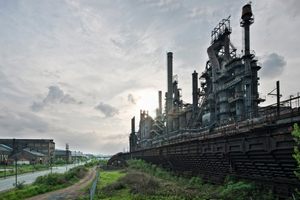
During Pittsburgh’s steelmaking heyday, the Carrie Furnaces produced more than 9,000 tons of iron per day to supply the region’s mills. Now, after shutting down in 1982, all that remains of the site is a rusting 92-foot-tall edifice with Furnaces 6 and 7.
The Carrie Furnaces date back to 1884, when the first furnace was built under the independent Carrie Furnace Company. Carnegie Steel purchased the furnaces in 1898 and they became part of the vast Homestead Steel Works, which stretched for miles along the Monongahela River. The Works were themselves part of an even larger industrial landscape extending toward downtown Pittsburgh. At its peak, some 15,000 people worked at the Homestead Steel Works and Carrie Furnaces.
The steel industry was deeply integrated into the ethos of Pittsburgh and surrounding towns until almost all the mills closed in the 1980s. Few traces of the great Works remain; the site is now occupied by the Homestead Waterfront shopping and apartment complex and Sandcastle water park. However, Carrie Furnaces 6 and 7 still stand near the towns of Braddock and Rankin, preserved as National Historic Landmarks.
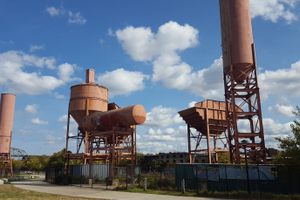
Now surrounded by railroads, the furnaces are closed to the public, but the Rivers of Steel Heritage Corporation offers tours from May through October, each emphasizing photography, graffiti, and stories from the industry and diverse workforce. Now, it is a national park, with the spire looming over the Monongahela River the centerpiece, showcasing the area's bygone days of steel.
Community Contributors

Added By


Edited By
davidheiner1ios, ldr9515, Extreme Road Trip, wickedwildflower...
- davidheiner1ios profile photo davidheiner1ios
-
ldr9515
-
Extreme Road Trip
-
wickedwildflower
-
 mate
-
 declansalcido
Published
September 11, 2014