About
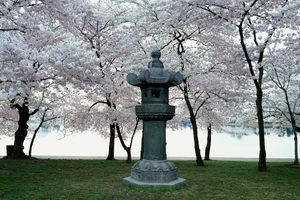
Carved out of solid granite, the Japanese Pagoda dates back to the 17th century. It weighs roughly 3,800 pounds and is composed of nine square stone slabs topped with a ribbed hip-knob. At the base, carvings of seated Buddhas on lotus flowers are a nod to the spiritual roots of pagoda architecture. The stacked structure of the pagoda represents the five classical elements of Tibetan and Shingon Buddhism as they progress upward: earth, water, fire, wind, and sky.
Despite its age, the pagoda arrived in D.C. relatively recently. In 1957, the mayor of Yokohama presented it as a gift intended to commemorate the centennial of diplomatic relations between the United States and Japan following the 1854 treaty signed in Yokohama. The structure was officially dedicated in Washington in 1958 as a symbol of friendship between the two countries.
The pagoda’s arrival has long been something of a mystery, as it reached Washington packed in five shipping crates with no instructions explaining how it should be put together. According to accounts of the installation, researchers at the Library of Congress were consulted to help determine the proper configuration before the stones could be assembled.
Today, the pagoda stands quietly near the Franklin Delano Roosevelt Memorial where, during cherry blossom season, it almost disappears into the blooming trees surrounding it.
Related Tags
Know Before You Go
The Japanese Pagoda is located along the Tidal Basin in West Potomac Park and is freely accessible year-round.
Community Contributors
Added By
Published
March 9, 2026