The Explorer’s Guide to Nevada’s Night Skies
Witness nature’s celestial wonders at Nevada’s parks—and maybe spot a few nocturnal critters.


Nevada’s big night sky nearly bursts with twinkling stars, and you don’t have to travel far to trade the urban lights for celestial spectacle. In Valley of Fire, just an hour outside Las Vegas, inky black skies are interrupted only by awe-inspiring rock formations. And Great Basin National Park, located near the Utah border, is internationally renowned for its designation as a dark sky park.
Whether you’re an astronomy enthusiast or just a night owl who doesn’t know your Merak from your Mizar (those are stars in the Big Dipper, FYI), settle into one of these spots to open your mind to the vast expanse of the universe. Head to these parks for their unmatched stars, and stay for the surrounding adventures—from hiking to camping to wildlife viewing.
Valley of Fire State Park
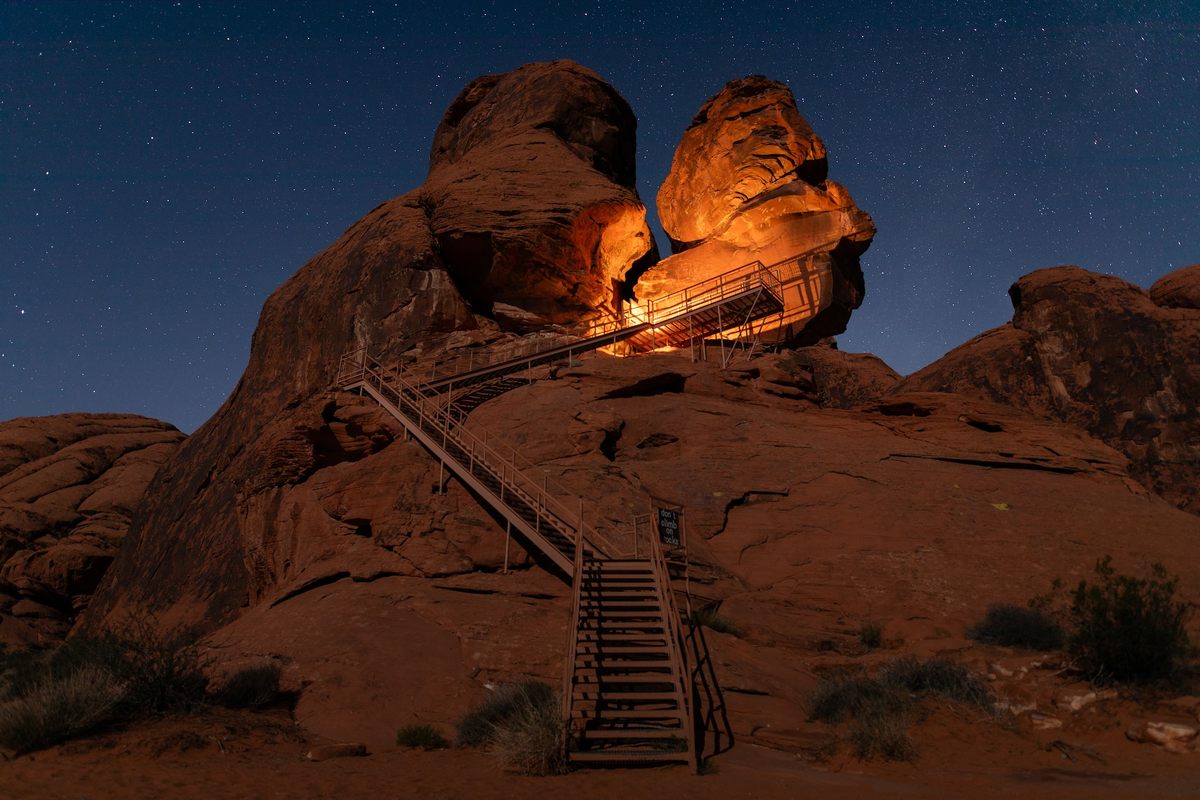
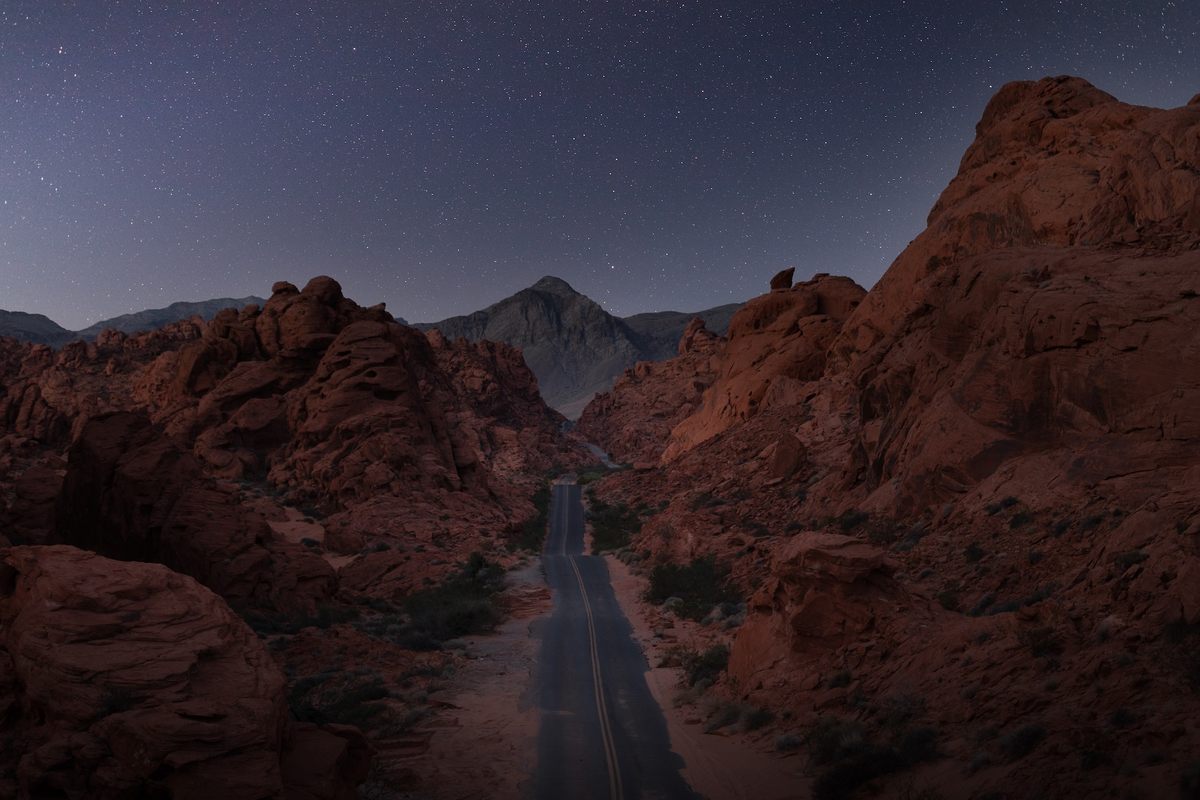
Nevada’s oldest state park is a sprawling nature preservation area known for its dramatic, red sandstone formations, which look as though they’re on fire when reflecting the sun’s rays. Valley of Fire is 40 miles (about an hour’s drive) outside of Las Vegas, meaning it is unaffected by the city’s neon lights.
The park is open from sunrise to sunset unless you’re camping in the designated campgrounds at Atlatl Rock or Arch Rock. It isn’t unusual to spot the Milky Way with the naked eye on clear nights (especially on or around the New Moon). The park often hosts professional astronomers, allowing visitors to view constellations and planets through telescopes and hear the stories associated with different celestial bodies. Guests can also embark on self-guided moonlit hikes from September to May when the weather is mild and the stars are at their brightest. But no matter what time of year you explore the valley, sitting among ancient rock formations in total darkness is a truly magical experience.
Once home to the Ancestral Pueblo farmers, the valley is now a hot spot for camping and hiking, with popular trails including the Fire Wave and the Rainbow Vista. The petroglyphs of the park’s ancient inhabitants can be discovered amongst petrified trees and eroded rocks with unique shapes and textures (one even looks like a giant elephant!). After dark, the valley inspires wonder in a completely different way. A number of nocturnal animals—from lizards to bobcats to ground squirrels—come out to play, and the sky lights up with thousands of stars.
Great Basin National Park
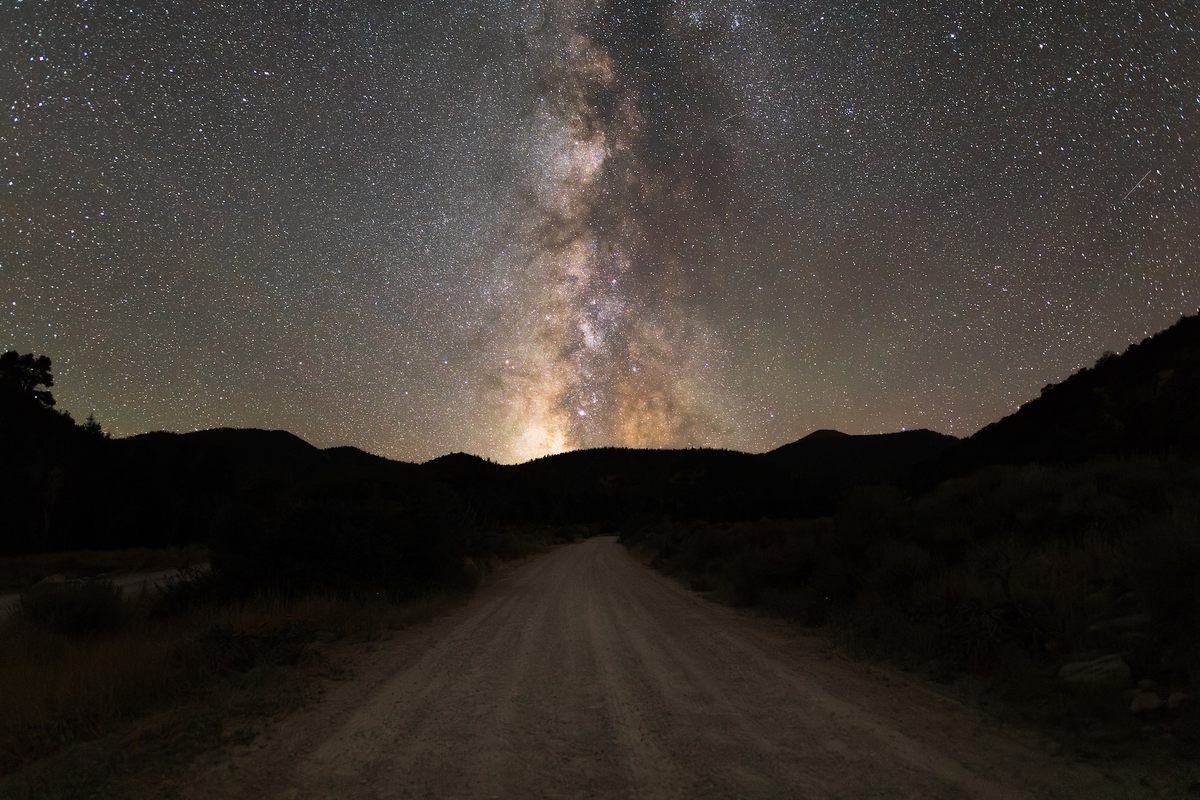

Recognized as an “International Dark Sky Park” by Dark Sky International, Great Basin is one of the world’s best spots to stargaze. Due to its high desert setting, the air in the park contains little view-blocking moisture, making it easier to view constellations with the naked eye. During the summer (peak stargazing season) the skies above Great Basin reveal over 6,000 stars and glimpses into the Andromeda and Triangulum galaxies.
This sprawling, 77-thousand-acre park contains wonder at every turn, from groves of ancient bristlecone pines—among the oldest living trees on Earth—to ethereal stalactites and stalagmites inside the Lehman Caves. The difference between the park’s highest and lowest trails is over 6,000 feet, from the top of Wheeler Peak to the bottom of Mountain View Trail. But no matter where you are in Great Basin, you’re in for some amazing nighttime views.
The park notes that it is committed to reducing its light pollution footprint, employing red exterior lights instead of white and even measuring the brightness of the night sky every month. This careful monitoring ensures that no outside light encroaches on the park’s pristine darkness. Also, between Memorial Day and Labor Day, Great Basin Astronomy rangers lead programs at the Astronomy Amphitheater every Thursday through Sunday.
Black Rock Desert
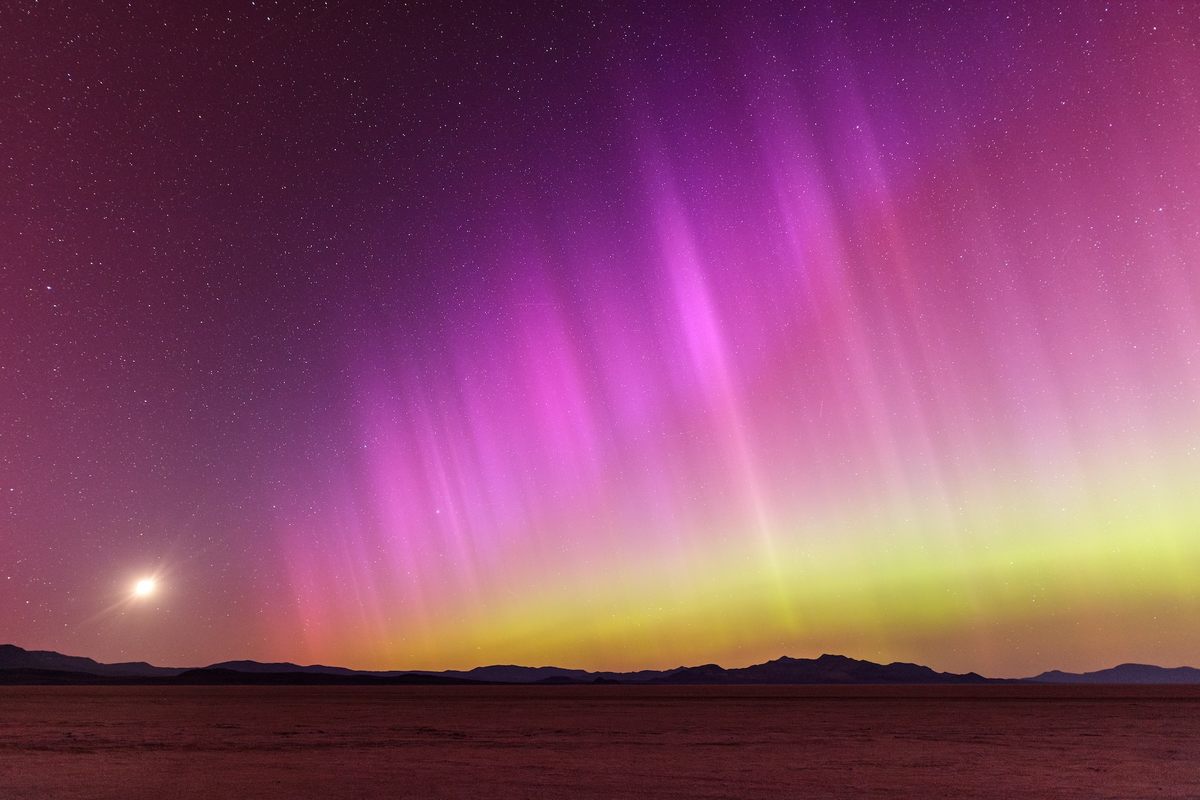

This rugged landscape in northwest Nevada is the largest collection of publicly managed land in the continental U.S. Once home to Lake Lahontan, a massive inland sea from the last ice age, the area is now known for its Black Rock Playa—a flat, dry expanse that stretches over 200 square miles (and is famous for being the annual site of Burning Man).
Most Black Rock campers stay in the center of the playa, where miles lie between your vantage point and the nearest mountain ranges. Black Rock Desert is known for its meteor showers—most notably the Perseid Meteor Shower, which bursts through the serene night skies each August. During Perseid, Friends of Black Rock-High Rock hosts a meteor shower campout, where amateur astronomers can view the phenomenon through telescopes (and drink some complementary hot chocolate!). Rocket enthusiasts, too, make regular trips to the playa to conduct breathtaking night launches that shine against the desert’s wide, flat terrain.
Driving through Black Rock, adventurers can also spot volcanic rock formations, fossilized, prehistoric remains, and native wildlife like mule deer and horned lizards. If you choose to stay the night and pitch your tent in the desert, you’re in for a whole other set of natural wonders.
Walker River State Recreation Area

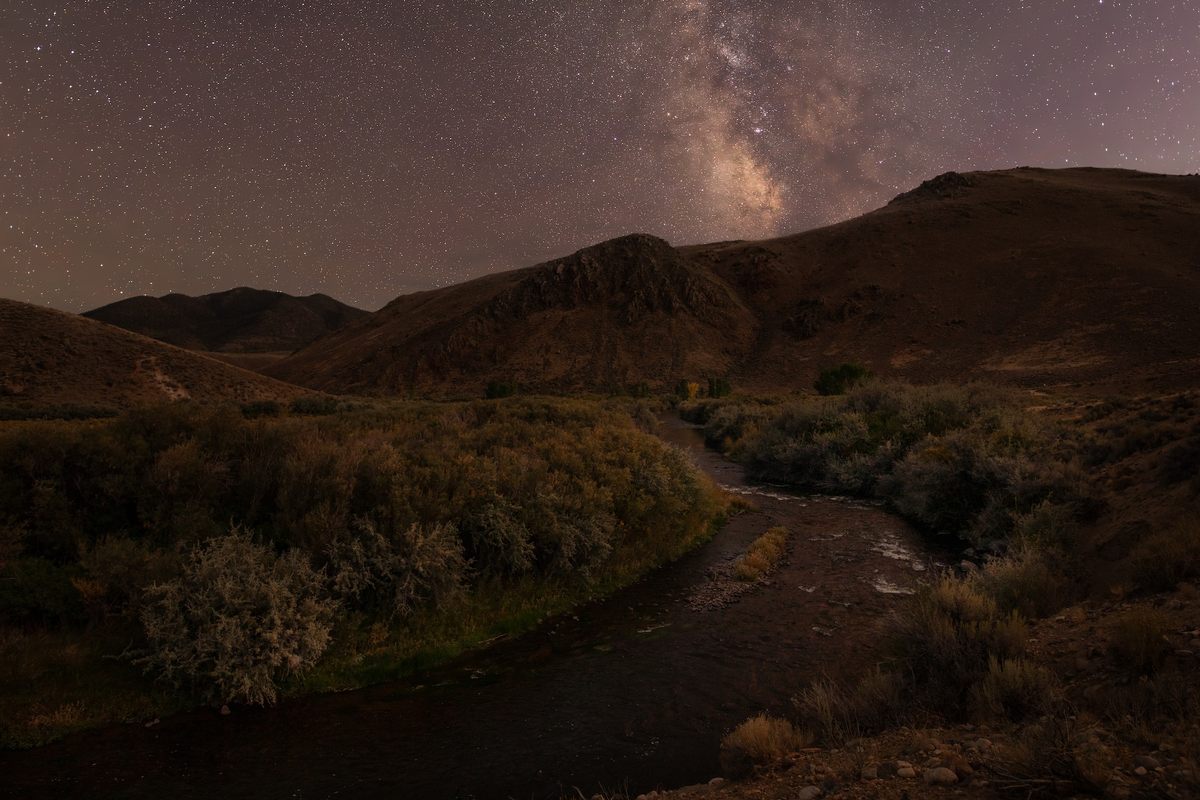
In 2017, the Walker Basin Conservancy donated over 12,000 acres of land to the State of Nevada, including several large ranches that had been closed to the public for over a hundred years. Today, the ranches and surrounding land compose the five distinct park units of Walker River State Recreation Area.
Nine Mile Ranch, also known as the “Elbow,” is the least developed of Walker River’s five parks and still looks just like the large ranch area that it was a century ago. Visitors can camp out in the Elbow’s Bighorn Campground, where there is easy access to the river and—more importantly—the darkest, most astonishing skies in the whole recreation area. Occasionally, Walker River park rangers host on-site astronomy nights, where visitors can experiment with different telescopic equipment and learn more about the numerous planets viewable from the park.
The East Walker River runs through this rolling landscape, with designated access points for kayakers, floaters, and fishers, and the area’s winding dirt roads are popular with hikers, mountain bikers, and equestrians. While Walker River is a popular site for daytime treks and picnics, it’s also an incredible place to spend the night. Whether you choose to pitch a tent, hook up your RV, or rent one of the campgrounds’ riverside cabins, there’s a whole new world to explore when the sun sets over Walker River.
Lunar Crater


Recognized as one of Nevada’s six National Natural Landmarks, the Lunar Crater volcanic field is one of the state’s most remarkable, otherworldly features, containing a whopping, 400-acre crater thought to have been formed by several shallow volcanic eruptions. Lunar Crater and its surrounding, smaller craters are so much like the landscape of the moon that the area was classified as an official “Terrestrial Analogue Site” and used for NASA’s Apollo astronaut training during the 1970s.
While its space-training days may be over, Lunar Crater is still an unbeatable spot for taking in the night sky. Explorers of the crater can camp anywhere along the pull-offs of the Backcountry Byway, all of which offer unobstructed views of the inky black sky and, often, a look at the Milky Way. The crater is a great place to experience zodiacal light—the sunlight that reflects off dust in the sun’s orbit path and produces a faint, pyramid-shaped glow in the night sky. Stargazers at Lunar Crater can also witness an astonishing red and green airglow across the sky and even get glimpses of the Dark Horse Nebula in the Milky Way’s Great Rift.
The Lunar Crater Backcountry Byway passes by the crater with a stopping point where visitors can get out of their cars for a closer look. Along the bumpy dirt road, it’s easy to spot natural formations like cinder cones and basalt flows, as well as some lovely wildflowers. The Byway also takes you past 20 different extinct volcanoes and ancient, obsidian-covered lava beds.
Sponsored by Travel Nevada. Click here to explore more.



Follow us on Twitter to get the latest on the world's hidden wonders.
Like us on Facebook to get the latest on the world's hidden wonders.
Follow us on Twitter Like us on Facebook