Zany Neighbors: From Pet Peacocks to Naked Beekepers
There are some neighbors you just never forget.

Listen and subscribe on Apple Podcasts, Spotify, and all major podcast apps.
Dylan Thuras: Hey all, Dylan here. So today we are sharing stories about neighbors. Stories from Atlas Obscura staff, friends of the show, basically anyone who had a good story to tell us about something that happened with their neighbors. It’s got front yards, it’s got backyards, it’s got pets. And after you hear this episode, we would like to hear from you. We want to hear your stories about your neighbors, the good, the bad, the ugly.
Maybe there’s a neighbor on your block who goes crazy for the holidays and it’s just like a delight to see what they’re up to. Maybe someone has an incredible garden. Maybe someone refuses to cut their yard and lawn and like, that’s cool. They’re just a rebel in some suburban cul-de-sac. Maybe that person is you.
Anyway, give us a call at 315-992-7902 and leave us a message telling us your name and your story. You can record a voice memo and email it to us at hello@atlasobscura.com. We want to hear your neighbor stories. All right, here’s the episode.
This is an edited transcript of the Atlas Obscura Podcast: a celebration of the world’s strange, incredible, and wondrous places. Find the show on Apple Podcasts, Spotify, and all major podcast apps.

Will: Hey Atlas listeners. My name is Will. I’ve lived in New York City for 15 years, but before that I grew up in a very rural part of the state of Maryland. So rural that where I’m from, St. Leonard, is considered a census designated place. And when people ask me what that means, I say that it’s a big enough collection of people living in the woods that the government says that we need to keep an eye on that. And where I’m from, a lot of the houses were vacation homes for people who lived and worked in Washington, DC.
And my neighbor had peacocks for pets. He had two beautifully colored, amazing, vibrant plumage, classic peacocks that would just kind of hang out in his yard. And I would see them when I would ride my bicycle around the circle. And they never left. They knew not to leave. But it was the most unusual sight to see these two exotic birds just kind of hanging out in my neighbor’s front yard. I could see them from my house, too.
And one summer, this neighbor asked if I wanted to do some work around his house to earn some extra money. And I said yes, I think specifically so I could catch another glimpse of these peacocks and see where they lived. And I did that while I picked blackberries and mowed the lawn. And from time to time when I think about my experience growing up—because where I’m from, I still talk to several friends from when I lived there—I always bring up the fact that my neighbor had peacocks that would stand in his front yard.
Johanna Mayer: Hey, this is Johanna. I’m the senior producer of the show. So I live in Brooklyn, New York. And there’s this block in my neighborhood. It is a beautiful block. The streets are really wide because it leads right into the entrance of Prospect Park, which is one of the biggest and most beautiful parks in the city. There are huge, shady trees. It’s mossy. The block is lined by these very fancy limestone and brownstone buildings.
And on this block, there is a house that I try to walk by as frequently as I can, because it has the most incredible front yard display. I have never seen anything like this in the city before. There’s everything in this display. There are inflatable characters. There are lights strung up. Some of them are blinking sometimes. There are stuffed animals strapped to it, various pieces of furniture. It’s like every inch of this tiny little front yard is crammed to the brim with some sort of strange ephemera. And it changes. This is not just a holiday thing, but they do swap out various themes for Christmas, for St. Patrick’s Day, whatever. But it is up year-round.
I love this house and its yard because it feels sort of like, almost like an act of resistance, or it’s like someone who is just really dancing to the beat of their own drum, not caring what their neighbors or anyone think of them, just executing their very out-of-place vision. One of these days, I will be brave enough to ring their doorbell and talk to them and ask them all about why they put up this display in this incredible front yard that they have. But until then, I will just continue to walk past it as many times as I can. And if you are the owner of this house and you happen to be listening to this podcast, please get in touch. I would love to do an episode about your house.
Amanda McGowan: Hello Atlas listeners, Amanda McGowan here, one of the producers on the show. So I grew up in a pretty rural part of Connecticut. There was a lot of land in between people’s homes, and my neighbors had alpacas, which when I was a kid seemed very exciting and cool.
But I didn’t think too much about it until recently, because I think it was my mom who pointed out to me that there was this alpaca farm in town that was selling yarn made out of the alpaca’s wool. And you could buy it and the tag would have a picture of the alpaca and it would be like, “This is Steve’s wool,” or something like that. You know what I mean? And I loved to knit. So this was very exciting to me.
So I looked it up and I actually realized that it wasn’t even our neighbor’s alpaca farm. And apparently there’s multiple alpaca farms in the town where I grew up. And then I was zooming out and apparently there’s many, many, many alpaca farms in the state of Connecticut. And then I zoomed out even further and found a Reddit post that was a map of the United States that said “alpacas by county 2022.” And there are a lot of alpaca farms out there.
So if you’re a person who likes to knit or crochet and you would like to have a photo of the alpaca that produced the yarn that you’re knitting from, I highly recommend checking out a local alpaca or llama proprietor or farmer near you.
Luz Fleming: What’s up everybody? This is Luz Fleming, your audio engineer for this podcast. I have a story about a neighbor I had in Bed-Stuy. And a little side note, when I moved to Bed-Stuy in 2005, it was by far the friendliest neighborhood I ever moved to. People introduced themselves and said welcome to the neighborhood pretty much every day for an entire year.
And in that spirit, I met somebody a couple blocks up from me. Very nice guy. I’m not going to mention his name. And we always stopped to chat every time we saw each other.
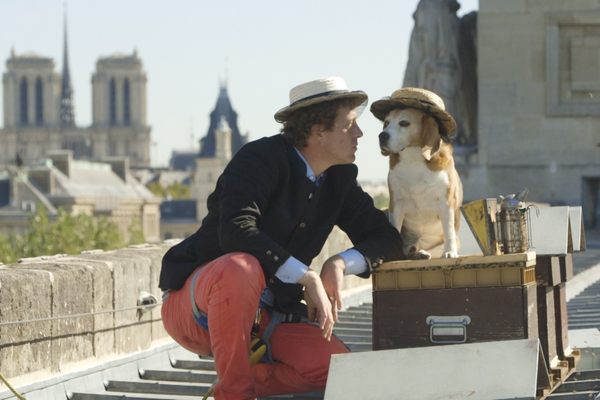
And at some point he mentioned that he was a beekeeper and had a whole hive on his roof. I thought that was pretty interesting. So I would often ask him about that. How are the bees doing? Are they producing honey? And this probably went on for two or three years. And one day he says, “You know, we’re having a Brooklyn beekeepers meeting at a bar in Clinton Hill. Everybody will have their honey and we’ll be doing tastings and you should come through. It’ll be fun.”
So I went with a couple friends and sure enough, there was this group of beekeepers from Brooklyn and each one had their own jar of honey out. And each honey tasted totally different from the other. I remember one person had a hive near Greenwood Cemetery and I thought that honey was especially good. And it made me wonder if it was from flowers in the cemetery or why that would have been.
But anyway, my neighbor seemed to be a real celebrity at this event and he was hosting and emceeing and everybody knew him and was joking with him. But there was something to the jokes that I didn’t quite understand. And I felt like I was missing something. Like there was an inside joke and I didn’t quite get it. And I just couldn’t get that out of my mind. And everything was great. I said “Goodbye, thanks for inviting us. We all had a great time.” But I had to know what it was that I was missing out on.
So I did a search when I went home. And sure enough, my neighbor pops up right away as the Naked Beekeeper. And he will tend to his hive on the roof, almost completely naked. So you never know who your neighbors are or what they’re into or just how into it they are. And again, great guy. I’m not going to mention his name, but he doesn’t seem to be covering anything up anyway. So you could probably find him pretty easy. Anyway, that’s my story. See ya.
Listen and subscribe on Apple Podcasts, Spotify, and all major podcast apps.
This episode was produced by Manolo Morales. Our podcast is a co-production of Atlas Obscura and Stitcher Studios. The people who make our show include Doug Baldinger, Kameel Stanley, Johanna Mayer, Manolo Morales, Amanda McGowan, Alexa Lim, Casey Holford, and Luz Fleming. Our theme music is by Sam Tyndall.




Follow us on Twitter to get the latest on the world's hidden wonders.
Like us on Facebook to get the latest on the world's hidden wonders.
Follow us on Twitter Like us on Facebook