A Botanical Showdown Planted the Seed for Portland’s International Rose Test Garden
Portland, Oregon is known as the City of Roses, but clinching this title was no easy feat.


Listen and subscribe on Apple Podcasts, Spotify, and all major podcast apps.
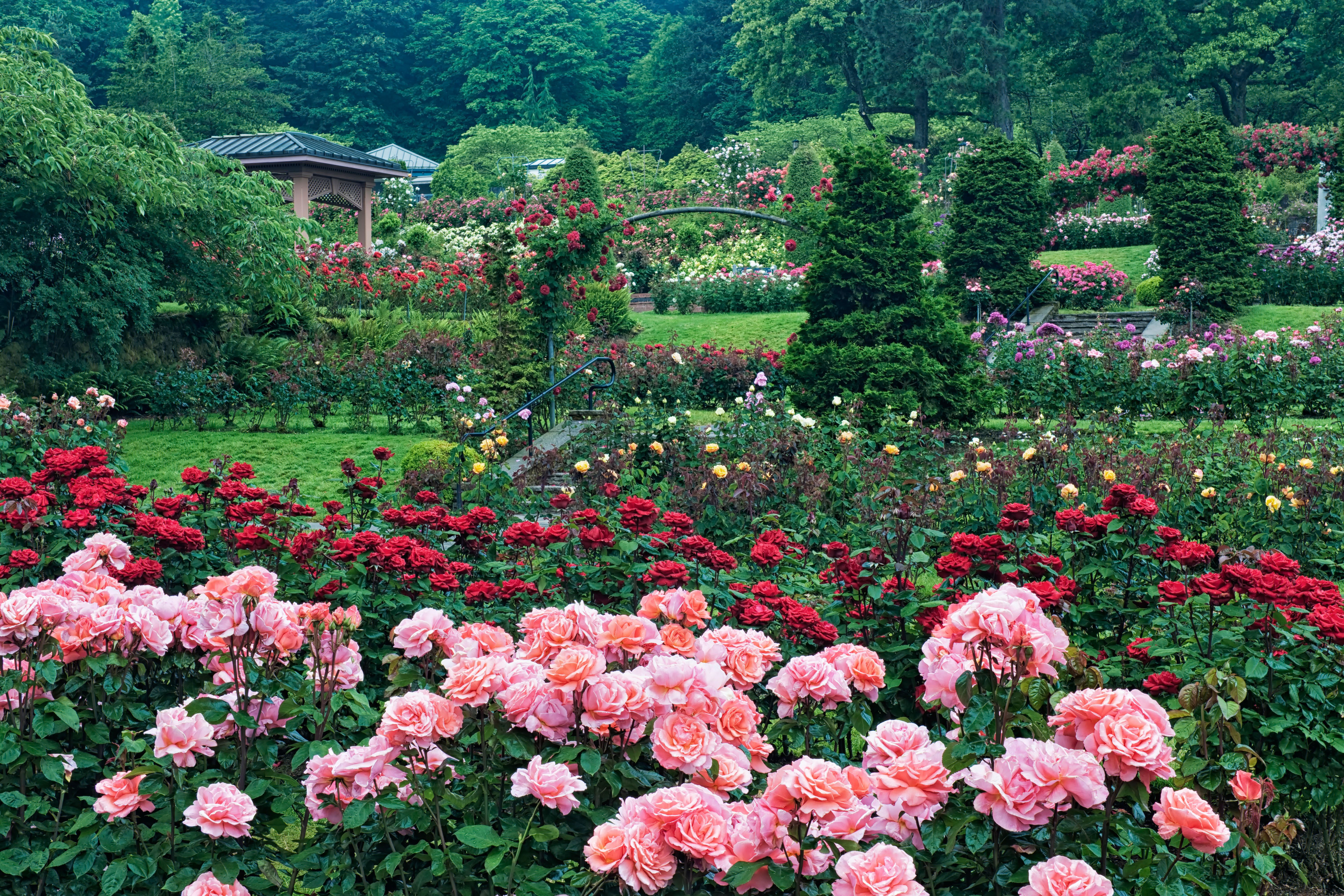
Dylan Thuras: Washington Park in Portland, Oregon. It’s a pretty funky place. It’s built into the hillside. You spend a lot of your time wandering around and kind of stumbling across things. Things like maybe a zoo or an amphitheater; or, perhaps, you take one turn and you come upon this enormous rose garden.
Rachel Burlington: I remember just walking down the stairs and being like, “Whoa, where am I?” I don’t even know what’s going on. I’m smelling things; there’s so many colors. That was my first experience coming to the Rose Garden before I even got this role.
Dylan: This is Rachel Burlington. She’s the curator of this garden, meaning she spends her time making sure that all of these roses are happy. And there are a ton of roses to keep happy.
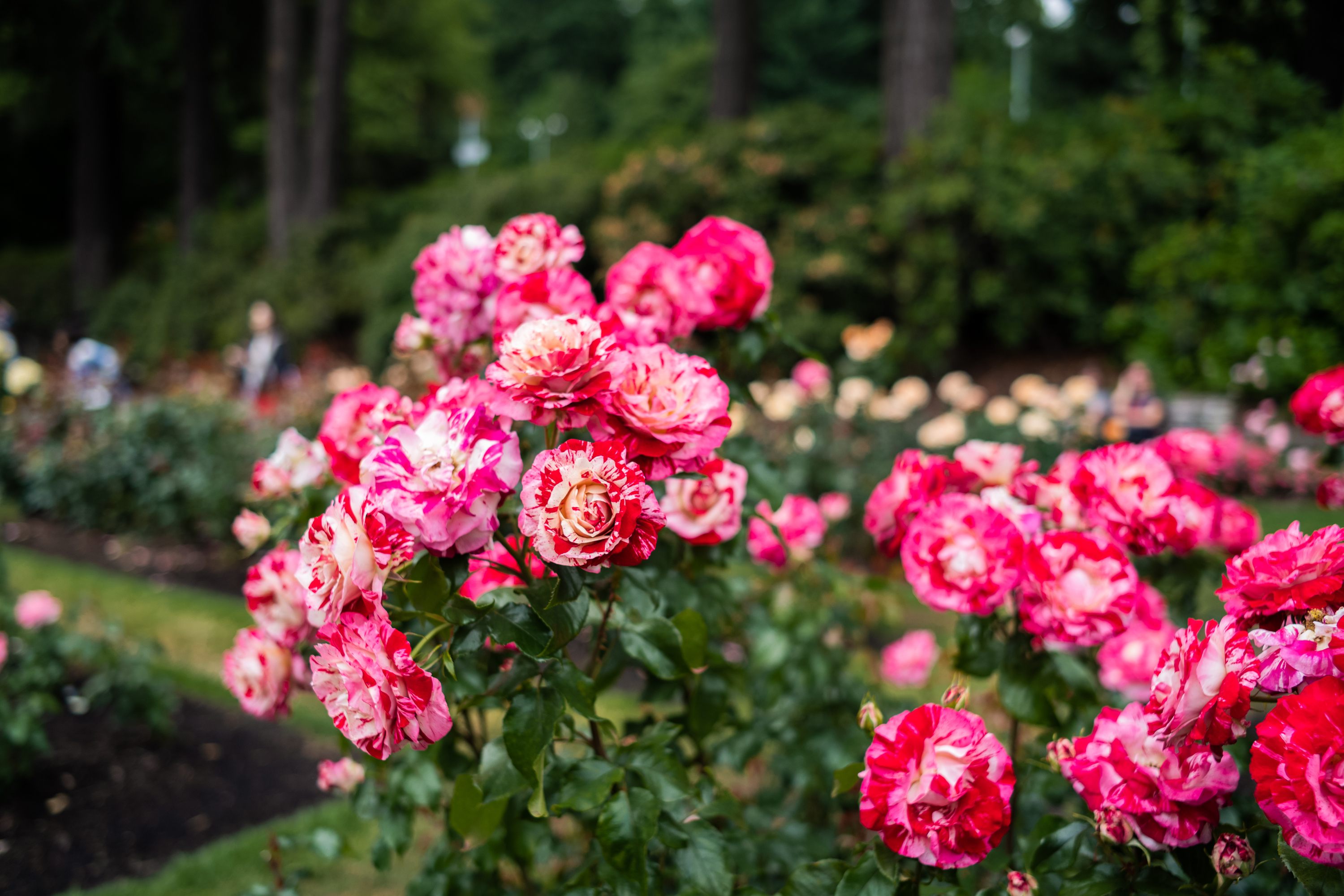
Rachel: We have over 10,000 roses—individual rose bushes—and we have about 625 varieties. So we have striped ones, we have pink ones, we have bicolor ones, we have little ones, we have big ones. We have virtually every type of rose you can think of.
Dylan: When I first started learning about the garden, I kept running into this story about how it had gotten started. And the story goes back to World War I. Europe is being torn up by this horrible conflict, and so the people of Portland decide, “We want to offer help.”
They reached out to gardeners over there saying, “We can help you save your plants from destruction. Send your roses to us, and we will keep them safe and growing until after the war.” A beautiful gesture of kindness from one gardener to another. It’s a great story. There is, of course, one major problem.
Rachel: I have not found any evidence to say that that’s true. There’s nothing to corroborate that.
Dylan: This story—it really always nagged at Rachel. It became almost the bane of her existence. You might say, the thorn on her rose. So she decided, “Okay, I need to do some research of my own. I’m going to set the story straight. I’m going to dig into the archives and find out actually how this garden came to be.”
Rachel: I’m still kind of knee deep in it, and it’s really exciting. Like with any mystery, you just start pulling up the thread, and then the whole thing unravels.
Dylan: I’m Dylan Thuras, and this is Atlas Obscura, a celebration of the world’s strange, incredible, and wondrous places. This episode is brought to you in partnership with Travel Portland. And today—I didn’t realize this—but Portland is known as the City of Roses. Getting this title, clinching the champion spot, was a real street fight.
Today, we hear from Rachel about this story, and we hear from her about the city’s secret weapon in that fight. It was this garden—specifically this test garden, a kind of a cross between a beautiful, peaceful park and a mad scientist’s laboratory. Less World War I, and more War of the Roses. That story, after this.
This is an edited transcript of the Atlas Obscura Podcast: a celebration of the world’s strange, incredible, and wondrous places. Find the show on Apple Podcasts, Spotify, and all major podcast apps.
Dylan: I am a bad gardener. I try every year to grow things, and it just fails, but we do have roses growing in our backyard. And I’ve learned a thing or two about roses over the years, and I’m going to pass one on to you. The first is that rose people are very, very serious about roses.
Rachel: I feel like there are rose people, and there are plant people. Rose people are its own thing of horticulture.
Dylan: That’s Rachel Burlington again. Yeah, rose people are so serious that they actually have a pretty good idea of when the very first rose bush was planted in Portland, which was all the way back in 1837. Rose people…they just keep track of this kind of thing. And here’s the other thing about roses.
Rachel: Roses have had a reputation for not being the easiest to grow. Sometimes roses have a bad reputation for being high-maintenance and disease-prone, and certainly that was the case.
Dylan: Roses are very finicky. They get diseases easily. They get fungal diseases in humid environments. I mean, humidity is basically the kryptonite of roses. But then people tried to grow roses in Portland, and they were surprised.
Rachel: Portland has the ideal weather: basically a combination of mild and wet winters, warm and dry summers. That perfect concoction creates the best climate. In fact, sometimes I feel like people come in here and say, “These are the best.” I almost feel like I’m cheating. I’m like, “I literally just planted it and didn’t do anything.”
Dylan: Rose growing in Portland really started to take off. By the late 1800s, rose enthusiasts had formed the Portland Rose Society, the first of its kind in the US. And the society began hosting big annual rose shows. By 1904, these shows included a pageant and a parade.
The rose business was blooming. Then, as 1905 rolled around, the city decided they were ready to go much bigger—to pitch themselves to the rest of the country and to the world. But they were not alone in this ambition.
Rachel: Around that time, a lot of these West Coast cities were developing. They’re trying to attract population. They’re trying to get people to invest in their cities.
Dylan: Portland decided they were going to throw a big exposition, something like a World’s Fair festival that would bring visitors and investors into the city. The official theme was going to be the 100th anniversary of the Lewis and Clark Expedition. But, unofficially, they thought they’d try out a new sort of ad campaign, a new kind of city identity—something snappy, something people could know Portland by. So they thought, “What about all these roses? What if we made Portland the Rose City?”
Rachel: If everyone sees the City of Roses, well…roses are hard to take care of. “There must be really good weather, so maybe we should consider moving there.”
Dylan: So, for the 1905 exposition, they decided to plan a big floral centerpiece, this parade. And then along the parade route, they planted roses—an insane, incredible amount of roses. 200 miles of roses of a very specific variety, actually—something called the Madame Caroline Testout. Yes, rose people very much keep track of this sort of thing.

Rachel: They wanted to cement their name as City of Roses because they wanted to advertise to the world that it was a great place to live.
Dylan: Here is the point at which Rachel starts digging into this story, seeing what the archives can tell us all about this. As it turns out, Portland was not the only city vying to be the City of Roses. A lot of other cities on the West Coast also wanted to advertise their great weather, their good planting environment. And so here comes the villain of our story: Tacoma, Washington (and also Seattle and some other cities in California).
Rachel: It’s quite funny because I’ve always heard this story about how Portland competed with Tacoma and Seattle to be the City of Roses. And so, actually, I was reading through some old newspapers, and quite literally they were competing for this title, and it was pretty heated. And there were a lot of articles being like, “Oh no, what if we don’t get it?” and that type of thing.
Dylan: Portland was trying to come up with ways to stay one step ahead of the competition. In particular, a guy named Jesse Curry started doing some scheming. He was also a concrete executive. He wrote frequently for the local paper, and he was a big time rose guy. Curry struck up a correspondence with an unusual local celebrity, a priest named Father George Schoener, who liked to dabble in plant hybridization.
Rachel: He’s known as the plant wizard. So that’s literally what a lot of head of lawyers called him, but he was very productive in crossing roses and other plants. And so there are some letters where Schoener is encouraging Jesse Curry to not only have a garden, but to make it a test garden.
Dylan: A test garden: a place to test out new rose varieties. This was very interesting to people like Father Schoener, who was kind of coming up with his own varieties in his own backyard, breeding roses for different traits, different colors. And it would be very interesting to rose growers internationally—to companies trying to bring brand new rose varieties to market.
Rachel: There’s certain criteria like: Is it pretty? Does it have a consistent shape? Is it vigorous? Drought tolerant? And another thing that people might not think about is there’s a self-cleaning trait. Self-cleaning means it does not have to be deadheaded, which means that, basically, the spent blooms fall off on their own and then re-bloom without that care. So, we talk about trying to make the rose low maintenance. You know, give the people what they want.
Dylan: Jesse Curry started lobbying officials in Portland to make this happen. But to make it a true test garden, they were also working with companies and getting brand new varieties before they ever went to market. And he also had to get approval of this organization called the American Rose Society. It is a lot like trying to get the IOC to make your city the host of the Olympics. The society wants a big commitment of land, money, manpower, all in advance.
This whole thing is happening in the middle of World War I. There is just a lot of other stuff going on. So, Portland’s attention seems to waver a bit, and sensing an opening…in swoops Tacoma. Here is a headline from 1919: “Rose test garden may go to Tacoma.” And I quote, “Portland, known from ocean to ocean as the City of Roses, stands in danger of losing its preeminence through indifference on the part of the Portland citizens.” It goes on to say that Tacoma offered unlimited acreage and greatest cooperation from local officials if the test garden went to them.
Rachel: And then that just sets the alarm for Portland. “Oh no, we’re at risk of not having our test garden! We’re the city of roses; that’s unacceptable!” So, that kind of lit some fire under people’s bellies and expedited the process and just renewed people’s interest in it.
Dylan: Finally, Portland got their garden off the ground. Or maybe I should say on the ground. It was officially dedicated in 1924. Let’s go back for a second to the story we first told—the one about World War I and saving plant varieties and all of that. As it turns out, Curry and other organizers had been collecting specimens for a few years leading up to the garden’s opening. Specimens from all over the U.S., but even some from Europe.
Rachel: Inadvertently there might’ve been some varieties that came over from Europe that were saved because they just sent it over for testing.
Dylan: Perhaps there was a little bit of truth to that story after all. Today, Portland’s garden is still a test garden, meaning that if you go visit, you will be able to see new varieties of roses that are not on the market yet. As surprising as it seems, there are new roses coming out all the time. They drop new roses, like, very regularly.
Rachel: There’s this big market for roses. If you keep releasing, people are gonna be like, “What’s the new rose? I want it; I want to have it in my garden.”
Dylan: Growers are always experimenting with new ways to grab people’s attention. One very obvious one is trying out new colors.
Rachel: There’s a rose that is a green rose because it actually doesn’t have any petals. It just overproduces the sepals, which actually hold the petals. And so it is technically the green rose.
Dylan: And one experimentation that I had never even considered is new smells.
Rachel: It isn’t just your typical rose smell. Like, I’m noticing more fruity ones. I’m also noticing this type of smell that reminds me of Jolly Ranchers.
Dylan: Does a rose smell as sweet by any other name? Because it sounds like by some names, they smell like Jolly Ranchers. I guess that is sweet. Anyway, these are just some of the many wonders that you will find if you go to the garden and take some time to stop and smell the roses.
Rachel: You know, I’m working in the garden. I’m getting over here stuff. And like the funny comments people come up with when they’re just like, oh, I didn’t know a rose could look like that. Or I heard a big “Crikey!” once. And so just being able to witness people’s amazing expression, kind of similar to how I reacted. That really makes it really special.
Dylan: The International Rose Test Garden is totally free to visit. If you see any varieties you really like that are currently on the market, you can scan the QR code next to them, and then you will have these roses in your garden.
Rachel: We want to make sure everyone goes home with a new plant friend or a future plant friend.
Dylan: And they will be your problem.
Sponsored by Travel Portland.






Follow us on Twitter to get the latest on the world's hidden wonders.
Like us on Facebook to get the latest on the world's hidden wonders.
Follow us on Twitter Like us on Facebook