

Ask most Americans what happened at Jamestown and you'll get some version of the same tidy story: English colonists arrive, struggle, and pull through, and Pocahontas saves Captain John Smith along the way. Generations of retelling, plus one very famous animated movie, have worn that version smooth. The real story is rougher, more human, and far more interesting. The best way to see that is to stand on the ground where it happened, where archaeologists are still pulling new evidence out of the soil more than 400 years later.
That's what makes Historic Jamestowne different. It isn't a finished, polished narrative. It's a working excavation, staffed by archaeologists and park rangers who will tell you plainly what they know, what they suspect, and what they're still trying to work out. You aren't just learning history here. You're watching people do it.
Before You Start Exploring
Historic Jamestowne sits at the end of the Colonial Parkway, an easy drive from Williamsburg, and parking is on site. My first piece of advice is unglamorous but important: use the restrooms at the visitor center when you arrive. Most of your visit is outdoors and on foot, and you won't pass another restroom for a good while.
Staff at the entrance will check you in and tell you which tours are running that day. Don't expect the theatrical polish of Colonial Williamsburg. This is an active research site that also happens to welcome the public, and that's exactly why it's worth the trip.
Looking Down Into James Fort
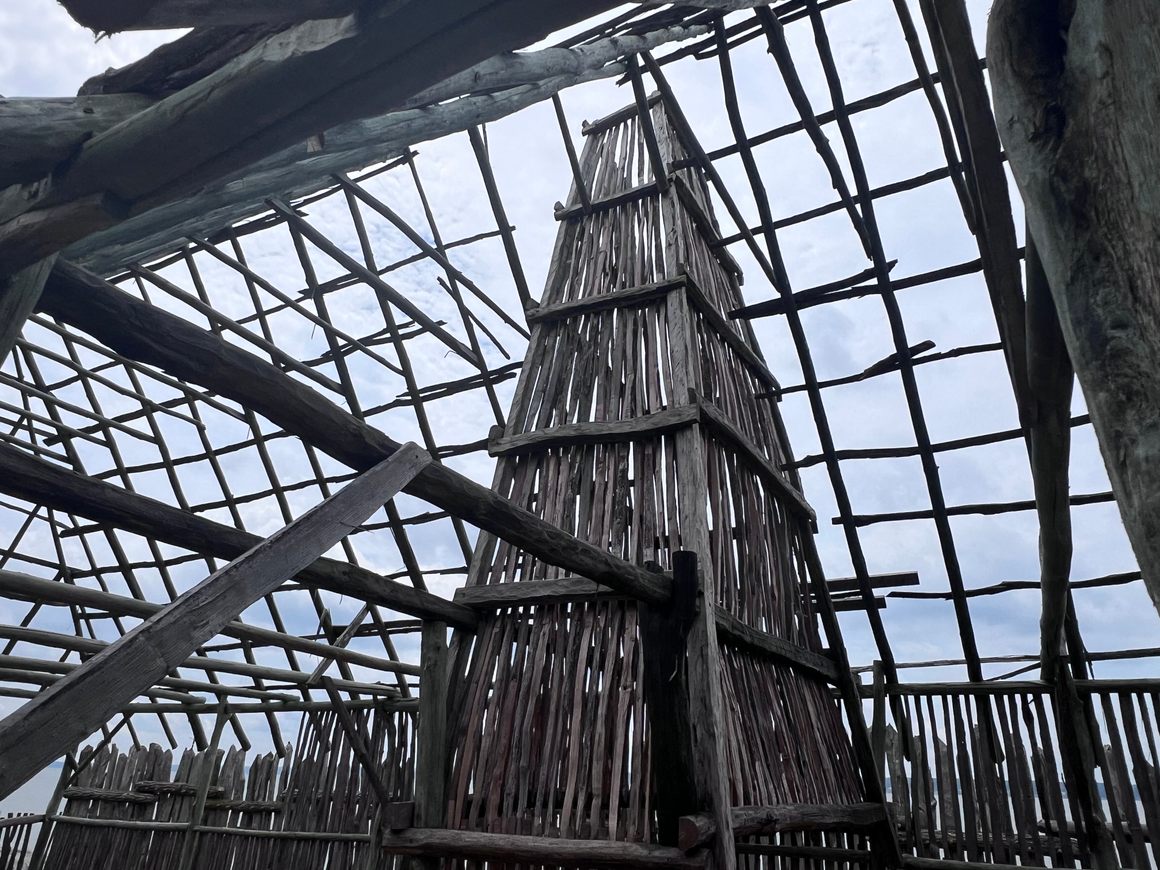
The moment that gets almost everyone is the first look at the James Fort excavation. It isn't behind glass or shrunk into a diorama. You walk up to the edge and look down into open units, grid lines, and the physical traces of the fort the English built in 1607.
Walking tours are led by archaeologists, rangers, or interpreters, and they trace the fort's footprint for you: where buildings stood, which ones have been identified, which are still being dug, and which remain open questions. Our guide talked about what bone analysis reveals about the colonists' diet, which was far more varied (and at times more desperate) than you'd expect, and explained why individual finds matter to the bigger picture.
This is where the textbook version starts to come apart, and as a folklorist, it's my favorite part.
Take the Pocahontas rescue. It comes from John Smith's own later writings, and historians and Powhatan scholars have long questioned whether it happened the way he described, or at all. What's well established is that Pocahontas was a child, probably about ten or eleven, when Smith was captured. The romance that Hollywood built around her doesn't hold up. What does hold up, and what the archaeology shows so well, is that the Powhatan people were running a sophisticated political world and dealing strategically with a group of newcomers who were badly unprepared for where they'd landed.
Afterward, head into the Archaearium, the on-site archaeology museum. It displays objects pulled from the fort, including pottery, tools, and personal belongings of people whose names are mostly lost, and it explains the methods archaeologists use to read them.
Before you leave, take the Island Drive loop. The road winds through marsh and woods along the James River, and it's the best place to picture what the colonists actually faced: swampy ground, disease, brackish water, and land that already belonged to someone else. Most of the early colonists didn't survive their first years here. There's nothing romantic about that. It was survival against terrible odds.
The Glasshouse: Jamestown's First Try at Industry
A short walk from the fort, near the park entrance, is the Jamestown Glasshouse, and it tells a story most people have never heard. Before Virginia bet everything on tobacco, its backers hoped it would become a manufacturing outpost.
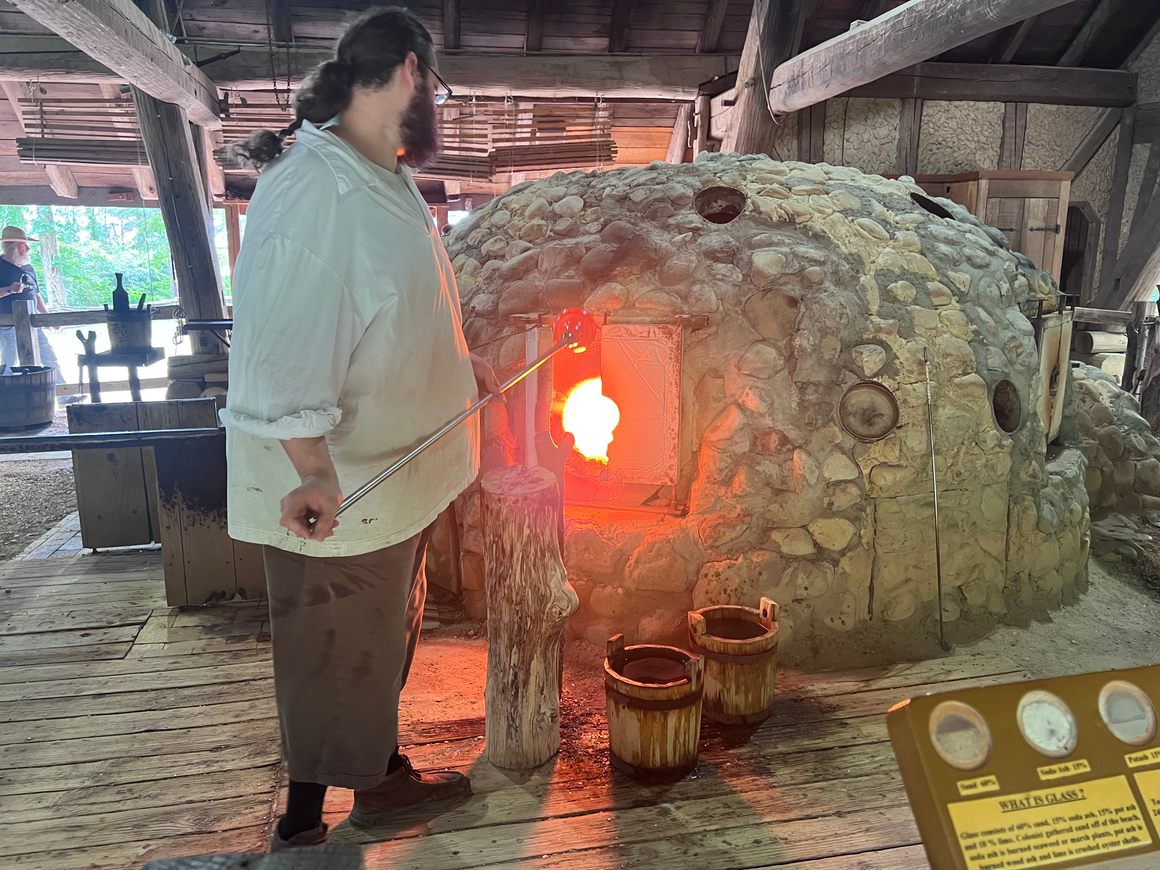
In 1608, skilled glassmakers from continental Europe arrived with the second supply ships, and within months samples of Jamestown glass were on their way back to England. It was among the very first goods manufactured in English America. The venture didn't last, and a later attempt in the 1620s faded too. Tobacco was easier money and needed far less specialized skill. Still, glassmaking holds a real place as one of the colony's earliest industries.
Today, artisans in period clothing work at a reconstructed furnace next to the ruins of the original glasshouse. Watching them gather molten glass at around 2,000 degrees Fahrenheit, blow it, and shape it with hand tools is mesmerizing. The glow, the timing, the sheer skill: it's a centuries-old craft happening right in front of you.
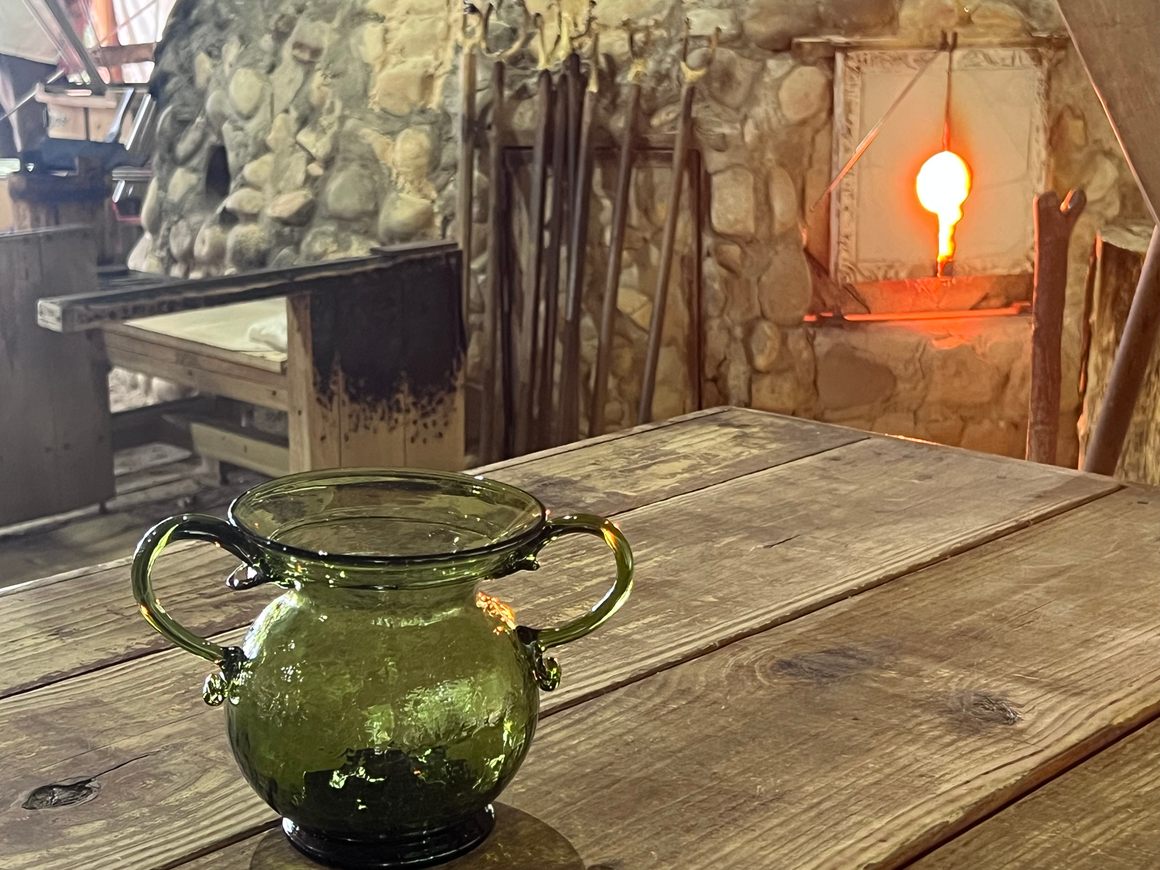
Their work is for sale, including bottles, wine glasses, candleholders, vases, and paperweights, and part of every purchase supports the National Park Service. I love souvenirs like that. You can hold this bit of history, use it, and bring it home, and buying it helps keep the program going.
Jamestown Settlement: Living History Next Door
One thing confuses a lot of visitors, so let me clear it up. Jamestown Settlement and Historic Jamestowne are two different places. They're close together and both are worth your time, but they do different jobs.
Historic Jamestowne is the original site, home to the real fort, the active dig, and the Archaearium. Jamestown Settlement, just up the road, is a living-history museum that uses re-creations, films, and costumed interpreters to tell the wider story of early Virginia. Here's what you'll find there:
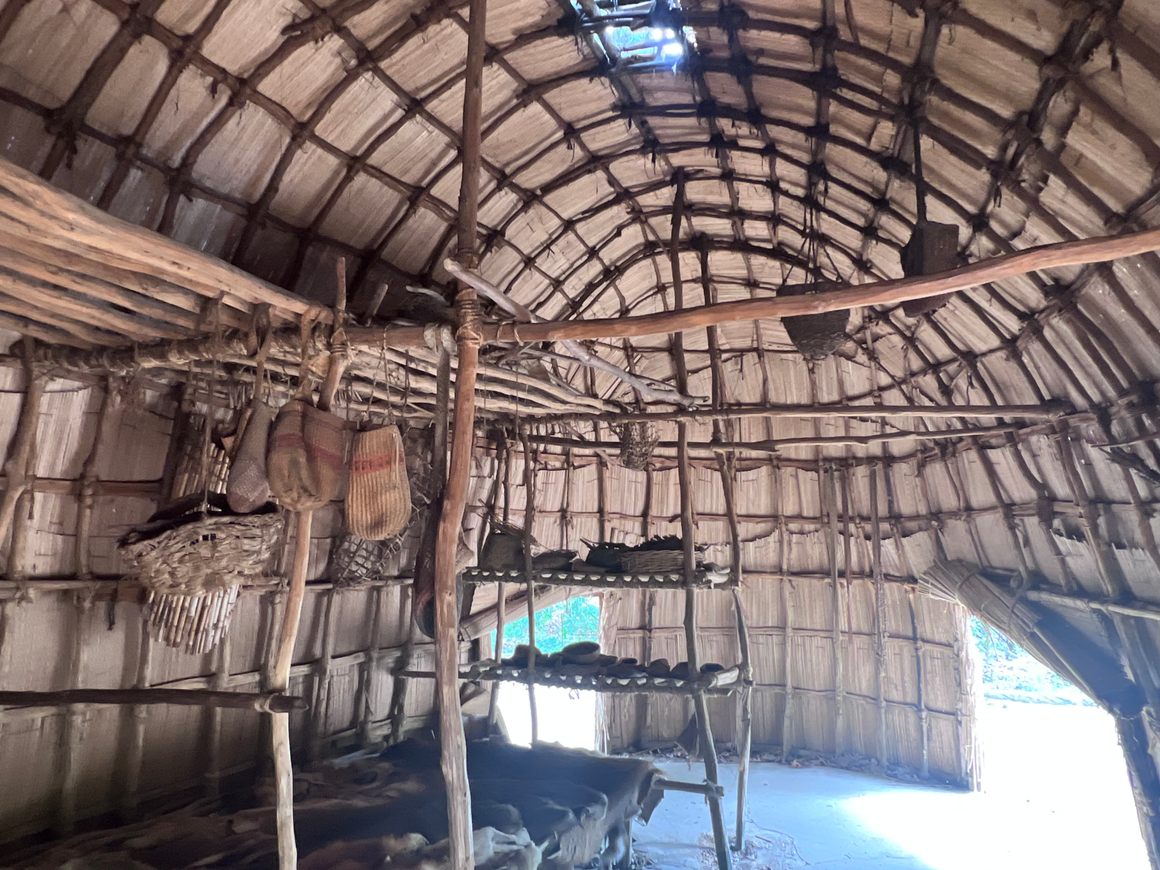
• A Powhatan town. Re-created houses and workspaces show how the Powhatan people lived. The museum presents them as the beginning of the story rather than a footnote, which is both historically accurate and important.
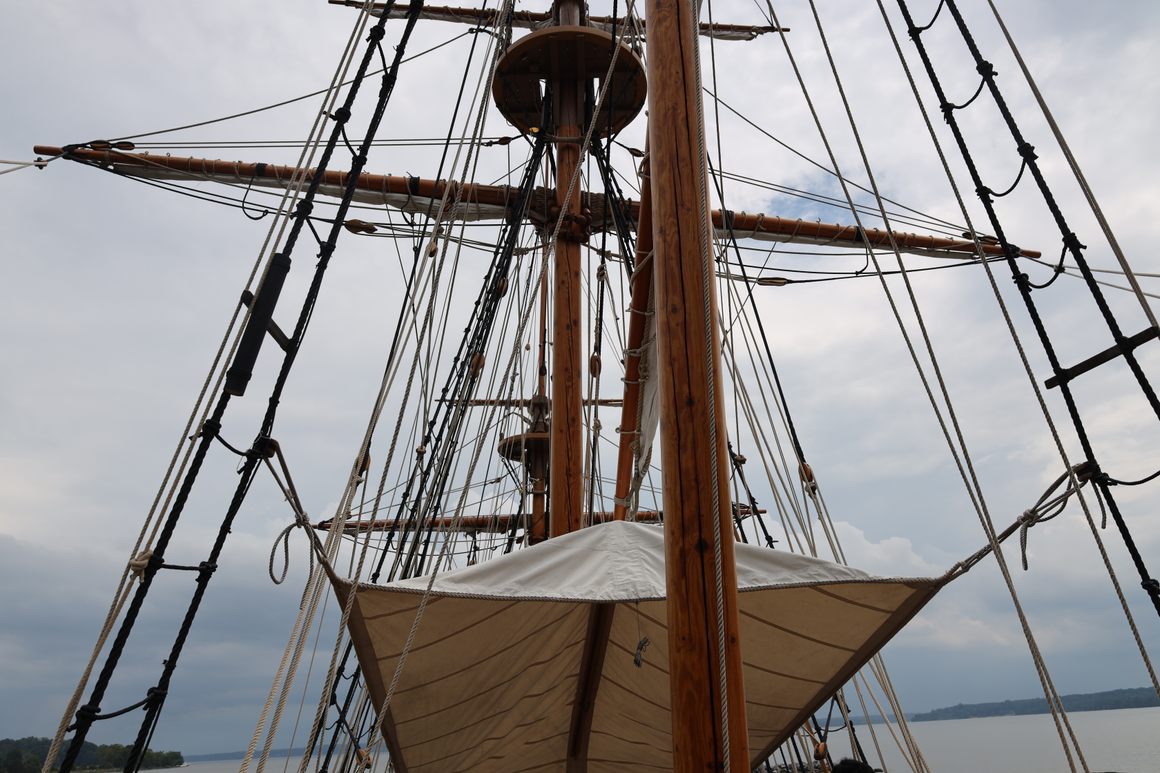
• The three ships. Full-size replicas of the Susan Constant, Godspeed, and Discovery, the ships that brought the colonists in 1607, are docked on the river, and you can climb aboard. Standing on those cramped decks makes the voyage feel very real.
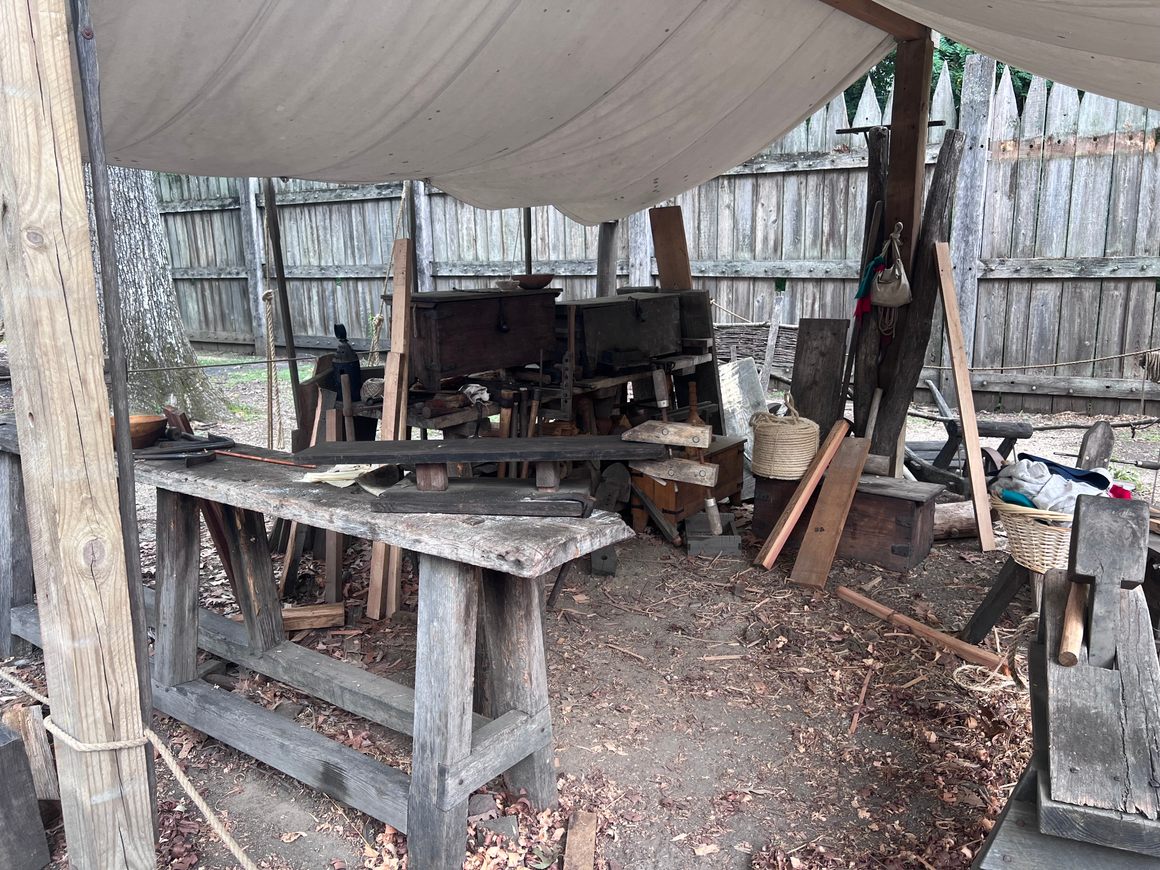
• A re-created fort. A reconstruction of James Fort shows what the settlement may have looked like in its early years. Interpreters demonstrate daily tasks, and the musket and armor demonstrations are a crowd favorite.
• The galleries. Indoors, artifacts and films trace the overlapping worlds of the Powhatan, English, and West Central African peoples, and the exhibits don't shy away from the death toll or the chaos of those first years.
Put the two sites together and you get the full picture: the hard evidence in the ground at Historic Jamestowne and an immersive sense of daily life at the Settlement.
What Jamestown Leaves You With
Standing at the edge of James Fort, I realized how much the version of this history I grew up with had left out. It wasn't exactly wrong, but there were huge gaps.
Here, Pocahontas becomes a real girl with her own life, not a plot device in somebody else's adventure. The colonists stop being heroes or villains and become people scrambling to survive somewhere they didn't understand, among people whose land it was. The Powhatan paramount chiefdom comes into focus as a powerful political entity rather than scenery for European arrival.
Then there's 1619, when the first documented Africans arrived in English Virginia. They were West Central Africans who had been captured and forced onto a slave ship. Their arrival marks an early chapter in the history of slavery in English North America, a system that was then built up, written into law, and normalized over the following decades. Confronting that is part of understanding this place.
That's what a great historic site does. It shows you the evidence, unsettles the stories you were handed, and trusts you to think it through.
Why I Keep Recommending It
A lot of travel writing is about what's beautiful or fun to photograph. Jamestown is both, but that isn't why it matters. It matters because standing where English colonization of North America took root makes you face the uncomfortable parts of how this country began: the real mechanisms, the real people, the tragedies and the complications.
It's also a genuinely great day out. Between the open dig, the glassblowers, and the ships at the Settlement, there's plenty to engage kids and adults alike. You get to learn, explore, and experience a real piece of history for what it actually was: messy, unfinished, and still being uncovered.
I write more about Virginia's colonial history, including Yorktown and Colonial Williamsburg, and about the folklore behind historic places at MaloriesAdventures.com.


