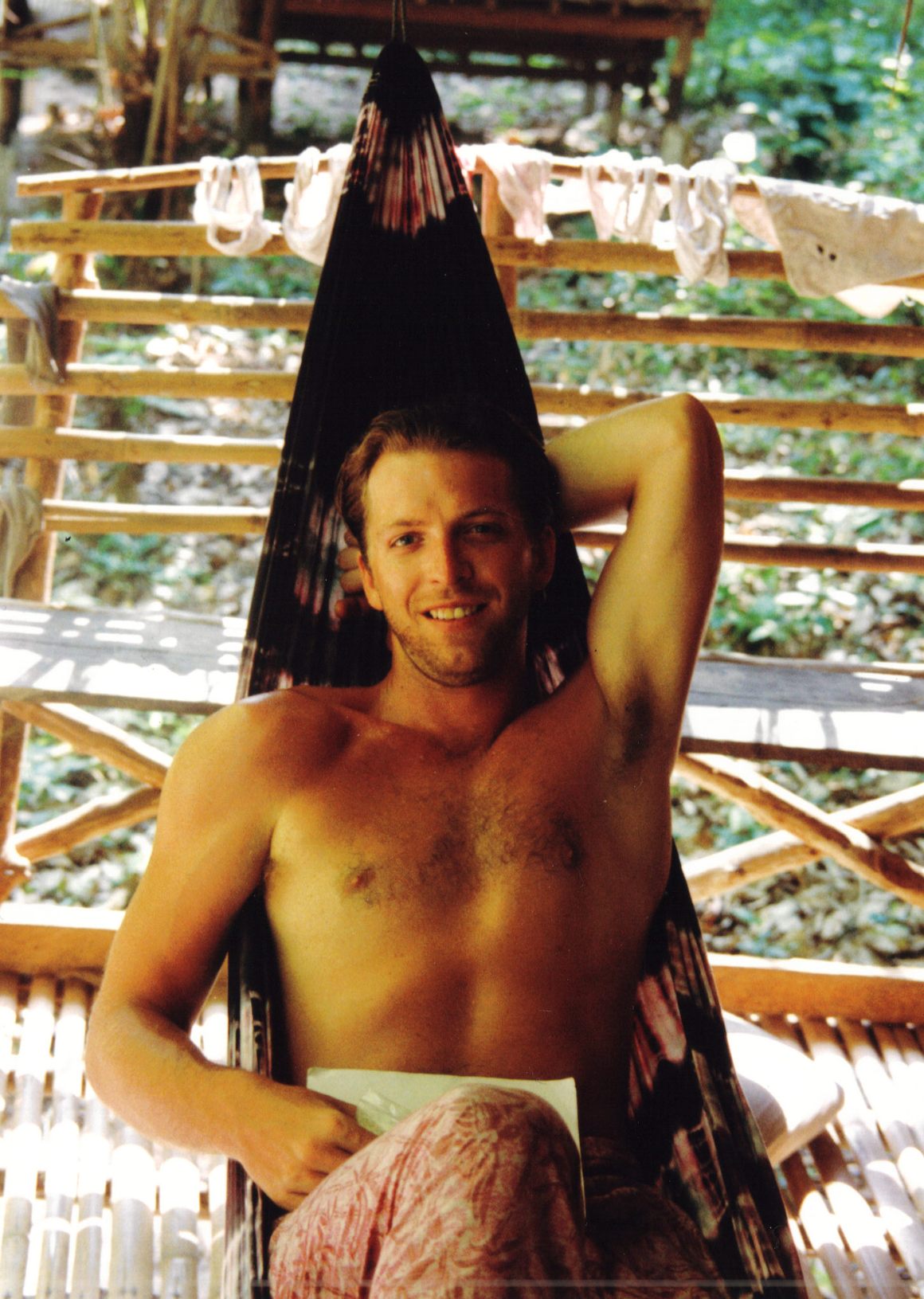
Koh Samui, Thailand (1985) - During my first extended time away from home, I kept on the move. I traveled through forty countries in that first year; my two biggest challenges were staying clothed and fed. Three months in, someone stole the duffle bag with all my clothes, and at about the same time, my money began to run out.
But at twenty-one, I was infatuated with travel and new places and the odd characters I met. In some ways, I was not just emotionally but physically unable to go home, as if my core itself would resist a return to domestic life. Not now, it whispered, you just got started!
I just couldn’t leave the open road—I wouldn’t quit it.
Things slowed down dramatically once I reached Thailand—not that I had a say in it. I got in a motorcycle accident up north, while descending the winding road from the Doi Suthep temple, and was forced to recuperate in a hammock for six weeks while the leg healed.
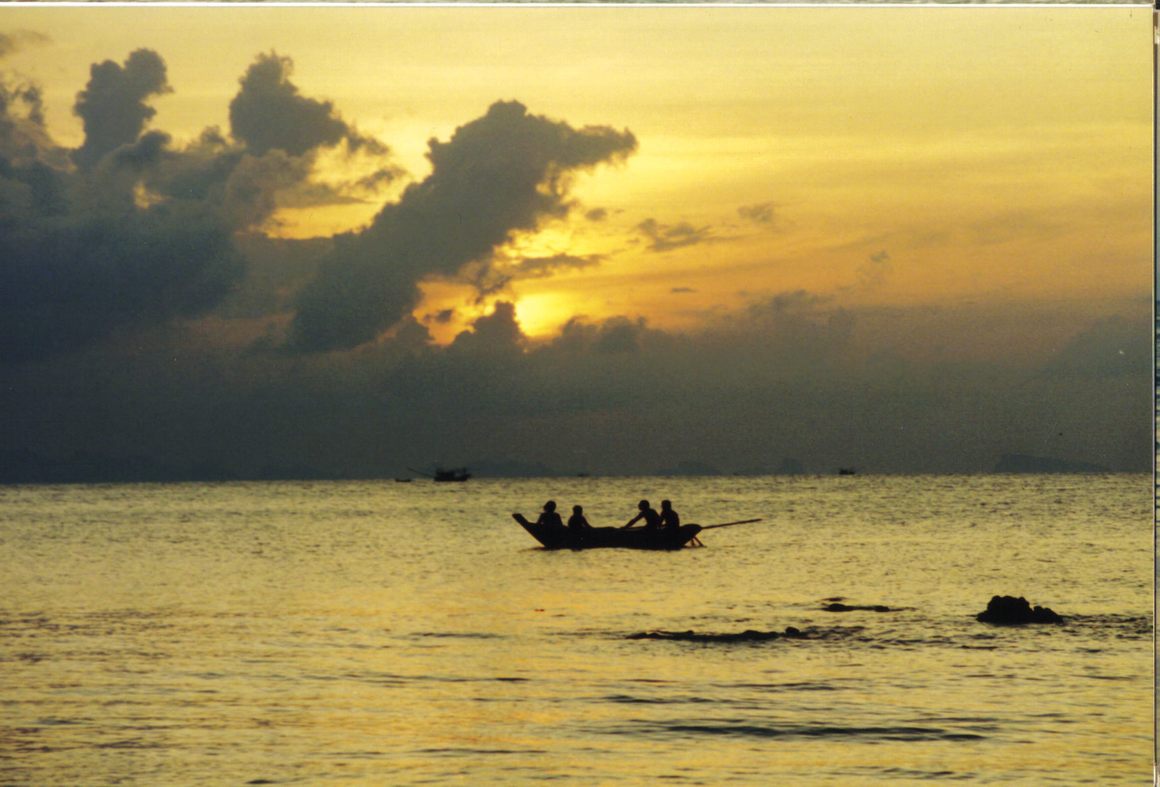
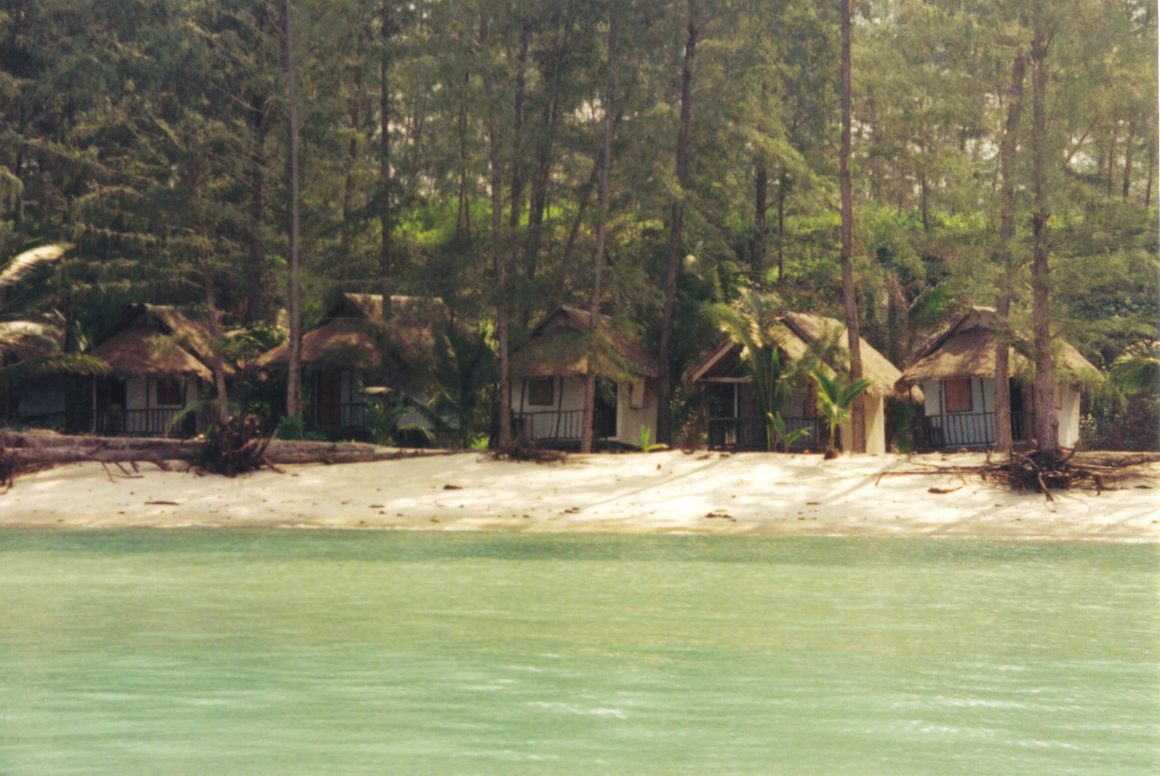
On the island of Koh Samui, in the Gulf of Thailand, I rented a palm-thatched bungalow for two dollars a day. It featured a simple bed made from bamboo and a thin mattress under a worn mosquito net. It had no electricity, but a small porch looked out over the turquoise sea, with two bamboo chairs and a rickety table.
The complex had a half-dozen huts and a small restaurant, run by a nice couple with two young daughters of nine or ten. When I limped into their reception area, they were clearly concerned about the state of my leg. It was raw and healing slowly from ankle to hip, and every time I bent it, which I could not entirely avoid, the skin pulled and stung.
The father—a man named Bon—helped me to my bungalow with paternal care. He removed the table from the porch and set up a hammock for me. He also brought me a collection of dilapidated novels left by other travelers. Half of them were in German or French, but I gladly pulled out two English novels—Papillon and Zen and the Art of Motorcycle Maintenance.
After that, I read a lot and became almost addicted to banana shakes while my body healed.
I watched the sun rise and set. Witnessed the coming and going of the tide. I observed macaque monkeys raiding my neighboring bungalows for food while monitor lizards scurried under my porch. Butterflies fluttered by. Eventually I even bathed in the sea once a day, to help my leg heal.
It would have been paradise except for the gibbon.
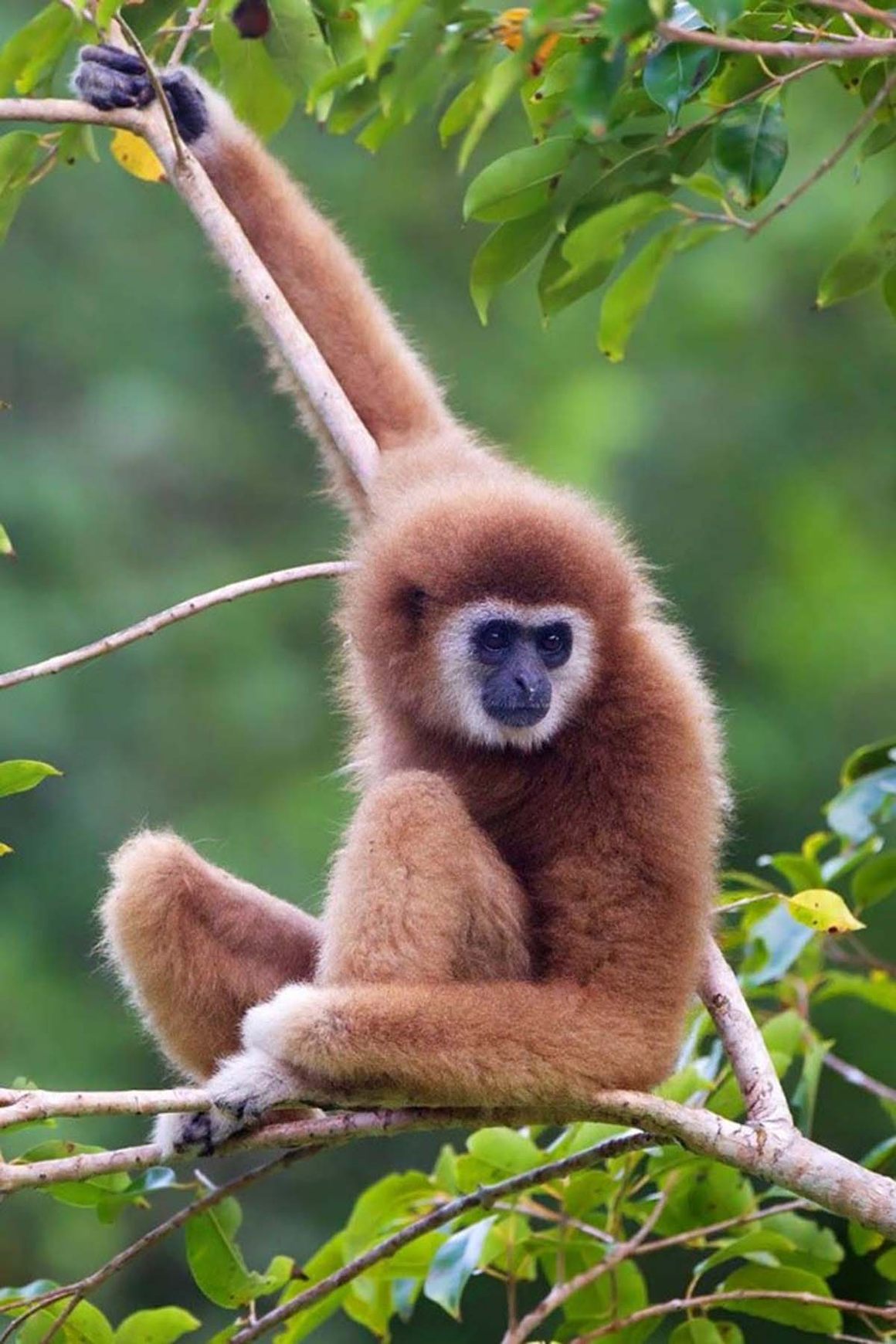
A troop of Lar gibbons (Hylobates lar) inhabited the coconut groves around the bungalow complex. They swooped through the trees in the cool mornings with their whooping calls echoing clearly through the crisp air. These apes are the fastest and most agile of all tree-dwelling, non-flying mammals. Their feet and hands are elongated, and their wrists are designed with a ball-and-socket joint that allows them to use very little energy when swinging from limb to limb.
When I first arrived, I was enchanted by them, and as I gently swayed in my hammock, I listened to them communicate with one another. You can hear them from over a half mile away, their voices clear and powerful.
Gibbons are social animals who mate for life. Couples will vocalize together, singing duets that are occasionally joined by their young. Males boast ownership of their territories through song and sing solos in the hopes of attracting a mate. Each song is so unique that it can be used to identify the area from which the gibbon comes.
They are the only apes in Thailand. There used to be orangutans, but agriculture, logging and palm oil plantations destroyed much of their habitat.
One morning, after I had been on the island for about a week, I realized that I hadn’t heard the gibbons. While I listened intently, my eyes drifted to the restaurant. There, in the shade of a large banyan tree, I noticed a lone gibbon sitting on the ground.
I grabbed my camera, to which I’d already affixed the zoom lens, and focused on the small ape. He had tan fur; the tips highlighted gold when he leaned forward into a shaft of morning light. His face was dark, with two large, black eyes. Of course, he was tailless—apes don’t have tails—but other than that, he looked more like a monkey than an ape.
I smiled, excited to see a gibbon only thirty feet away. But then I spied the rope tied to a collar around his neck.
Apparently, someone had captured him and left him there, probably as a lure for travelers passing by the complex.
I took my finger off the shutter-release button and lowered the camera. I felt sick to my stomach. My own freedom was my most valued possession. How could they keep such a beautiful animal captive?
I picked up my camera again and focused on the gibbon’s face. But when I looked in that gibbon’s eyes, I saw worry and sadness as clearly as if I was looking at someone I knew well.
I was lost in thought about what was going through the captive gibbon´s mind when Franco showed up on my porch.
Franco was from Mexico. He lived in the bungalow next door.
He looked at the gibbon. “No es bueno,” he said and shook his head.
Suddenly we heard another gibbon call out. The call carried a note of sadness.
The captive gibbon looked in that direction anxiously. He tried to inhale a gulp of air and inflate his throat sac, but the collar impeded him.
He exhaled, unable to reply to the call.
Franco stormed over to the restaurant. He gestured at one of the young girls and said, “Go get Bon. I need to talk to your papa.”
Over the next few days, the ape was the focus of the many conversations between my neighbors—other travelers—and the owners of the complex. Bon considered the gibbon good luck. He said he would never hurt him, and someday he would most definitely set it free.
But not now.
We liked Bon. None of the travelers wanted to offend him, but we all agreed the ape must be set free. I’d started reading Papillon, an autobiographical novel written by Henri Charrière about his time in a penal colony in French Guiana. Charrière spent most of his sentence in solitary confinement, planning his escapes.
As I read, I felt the gibbon’s eyes on me, watching curiously from the shadows. He reminded me of how the prisoners in Papillion watched the guards, and I eventually began to call the ape Papillion. Sometimes he walked around bipedally like a human, with his arms raised over his head, but mostly he sat in the tree and stared off into nowhere.
I felt that my injuries and lack of mobility, and the rope and collar tied to his neck, united us.
We were doing time together. From my hammock I glared at the rope that ran from Papillion’s collar to the tree. The banyan was huge—about ten feet wide with roots sprawling everywhere—and the rope was tied off to a lower root.
I decided that as soon as I was able to limp to the tree, I’d either untie the rope or cut it and set Papillion free. That thought got me through the next few days.
But Bon must have anticipated someone doing exactly that because I woke one morning to see that the far end of the rope had been retied high up in the tree.
Daily, Franco confronted Bon, and every day he was given excuses.
“I need this gibbon here to scare the snakes away,” Bon said. The restaurant had a trash pile behind it, and that attracted rats, and they, in turn, attracted the snakes.
Over the coming days I did hear Papillion shriek when he saw a snake, but he only scampered up the tree—he had no intention of going near the serpent.
Franco noticed this too and argued the point determinedly.
I thought of my own freedom and wondered how I would deal with captivity. But I missed my family terribly, and I wondered whether the gibbon missed his family as well – they seemed to hover around us, calling out but never venturing within sight.
I knew gibbons formed long-term bonds, and I pondered what he yearned for more, his freedom or his mate. The more I thought about it, the more I decided that both were intertwined.
Finally, I was mended enough to have meals in the restaurant.
I joined Franco at a table, and before long, Bon approached me with a wide smile. “You are getting better,” he said.
I smiled. “I am.”
“Is there anything you need?” asked Bon.
I gave Franco a grin, nodded at the gibbon, and said, “Let the ape go.”
Bon sighed. “You too?” he asked.
And after I nodded again, he said, “When the gibbons are around, they keep the macaques away—they are dirty animals that steal food from the tables.”
Franco nodded. “Then feed him a few bananas when he comes around. If he likes you, he will stay. And then he can help chase away the monkeys without being a prisoner.”
Bon stared at us for a long moment, then sighed and nodded his head.
He stepped into the kitchen and grabbed a banana, then stood by the base of the tree.
He whistled, and Papillon timidly dropped to the ground, one arm extended toward the fruit.
As the gibbon hesitantly leaned toward the banana, Bon quickly reached forward and flipped open a small metal clasp on the collar. The collar dropped to the ground with a clink.
Papillion stepped back, the banana forgotten, and in a flash, he was up the tree. A second later he was gone, swinging silently through the canopy.
The next day’s sunrise found me sitting in a chair on my porch. Suddenly the cool dawn silence was broken by a gibbon’s call, and soon that was answered by another.
One of those voices I hadn’t heard in a while. I smiled as I realized it was Papillion’s.
Papillion was free at last! Just like in the novel, I thought.
I watched the treetops until I spotted Papillion perched in the upper branches of a coconut tree.
I suddenly realized that in all the time I’d been watching him, I’d never taken his photo.
I zoomed in with my camera, but even with the zoom, the gibbon only showed up as a small dot. I took the photo anyway, my first one of an ape.
“Go live it up,” I said with a smile as he swooped away.