


These Biscuits Reach All the Way Up to Heaven
The angel biscuits at this Alabama restaurant are a chef’s way of paying tribute to his grandmothers.


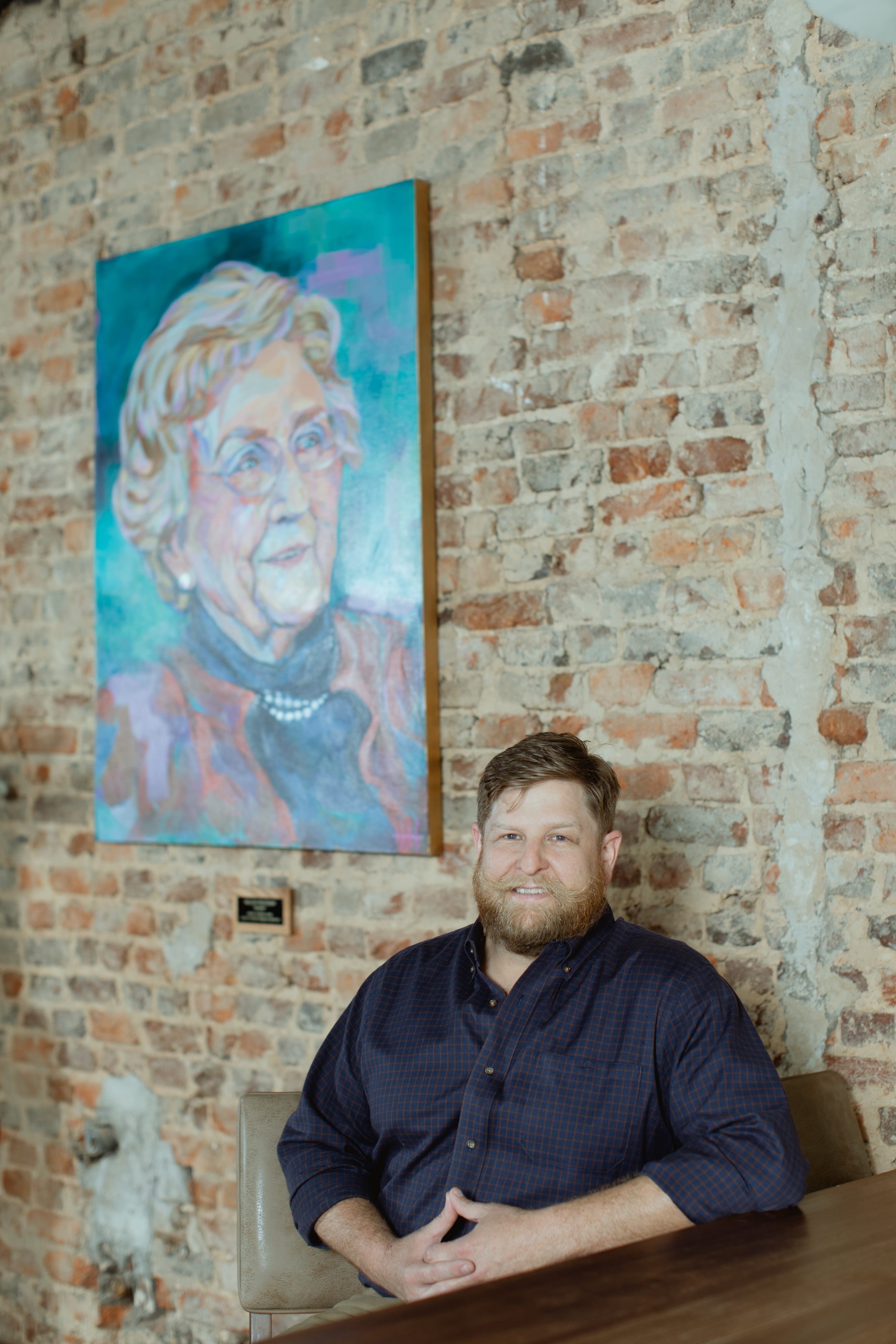
“Biscuits are the bread of the South,” says the Alabama-born chef Rob McDaniel. “They’re not something just for breakfast.” In a region where opinions about who bakes the best from scratch can get heated, McDaniel pays homage to his grandmothers by serving hot biscuits fresh out of the oven with whipped cane syrup butter at Helen, his family-style restaurant in Birmingham.
“Everybody’s got her own method,” he says. “Both of my grandmothers made biscuits, but very differently.” McDaniel explains that the one who lived out in the country and got by on a small budget, favored buttermilk and lard, while his other grandmother used heavy whipping cream in her dough. With all due respect to the women in his family, McDaniel settled on another traditional recipe with a contentious history.
The first biscuits introduced to the South had little resemblance to their light, fluffy descendants, smothered in sausage gravy or stuffed with country ham. Flavorless hardtack, consisting of flour, water and salt, prepared months in advance of a voyage, arrived in the colonies with British seamen and Scottish merchants during the 18th century. Another century would pass before they began to resemble anything more digestible than a weevil-ridden “tooth duller.” Most Southern cooks subsequently improved the leavening of their biscuits by whacking the dough with a rolling pin or mallet to give them a modest rise. (Hence the term “beaten” biscuits.)
Winter wheat harvests began to yield softer flours, and farmwives with access to fresh milk and lard, mixed and then shaped biscuits by hand to bake over hot coals. The first spring-loaded biscuit cutter was invented by the Black caterer Alexander P. Ashbourne, born into slavery around 1820; his patented tool would go on to revolutionize production in commercial kitchens, and eventually make biscuits a staple menu item at Southern fried chicken chains. But when baking soda and baking powder were introduced in 1846 and 1856, respectively, this gave rise to angels.
Angel biscuits are the embodiment of delicious overkill. Two of the South’s iconic flour brands—White Lily and Martha White—claim their recipe testers created the original recipe. (Fun fact: in the 1940s Martha White sponsored a Nashville radio show, “Martha White Biscuit Time,” which featured the country performer Milton Estes and his band, the Musical Millers.) Anne Byrn, author of Baking in the American South, recently wrote about angel biscuits’ connection to an old-fashioned Alabama recipe called riz biscuits. In the headnote for her recipe, Byrn also calls them bride’s biscuits, and suggests the shaped and cut dough is suited to freeze ahead of time for parties. (Southerners do like to entertain.)
McDaniel credits his version to Southern Living’s recipe developer, Pam Carter Lolley. “The magazine was a mainstay at our house, with lots of dog-eared recipes,” he says. “I adapted her recipe a little bit, tweaked the way we fold and work the dough, but not a lot else has changed.” He prefers White Lily flour. “Being in the South, I didn’t know what King Arthur was until I went to culinary school in Vermont.”
So what really makes this biscuit stand out? McDaniel’s dough rises heavenward on a trifecta of leavening agents: baking soda and baking powder, supercharged with active dry yeast. There’s a hint of sweetness from sugar, and tang from buttermilk, resulting in a crossover biscuit that might taste a bit like a Parker House roll. Home cooks might bake them clustered in a cast iron skillet, but at Helen, McDaniel fires them on quarter-sheet pans. “We make them in small batches because anything larger doesn’t hold as well. On a half sheet, the first biscuit is not the same as the last biscuit. The most we’ve sold in a day is 120 orders.”
Other Alabama restaurants with notable biscuits in their ovens, albeit not necessarily angels, include Big Bad Breakfast in Tuscaloosa and Maple Street Biscuit in Mobile. For their scratch organic biscuits, the Alabama Biscuit Company skews organic, with stone-milled, sprouted spelt flour and butter from grass-fed cows—try them drizzled with their own house-ground pecan butter and local honey.
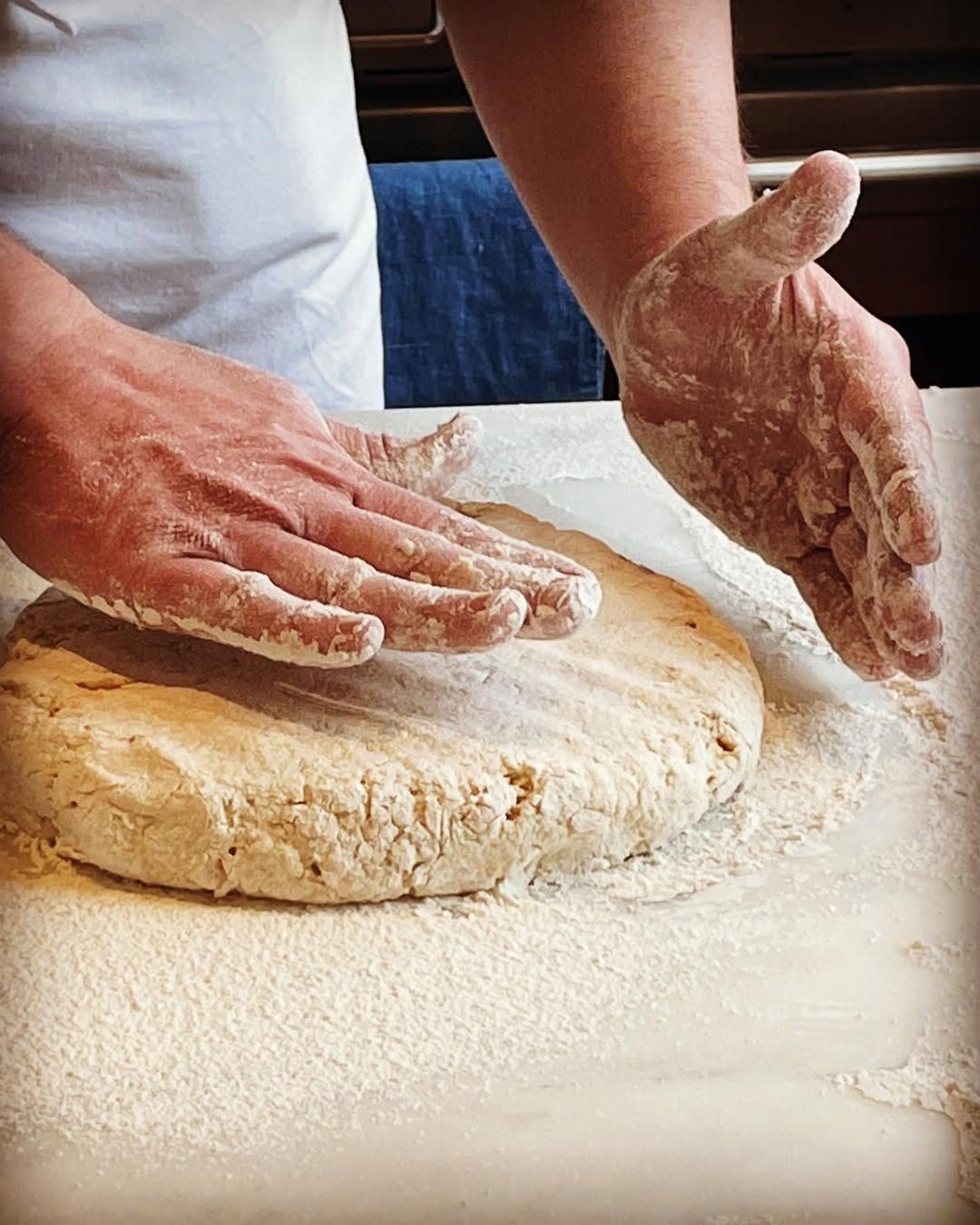
However, no other biscuits are going to taste like the ones baked in the kitchen of an 1858 farmhouse, way out in rural Marion, Alabama, during chef and author Scott Peacock’s Biscuit Experience. “I call it an experience for a reason, because it’s also about place,” he says. “Marion is an hour from the nearest interstate. The journey to get here is part of the preparation.” Peacock invites “Biscuiteers” to attend half-day workshops that explore the fine art of traditional biscuits, using heirloom ingredients like White Lammas flour, ground from one of the original biscuit winter-wheat grains, which he has been working to restore to the Alabama table.
“There was a value and prestige to a good biscuit maker,” says Peacock. “And because it was so quickly made, that was a huge part of its popularity. Really life changing for home cooks who had to turn out something quickly in a wood-fired stove, while holding things together, as husbands and sons were dying in the war.” (He means the Civil War.)

Peacock’s own mother apparently didn’t measure up to his father’s expectations when they first married. “She tried different recipes, to get his approval, which was a trap. It was a Southern marriage, for god’s sakes. One biscuit my mother could make, that he found acceptable, was angel biscuits.”
Peacock admits he is something of a purist, and prefers a straightforward, crusty buttermilk biscuit. He also confesses a love of leaf lard. “I don’t think there is one true biscuit. Rather, I’m in service to the tradition, the craft, and the practice of it. The angel biscuit has its place though. When I encounter one in the wild, I’m reminded again that it’s worthwhile.”

Angel Biscuits
Helen Restaurant, adapted from Pam Lolley in Southern Living
Ingredients
- ½ cup of warm water
- 2 ¼ teaspoons active dry yeast
- 3 ¼ tablespoons granulated sugar
- 5 cups all-purpose flour
- 1 tablespoon baking powder
- 1 teaspoon baking soda
- ½ cup unsalted butter
- ½ cup shortening
- ¼ cup melted butter
- 2 cups buttermilk
Instructions
-
Stir the yeast and 1 teaspoon sugar in the warm water. Let stand for five minutes.
-
In a large bowl, combine all dry ingredients, including remaining sugar. Cut in the butter and shortening with two forks or a pastry blender until texture resembles coarse crumbs.
-
Add yeast mixture and buttermilk to flour mixture. Stir until dry ingredients are moistened. Cover with plastic wrap and chill at least two hours.
-
Preheat oven to 400 degrees. Turn dough out onto a lightly floured surface and knead three to four times. Gently roll into a 1/2-inch-thick circle and then fold in half. Repeat rolling to 1/2-inch-thickness and cut with 2-inch round cutter. Place rounds with sides touching in a 10- to 12-inch cast-iron skillet. Brush biscuits with two tablespoons melted butter.
- Bake in preheated oven until golden, 15 to 20 minutes. Brush baked biscuits with remaining melted butter.
Sponsored by Sweet Home Alabama. Click www.alabama.travel to learn more


Follow us on Twitter to get the latest on the world's hidden wonders.
Like us on Facebook to get the latest on the world's hidden wonders.
Follow us on Twitter Like us on Facebook