
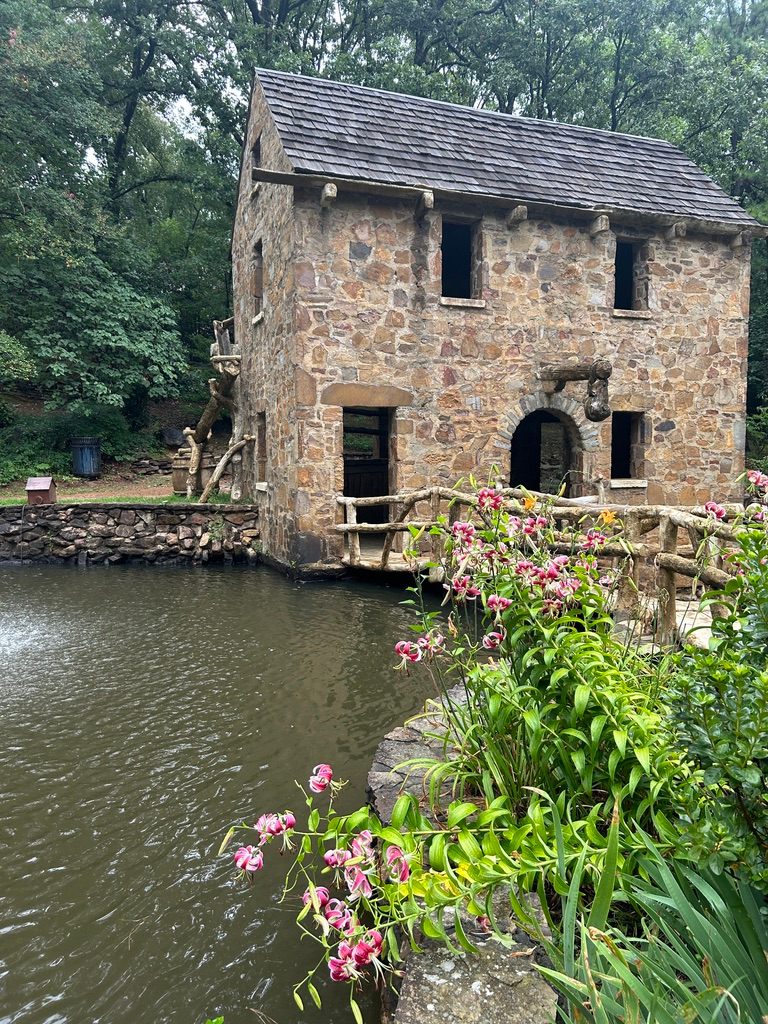
Sometimes, when feeling a little restless, a little bored, and a little unsure of where exactly to go or what to do, I like to revisit a favorite spot. One of these places is TR Pugh Memorial Park in North Little Rock, AR. It's pretty, it's quiet, it's usually not too crowded, and it's easy to get to. It's historic too, but I recently realized that I don't know any of the history. Yes, I'm aware that it's the last known filming location of the 1939 classic Gone With the Wind. Everybody knows that. After a deep dive, I found out a lot more than I had previously known. Let's go on a little journey.
In 1931, neighborhood developer Justin Matthews had a grand idea for a new park. He wanted to honor the memory of Arkansas pioneers, and the idea for an old grist mill replica was born. The mill itself was finished in 1933. And yes, it's supposed to look abandoned. The idea is that the old equipment has fallen away but the building itself still stands, leaking just enough water to lazily turn the wheel. Matthews called upon Frank Carmean to design the basics of the building. While traveling in search of inspiration, our friend Frank stumbled upon Mexian artist Dionico Roriguez. More on him later. Though the building itself is a replica, there are several authentic historic elements adding ambiance to the park: The small 1828 grist mill located on the first floor was owned and donated by the Cagel family of pope county; two large mill rocks used for seating date to 1823 an 1840; the building's cornerstone came from the plantation of Tom Knoble, grandfather of Tom Pugh for whom the park is named; and three sections of hexagonal wrought iron shaft cut from a passenger steamboat.
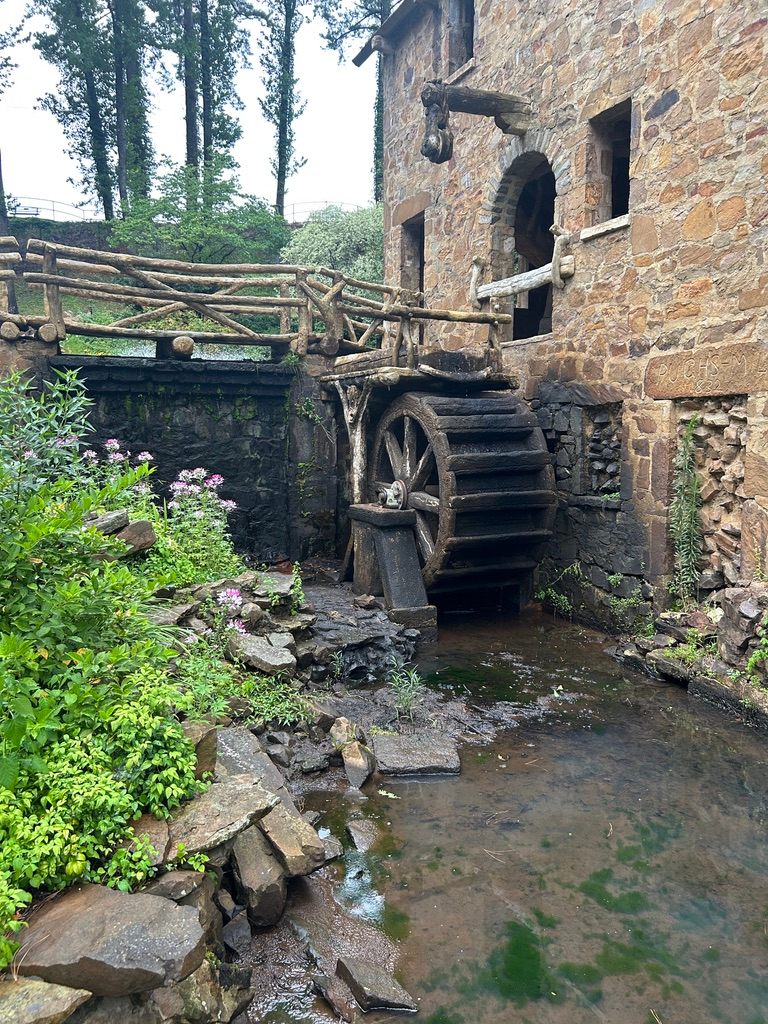
The craftsmanship of the mill and the surrounding park is remarkable. Dionico Rodriguez sculpted details from concrete made to look like wood, iron, or stone. In fact, his work was so detailed that exact species of trees can be identified. Rodriguez worked without any plans and was incredibly secretive regarding his technique. He would mix his products in the trunk of his car so that he could quickly slam it shut if anyone looked too closely. He would peel off the labels on jars and break them before disposal. However, we do have some basic information on how the sculptures and pieces were created. Forms were made of various construction materials, wire mesh, and reinforcing bars. The reinforcements were not welded, but tied with wire. Rodriguez's assistants would apply rouch coats of concrete over the forms, and once dried, Rodriguez would apply and sculp the final surface coat of Portland cement. In 1991 and 2024, the Old Mill would need some renovations. The craftsmanship was kept in the family, completed by Carlos Cortes. Cortes is the great nephew of Dionico Rodriguez and the son of his assistant Maximo Cortes.
Of course, that brings us to The Old Mill's claim to fame: Gone with the Wind. Why did David Selznick choose this location? Nobody knows. The Old Mill was honored on the 50th anniversary of the film and was featured on a commemerative stamp to celebrate the occasion. The park has also received visits from stars of the film throughout the years.
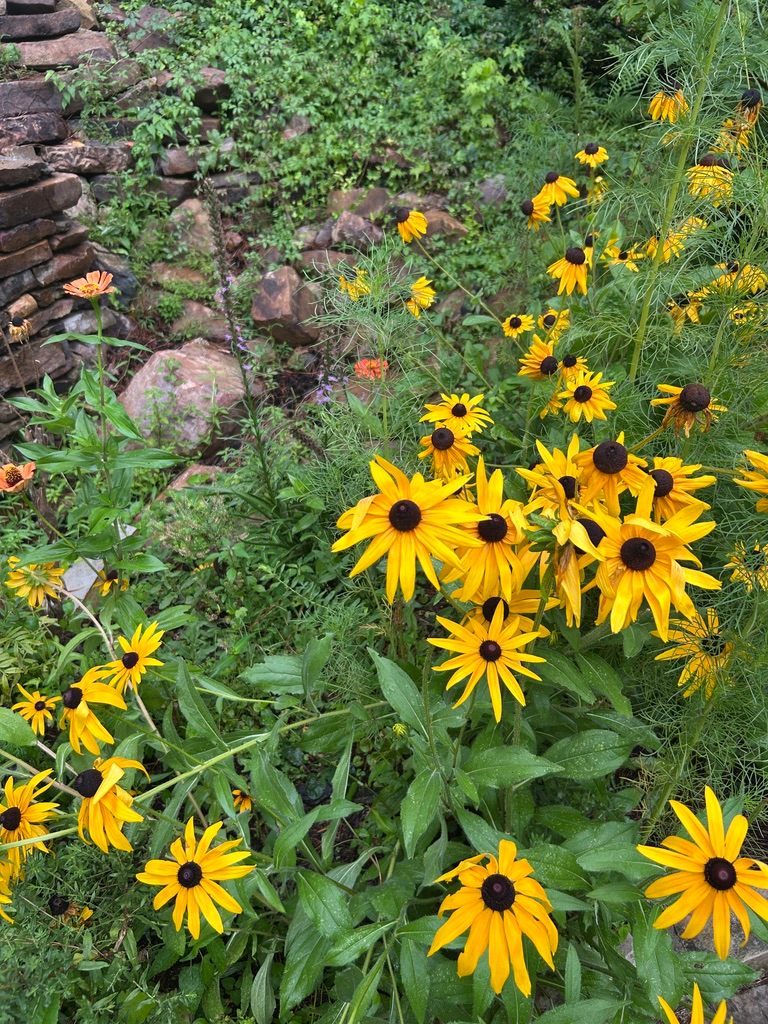
Finally, a little recent (ish) history. TR Pugh Memorial Park was donated to the City of North Little Rock in 1976, making this year the 50th anniversary. In 1986, the Old Mill was placed on the national Register of Historic Places. The park itself is full of native plants and signs identifying them, as well as several animals. Commonly seen are turtles, ducks, and other bird species.
The park remains a super popular place for weddings, portrait photography, and visitors looking for a peaceful walk or a quiet place to enjoy nature. It sees over 200 weddings and over 100,000 visitors each year. I'm happy to be just one of them!
