When Teddy Roosevelt and the City of Buffalo Met at the Crossroads of History
America’s modern era began with a small ceremony in a Buffalo home.


Since the U.S. capital first moved from Philadelphia in 1800, only four presidents have been sworn in outside of Washington, D.C. Chester A. Arthur and Calvin Coolidge took the oath of office at their family homes after their predecessors died. Lyndon Johnson was famously sworn in aboard Air Force One after John F. Kennedy’s assassination. And Theodore Roosevelt, who at 42 is the youngest man ever to assume the office of the presidency, did so in September 1901 at a private residence in Buffalo, New York.
The idea of Roosevelt taking the oath in New York might seem logical: he was, after all, the Manhattan-born scion of a society family and had previously served as governor of the state. But the reason for the location was not to celebrate a native son—Roosevelt took office in Buffalo because that was where his predecessor, President William McKinley, had just died after being shot by an assassin.
Roosevelt Opens the Exposition
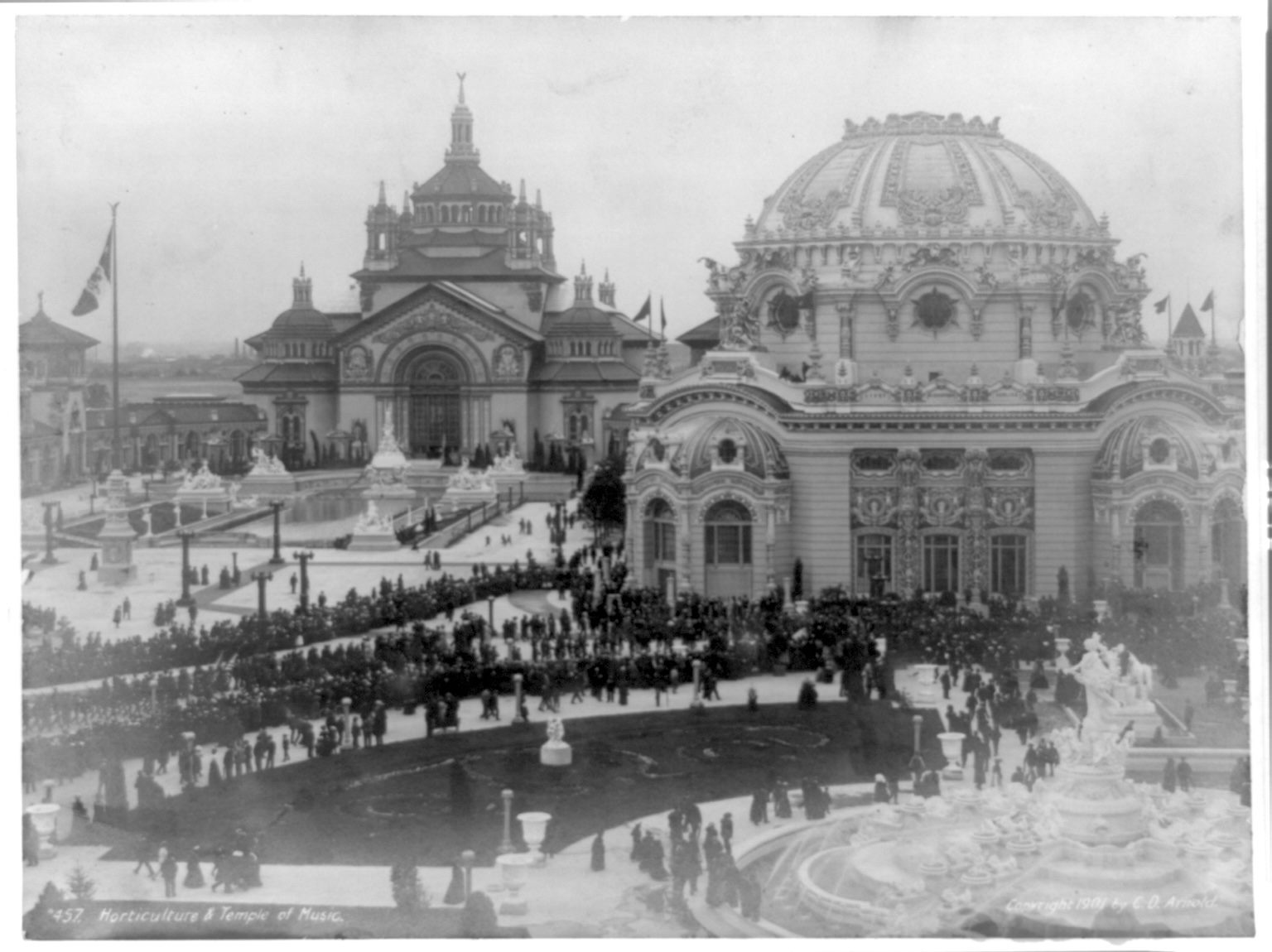
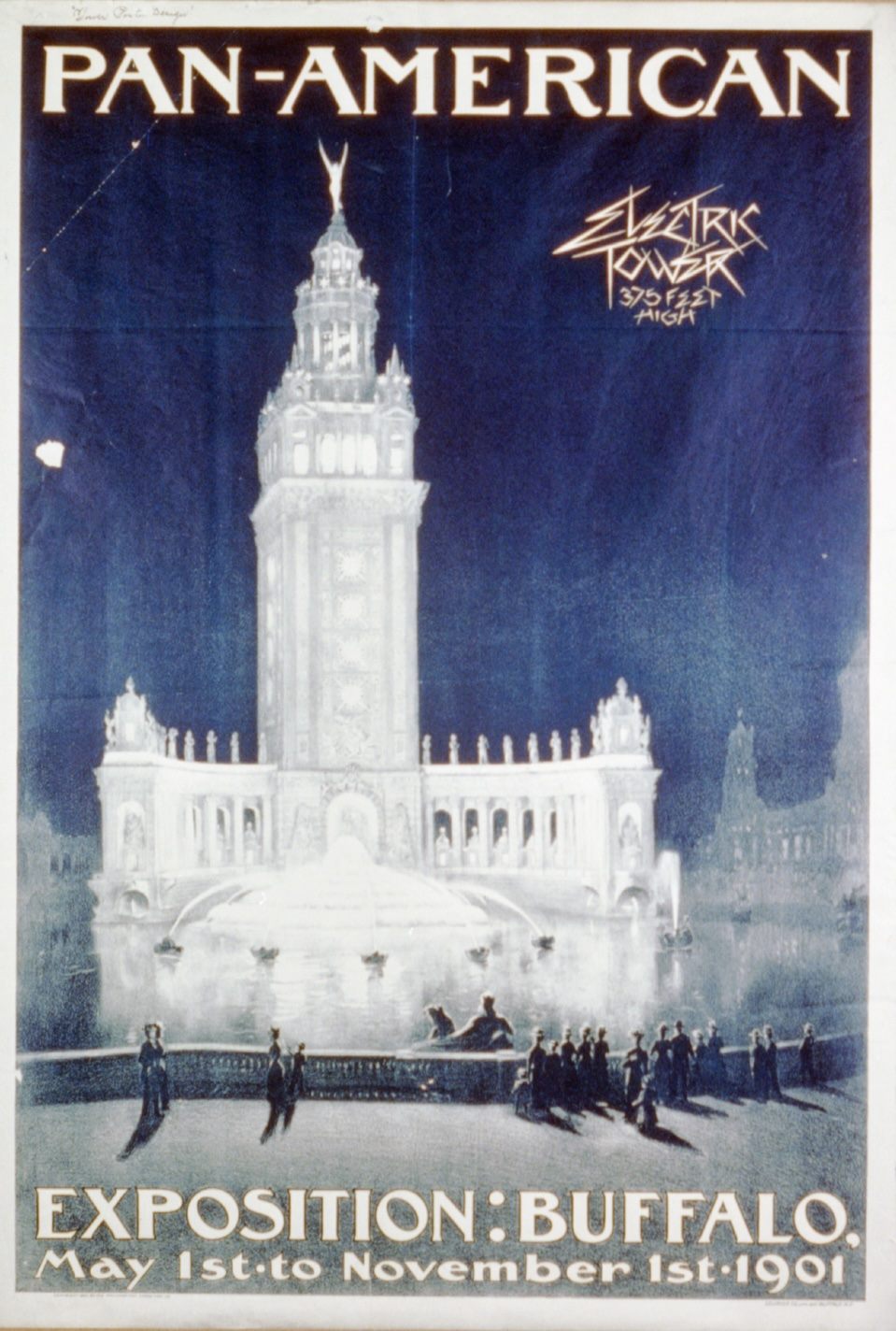
Roosevelt had first visited Buffalo in May 1901, to open the Pan-American Exposition, a six-month-long world’s fair marking the progress humanity had made over the previous century.
The vice president toured the 350-acre fairground, which included a fantastically illuminated electric tower rising at the center of a midway, with exhibits from many nations. Another popular display was a wild west show that featured a staged cavalry fight and an appearance by Geronimo, the aging Apache warrior. Over its six-month run, more than eight million people from all over the world visited.
McKinley at the Exposition, and the Assassination
Back in Washington, D.C., Roosevelt’s raves about the fair spurred McKinley, who loved a good exposition, to schedule his own late-summer visit. The most popular attractions and exhibits had received a lot of media coverage by the time the McKinleys arrived on September 4, 1901. The president spent his first full day in Buffalo fulfilling official obligations: touring the attractions, reviewing the troops, lunching with dignitaries, and making speeches. The next morning, Friday, President McKinley went to see Niagara Falls, 25 miles north of Buffalo. (Because power generated by the falls allowed Buffalo to be an early city with electric streetlights, streetcars, and residential electricity, Niagara Falls represented the kind of progress being celebrated.)
The president and his entourage returned to the fairgrounds in the late afternoon for a public appearance at the Temple of Music. Just minutes into the event, as McKinley met members of the public in a reception line, a 28-year-old anarchist, Leon Czolgosz, pulled out a gun and shot the president twice in the chest and abdomen. The president was taken to a hospital on the fairgrounds and Czolgosz was beaten by the crowd before being taken into police custody.
At that moment, Vice President Roosevelt was taking part in a Vermont fishing and wildlife event on a private island in Lake Champlain, when the news of the shooting arrived. He immediately left the island for Burlington, where he boarded a special train to Buffalo, arriving in the city on Saturday afternoon. He was met by a friend, Ansley Wilcox, who offered to put him up at his home. The president’s cabinet had all rushed to the city to keep vigil but, by Tuesday, as the president’s condition appeared to improve, it was decided that, for the sake of appearances, they should all return to their normal activities. Most went back to Washington, while Roosevelt left for a previously planned family vacation in the Adirondacks.
The Summons Back to Buffalo and the Inauguration
After two more days of gradual recovery, the president’s health took a bad turn. His less-than-ideal initial treatment (mirrors had been used in the operating room to amplify the dim lighting and penicillin would not be discovered for another 27 years) resulted in a rapidly worsening gangrene infection.
In the middle of the night on Thursday, Ansley Wilcox was awakened for his help in contacting Roosevelt at his remote camp in the Adirondacks. Wilcox was finally able to get word to a local guide, who climbed Mount Marcy on Friday to find Roosevelt. The vice president descended immediately and left by wagon late in the night. After changing horses three times over the rough six-hour journey, TR and his guide finally reached the nearest train station around 5 a.m. on Saturday. When his train arrived in Buffalo at 1:30 p.m., McKinley had been dead for almost 12 hours.
The long, anxious hours of travel had left Roosevelt tired, rumpled, and hungry, so he returned to the Wilcox mansion first. After lunch, he borrowed clothes from Wilcox and went to pay his respects to the McKinley family. Upon returning to the Wilcox house at 3 p.m., Roosevelt was joined by six members of McKinley’s cabinet.
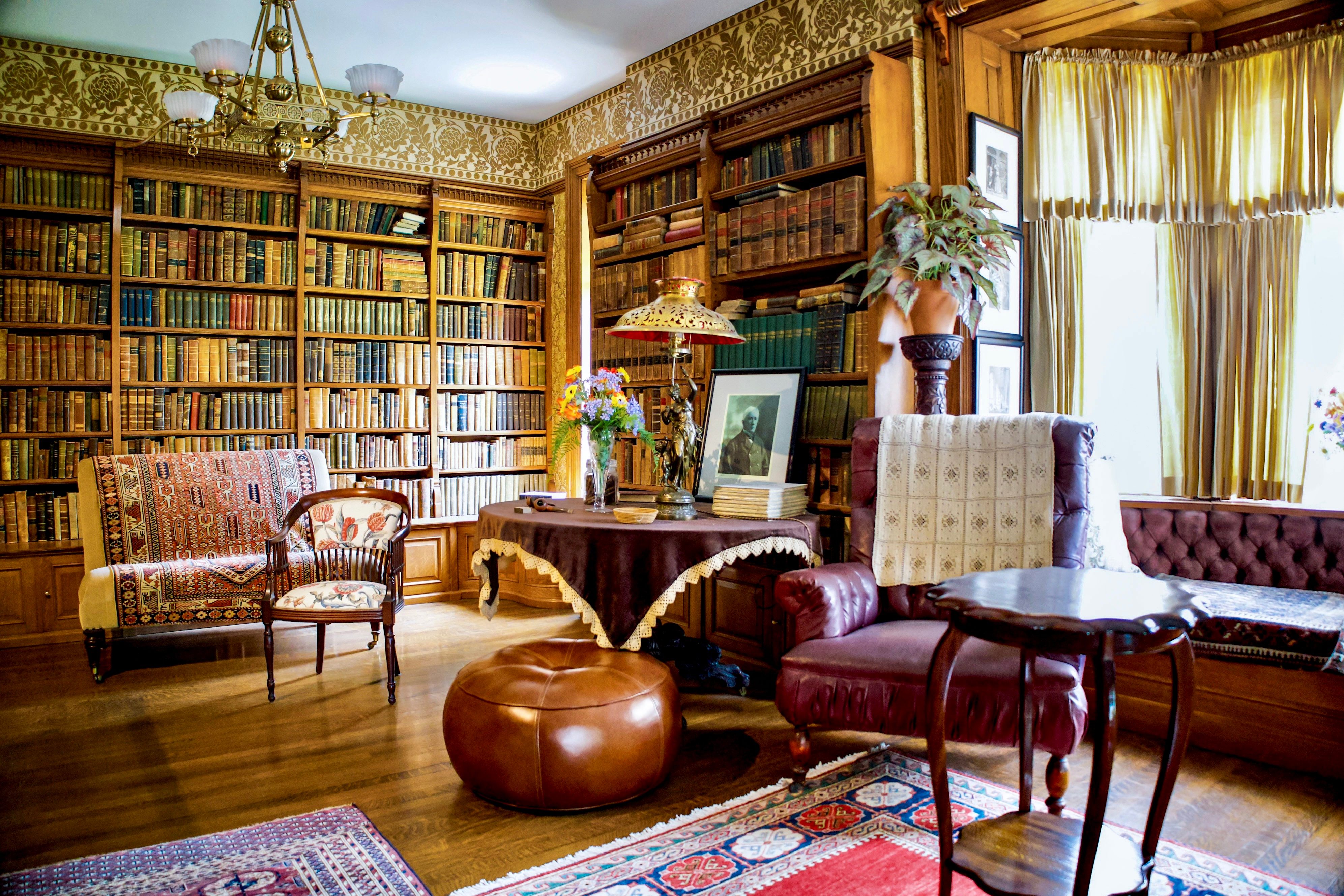
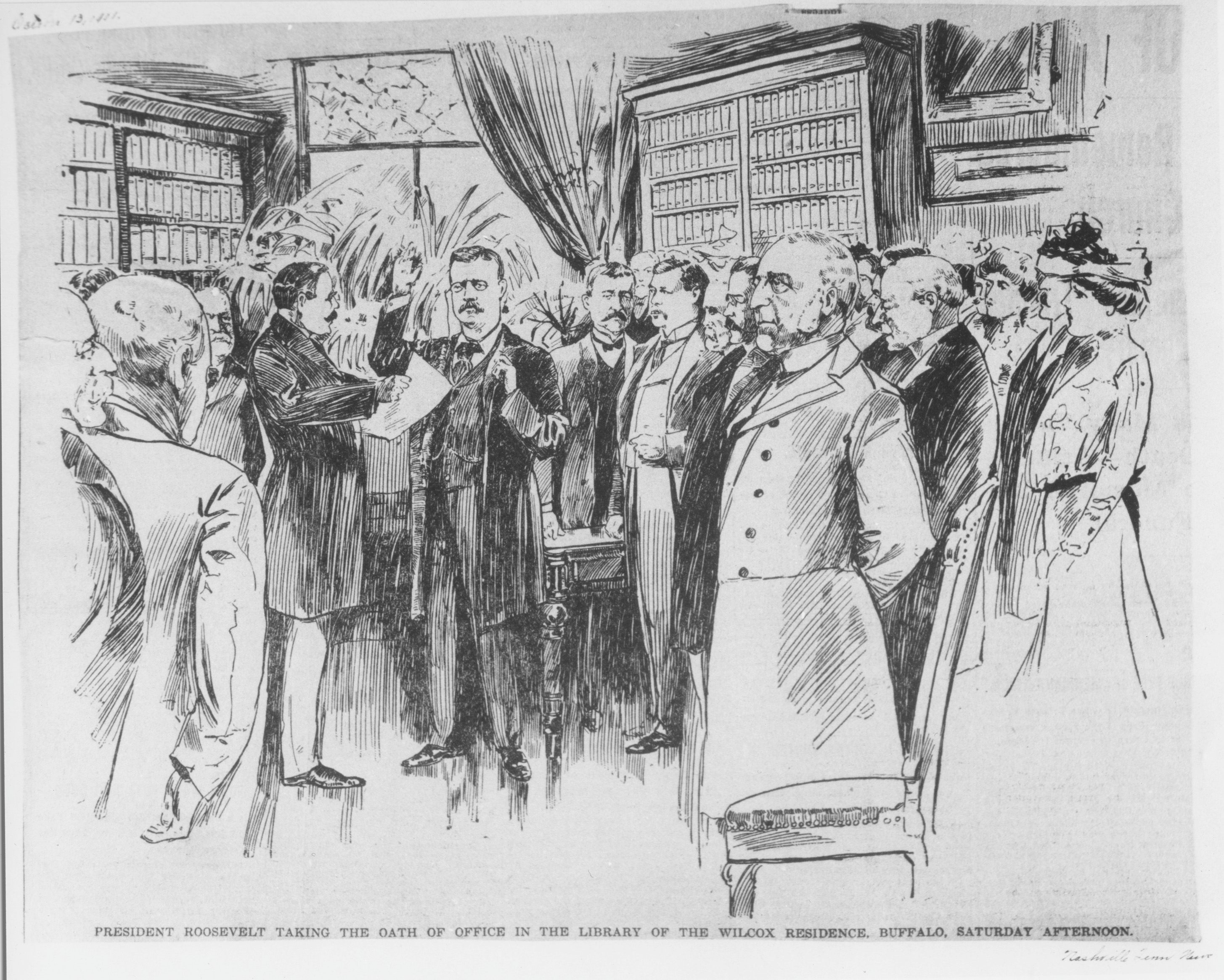
The country had been without a president for hours. Elihu Root, the secretary of war, suggested that Roosevelt be sworn in immediately. John Hazel, a federal district court judge, was among the visitors who’d been summoned to the house, and he hastily typed the oath of office on a regular sheet of paper. Fifty people crowded into the library at the Wilcox mansion to watch Hazel administer the presidential oath to Roosevelt. Journalists witnessed the ceremony, but photographers were kept out of the room, so the only visual record of the simple inauguration are sketches that were made from the recollections of those present.
The Fight to Preserve the Wilcox Mansion
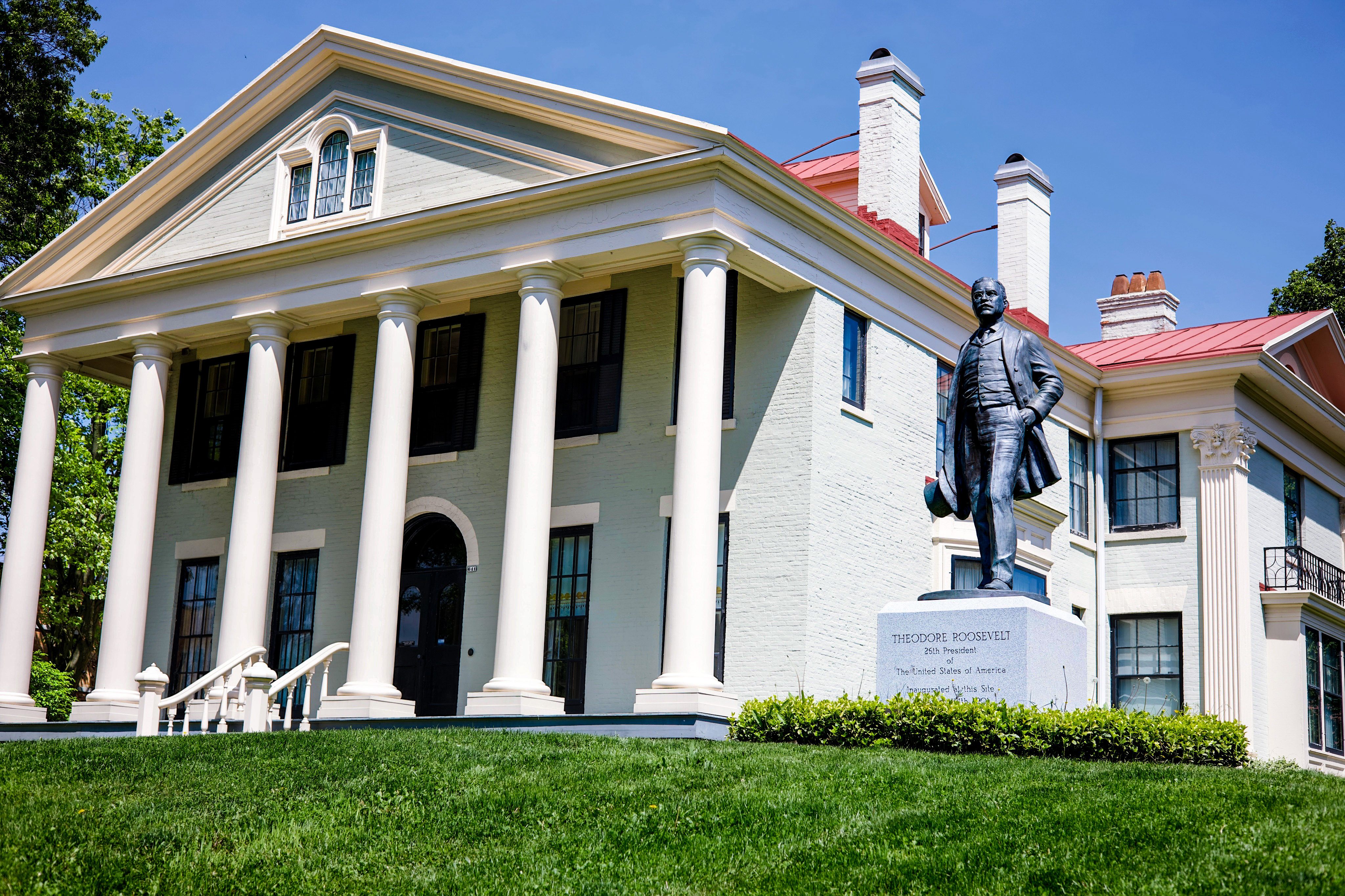
Ansley and Mary Grace Wilcox stayed in their handsome house at 641 Delaware Avenue until they both passed away in the early 1930s. The house sat vacant for a few years, a victim of Depression-era economics, until a pair of married entrepreneurs, Oliver and Kathryn Lawrence, stepped forward. The Lawrences renovated the house, added a bunch of flags and TR memorabilia, and opened Kathryn Lawrence’s Dining Rooms in 1938 , a successful restaurant and catering hall with Teddy Roosevelt as the special sauce.
In the early 1960s, the restaurant closed and a real-estate developer took over the lease. A panicked rumor spread among history-minded Buffalo residents. Was demolition on the menu?
A long, stressful period of fundraising, rabble-rousing, and politicking to save theWilcox mansion began. In 1962, Representative Thaddeus Dulski introduced a bill to protect the site as a National Historic Landmark. The bill failed to pass and was reintroduced several times.
Finally, in 1966, Senator Robert F. Kennedy of New York threw his full support behind getting the bill passed, writing in a statement, “The Ansley Wilcox house is as much a part of our national heritage as the national forest or the Grand Canyon. If we destroy buildings of this type, we destroy a part of ourselves.”
President Lyndon Johnson signed it into law in November. The Wilcox Mansion was saved at last, and could be restored to its condition when Roosevelt was inaugurated.
The Theodore Roosevelt Inaugural National Historic Site officially opened on September 14, 1971. Hints of the building’s time as a restaurant were removed and annual events like a Victorian Christmas experience, a teddy bear celebration, and a summer plant sale kept the house open. In 1980, President Jimmy Carter signed a bill increasing federal support to cover two thirds of the annual operating costs.
Today, the Theodore Roosevelt Inaugural National Historic Site is open seven days a week, hosting history buffs, schoolchildren, and scholars. Over the more than fifty years since it opened, renovations, restorations, donations of furniture and memorabilia, new exhibits, and technological innovations in exhibit designs have kept the Wilcox Mansion a fascinating place to discover Buffalo’s pivotal role in American history. Hourly tours are available, and visitors are encouraged to make reservations in advance. Educational talks and other special events are also on offer.
Finding Roosevelt, McKinley, and the Pan-American Exposition in Today’s Buffalo
Of the dozens of buildings erected in Buffalo for the 1901 Pan-American Exposition, the only one remaining on its original site is the New York State Building. When the exposition was planned, the intention was always to keep the building, constructed of Vermont marble, as the permanent home of the Buffalo History Museum.
Not surprisingly, the museum contains lots of artifacts and experiences related to Roosevelt’s inauguration (such as the frock coat he borrowed from Ansley Wilcox to wear while taking the oath), McKinley’s assassination (the .32-caliber Iver-Johnson revolver that Czolgosz used), and a multimedia permanent exhibit, “Return to the Rainbow City: Buffalo’s Pan-American Exposition.”
Within a tidy residential neighborhood near the museum, you can find another site related to that fateful year: the very spot upon which McKinley was shot, marked by a historic plaque attached to a small boulder in the median strip of Fordham Drive. It’s hard to imagine that this quiet street was once the site of the ornately decorated Temple of Music, as well as the drama and violence from that September day in 1901.
Sponsored by Visit Buffalo.




Follow us on Twitter to get the latest on the world's hidden wonders.
Like us on Facebook to get the latest on the world's hidden wonders.
Follow us on Twitter Like us on Facebook