
Before my first trip to Edinburgh, I did what most people do: I googled "most famous ghosts of Edinburgh." I told my friends, half joking, that if I ever saw a flaming carriage tearing down a cobbled street at full speed, I would probably faint on the spot. I had no idea, at the time, that the carriage in question belonged to a very specific 17th century case file, and that its passenger was one of the most respected men in the city.
His name was Thomas Weir.
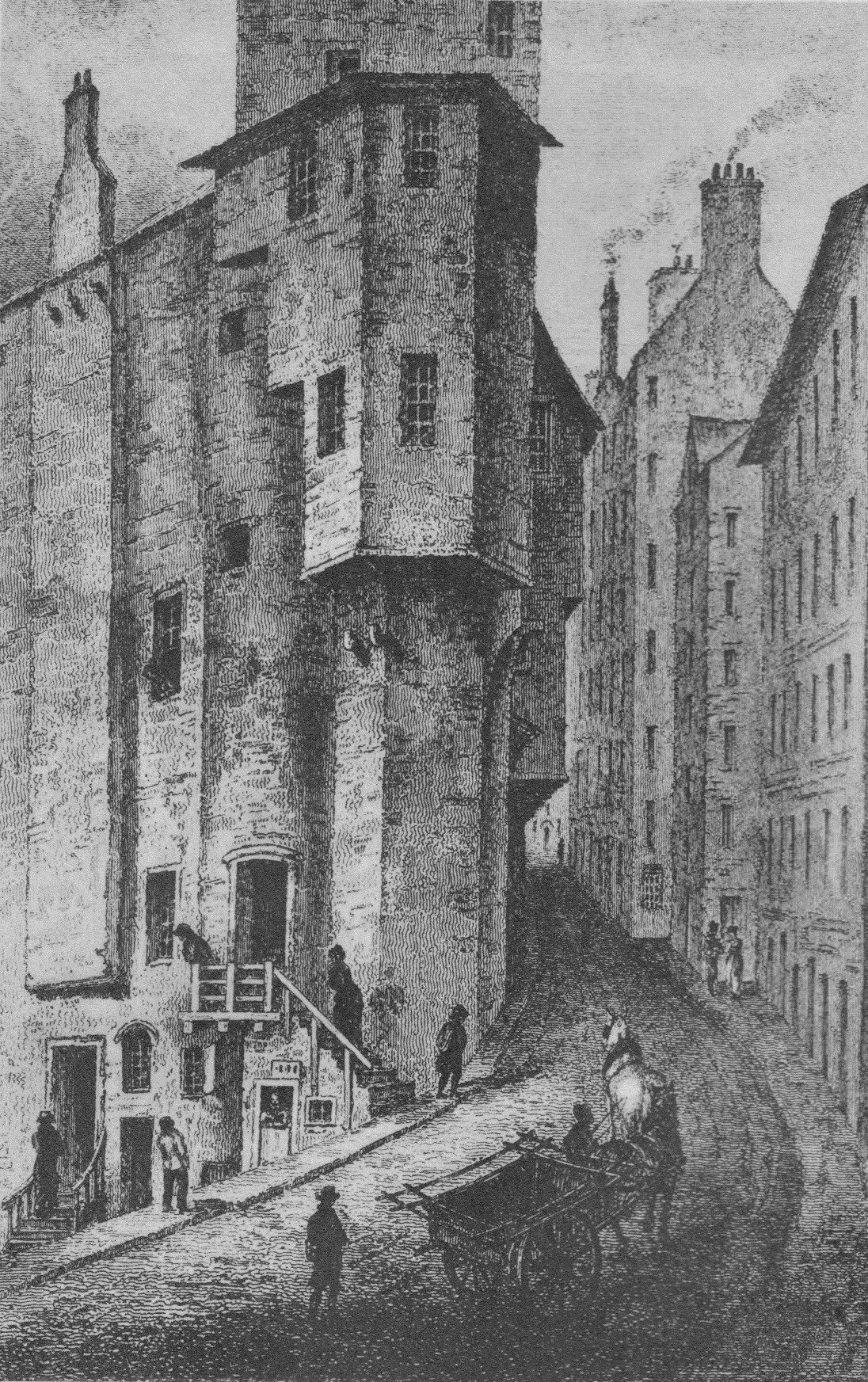
By the time he was in his seventies, Major Weir was about as far from suspicious as an Edinburgh resident could get. A former soldier who had served in the Covenanting armies during the Wars of the Three Kingdoms, he went on to command the city's Town Guard and settled with his sister Jean in a house near the top of West Bow, a steep, winding street connecting the Royal Mile to the Grassmarket (it's called Victoria Street today). The street's residents, known for their strict Presbyterian faith, had earned themselves a collective nickname: the Bowhead Saints. Among them, Weir was considered the most devout. He led prayer meetings.
He was rarely seen without a dark wooden staff, carved with the heads of satyrs, which he insisted was nothing more than an ordinary walking stick.
Then, in 1670, while ill and confined to his sickbed, Weir began confessing. Unprompted, and to a stunned audience, he described a lifetime of witchcraft, an incestuous relationship with his sister, and a pact with the Devil. The city's authorities did not know what to do with him. A man of his standing simply did not say things like this. Physicians were sent to examine him, on the assumption that illness had unsettled his mind. They found him perfectly sane.
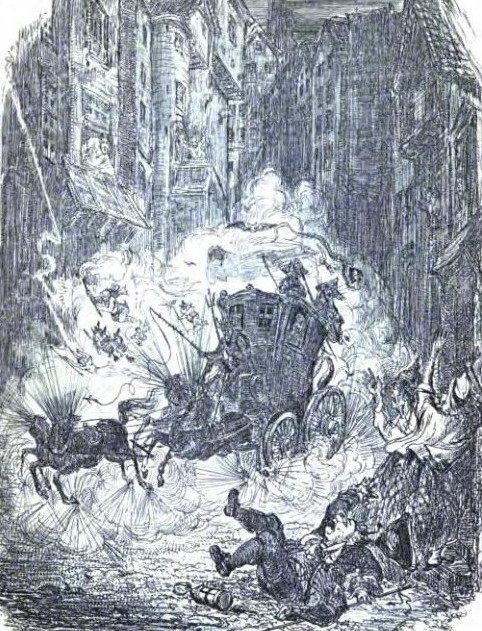
Then Jean corroborated everything, and added a detail that would outlive them both: she described being carried, along with her brother, in a coach of fire, pulled by six horses, on nighttime trips to Dalkeith and Musselburgh to meet with the Devil himself. The staff, she said, was his gift. It was capable of running errands entirely on its own.
The pair were tried before the High Court of Justiciary on April 9, 1670, and found guilty within days. Weir refused to ask for forgiveness. His recorded last words were: "I have lived as a beast, and I must die as a beast." He was garroted and burned at the Gallowlee, on the road to Leith, his staff thrown into the fire beside him. Witnesses claimed it took an unusually long time to burn. Jean was hanged the next day at the Grassmarket.
The trial itself is not folklore. It is documented in the records of the High Court of Justiciary and catalogued in the Survey of Scottish Witchcraft, a database maintained by the University of Edinburgh that tracks thousands of Scottish witchcraft cases between 1563 and 1736. What turned the case into legend came about a century and a half later, when local historian Robert Chambers collected it, along with dozens of other Edinburgh ghost stories, in his 1824 book Traditions of Edinburgh. It's Chambers who preserved the details that still circulate today: the house left empty for over a century after Weir's death, the sound of a carriage rattling down West Bow at night, and the staff, wandering the close on its own, still looking for the man who once carried it.
Weir's house on West Bow was eventually demolished, but the street survives, now lined with independent shops and cafes rather than 17th century prayer meetings. Walk it at night, ideally when the crowds have thinned, and you'll understand why the story stuck. It's steep, narrow, and quiet in a way that feels deliberate. If you hear something rolling over the cobbles behind you, it's probably nothing.
Probably.


