About
Ravenscar, a tiny coastal village in North Yorkshire, England, is about 10 miles from the popular resort town of Scarborough. It lies within the North York Moors National Park.
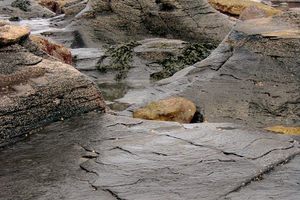
Ravenscar beach sits at the foot of the 600 ft high, impressive Ravenscar Sea Cliffs, and the "beach" is famous for these strange-looking natural features sitting on the wave cut platform just beyond the shingle. They are known locally as Mermaid Tables and numerous local stories surround them. They have been a tourist attraction in the area for at least 120 years.
However, it is the means by which they were formed and the geological setting which makes them fascinating. Some look like trees cut off at the roots and others are a little shorter, but most have an approximately circular form with a flat top which is the obvious reason for the reference to tables in the name. They are covered by the sea at full tide.
They were caused by a layer of unusually hard limestone capping the underlying softer shale, protecting the softer material from erosion by the action of the waves in the places where remnants of the limestone pavement still persist. The capping layer is only 6-7 inches thick and is known to geologists as the "Top Jet Dogger". This name originates from the fact that the shale layer is known for deposits of the semi-precious mineral Jet, which is the fossilised remains of a particular type of prehistoric tree fern.
The "beach" is also known for some fantastic ammonite fossils, with some presenting as "Golden Ammonites" because of their attractive coating of iron pyrites (fool's gold). These can often be found in the gaps between the "tables", adding to the fascination of those (younger?) visitors who come looking for mermaids.
One can guarantee that you will not see mermaids sitting around the tables, but, at the right time of year, you may come across loads of seal pups on the shore at low tide with the occasional one hauling itself up to take advantage of the flat surface of one of the tables.
The interesting features on Ravenscar "beach" were the main attraction for Victorian investors who tried to establish a tourist resort at the top of the cliffs. No houses were ever built, but drains, sewers and roads were laid, and a new Ravenscar Railway Station was built before the project collapsed. Traces of the planned settlement can still be found. Until the early 20th century, the small village close to the beach was called "Peak". The nearby Peak Alum Works still carries the old name ( https://www.atlasobscura.com/places/peak-alum-works) but as tourists started to use the station, the village changed its name to match the railway station.
Know Before You Go
Ravenscar rail station is now closed, but several buses serve the village from Whitby or Scarborough, both of which have main line railway stations. The Whitby service is from Middlesbrough, and Scarborough is approached via York.
Community Contributors

Added By
Published
June 19, 2026