About
In Mumbai, the tram service began in 1874 in the form of horse-drawn carriages. The tram routes operated from Colaba to Pydhonie via Crawford Market and Bori Bunder to Pydhonie via Kalbadevi.
Eventually, in 1907, electric trams started operating. With the advent of electric trams, the tram route was extended till King's Circle in Matunga. Dadar became the main tram terminus and the spot was popularly called Dadar Tram Terminus or Dadar T. T. (today's Khodadad Circle).
With the passage of time, to ease rush hour traffic, double-decker trams were introduced in 1920. It is said that at the peak of their service in 1935, around 433 trams operated on 47 kilometres of tracks. Eventually, in 1964, the tram service stopped operating.
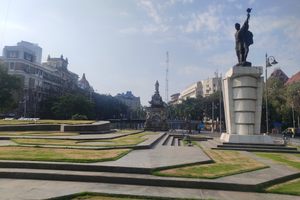
In recent times, in 2018, a portion of the old tram tracks was rediscovered during an excavation near Flora Fountain. To maintain their heritage value for the benefit of the public, these tracks have been fixed on the pavement for public display, next to the fountain at their original location to retain their authenticity.
Know Before You Go
These tram tracks are located on the pavement, right next to Flora Fountain.
Community Contributors

Added By
Published
June 19, 2026
Sources
- https://en.wikipedia.org/wiki/List_of_town_tramway_systems_in_India
- https://www.ndtv.com/mumbai-news/in-mumbai-decades-old-tram-tracks-resurface-1280141
- https://businesshistory.domain-b.com/focus/charm-of-the-trams-mumbai%27s-historic-transport-revisited
- https://hum54-15.omeka.fas.harvard.edu/exhibits/show/mumbai_development/trams
- https://memumbai.com/trams/