Why Are There Snowy Owls at Logan Airport?
This Boston airport is a surprisingly ideal home for these majestic Arctic creatures.


Listen and subscribe on Apple Podcasts, Spotify, and all major podcast apps.
Baudelaire Ceus: As a Massachusetts native, I’ve been to Logan Airport more times than I can count. And it’s a great airport. It has decent food, a ton of airlines, and best of all, it’s just ten minutes from downtown Boston. It does have the absolute worst traffic, though. But anyway, in all those trips to Logan, I always assumed that it was just us humans making use of the space sitting on the Massachusetts Bay. But there’s another species that’s been passing through the airport for over 40 years: the snowy owl.
Norman Smith: In an average year, I catch 10 to 12 snowy owls. The most I’ve seen at one time on the airfield is 23.
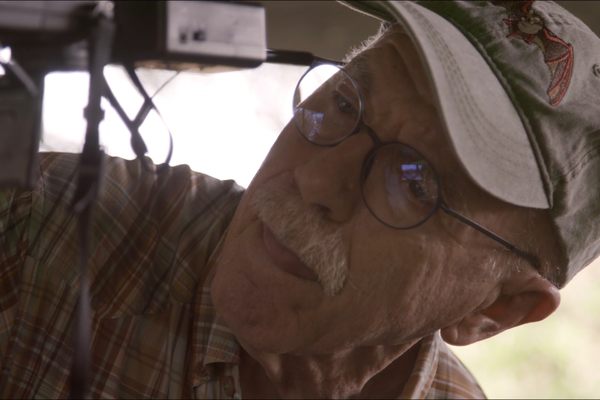
Baudelaire: This is Norman Smith, a fellow Massachusetts native that knows all about the snowy owls and the way they make themselves at home on the airfields of Logan Airport. Now, let me just point out that snowy owls aren’t tiny. They can be up to 28 inches tall with a wingspan of up to six-and-a-half feet. That’s as tall as probably the nightstand in your bedroom with wings almost as long as a king sized bed. So catching this thing obviously isn’t easy, but it’s what Norman does. He’s had a long career working with Mass Audubon, and today he’s a raptor specialist that has been studying snowy owls and their presence at Logan for decades.
Norman: The most I’ve actually captured in one year was 121. That was in 2013, which was the biggest year for snowy owls.
Baudelaire: For the past 40 years, Norman has been driven by his desire to know all there is to know about the snowy owl. Questions like: What could possibly draw these Arctic dwelling owls to one of the busiest airports in the world, and why do they continue to return year after year? What started as a 14 year old’s curiosity about the outdoors and natural history has turned into a career dedicated to researching the biggest owl in the Northeast and its annual landing at one of the biggest airports in the Northeast. My name is Baudelaire, and this is Atlas Obscura, a celebration of the world’s strange, incredible and wondrous places. Today, we speak with snowy owl researcher Norman Smith about his lifelong dedication to the other animal that takes off from Boston Logan Airport.
This is an edited transcript of the Atlas Obscura Podcast: a celebration of the world’s strange, incredible, and wondrous places. Find the show on Apple Podcasts, Spotify, and all major podcast apps.
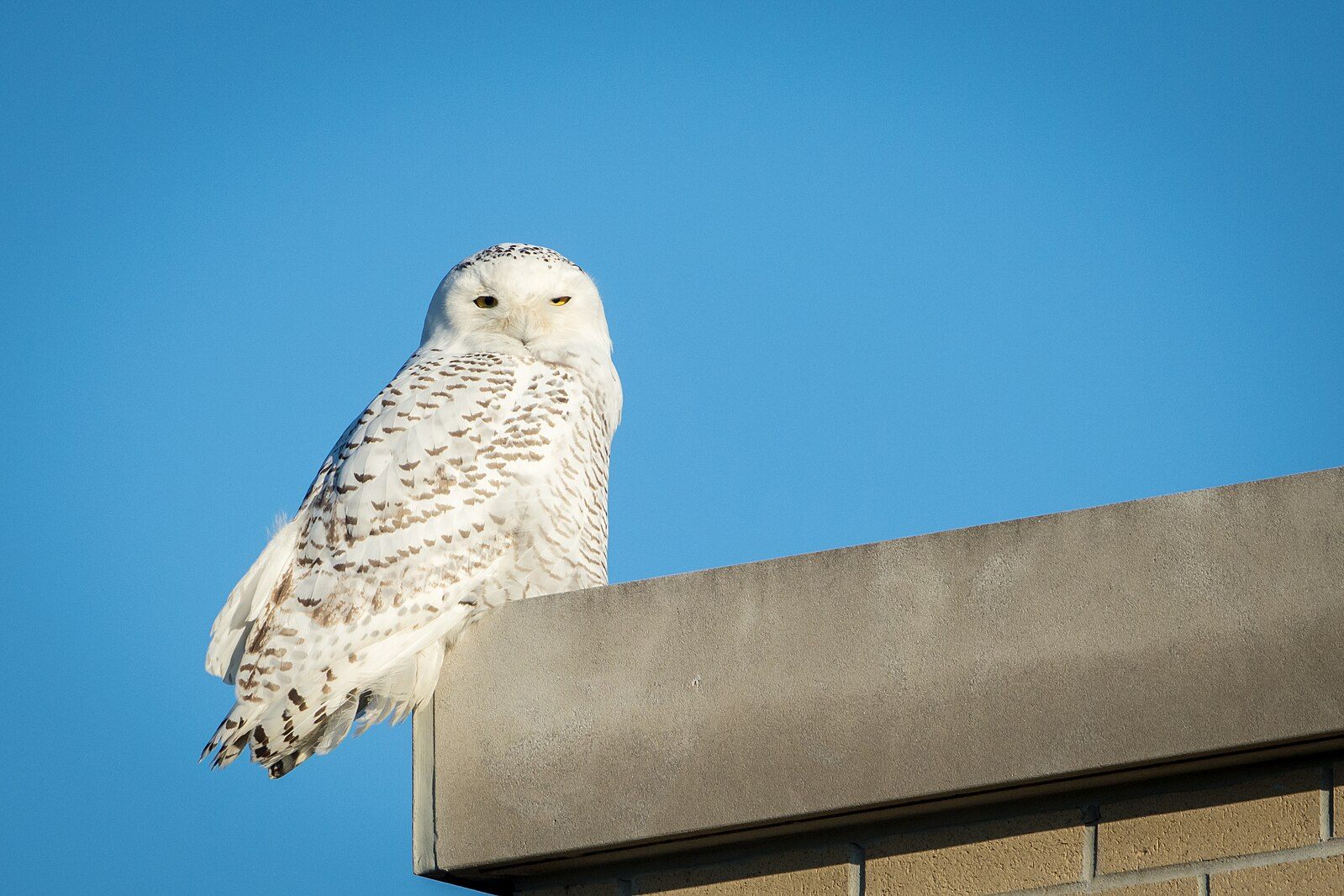
Baudelaire: The land surrounding Boston Logan Airport is vast and stretches out for miles. It’s a place where the stillness of nature meets the buzz of human activity. And Norman Smith has spent countless hours in these fields studying the snowy owls that arrive at Logan towards the end of the year and during the winter months.
Norman: It’s amazing. You know, the noise out there is deafening. And you’d say to yourself, wow, how could an owl with such sensitive ears possibly, you know, hang around at an airport? But they have unique abilities. And, you know, the feathers around the eardrums can be changed in shape. They can be pulled together and become stiff and abrasive and become an amplifier to amplify sound. Or they can open those feathers up and it becomes a muffler to actually quiet some sounds that go into their ears.
Baudelaire: Norman Smith’s life has been dedicated to studying the wonders of the natural world.
He’s a professor at the University of Michigan, and he’s a professor of biophysics. He’s a professor of biophysics at the University of Michigan, and he’s a professor of biophysics at the University of Michigan.
Norman: I was always interested in the outdoors and natural history. And where I grew up, we had a farm across the street and used to spend a lot of time out in the woods out there. As time went on, I decided that, you know, I wanted to volunteer at a place. And one of my favorite places was the Trailside Museum.
Baudelaire: That’s the Blue Hills Trailside Museum, a modest wildlife sanctuary just outside of Boston.
Norman: They had, you know, live animals there, native live animals and birds, raptors, hawks and owls, which I was really interested in. I was always fascinated in these birds that soared around in the sky during the day and were incredible creatures. And then at night, the owl species, they fascinated me as well. So I’ve always been intrigued by them.
Baudelaire: From the time he was 14, Norman felt a strong connection with nature. He moved into an apartment above the sanctuary after finishing high school in 1970. He was introduced to snowy owls during his time volunteering at the museum, when the director at the time took him to see his very first snowy owl.
Norman: He knew that, you know, I loved hawks and owls. And so he took me to see my first great horned owl nest and took me down to the Squamish Marina Bay in Quincy to see my first snowy owl.
Baudelaire: Norman’s love for the snowy owl was instant. And when he heard there was a ton of snowy owls at Logan Airport, just about 10 miles north of Quincy, he wrote a letter to airport management asking if he could do some research on the owls on the airfield.
Norman: And that’s how it all began.
Baudelaire: Since then, he’s caught over 900 owls at Logan Airport. But what initially drew his attention to the snowy owls was the fact that they weren’t here year-round.
Norman: They came from the Arctic, which was quite a distance away. And there was a lot of information about them. And I read up on snowy owls and it said that, you know, they come to New England because there’s no food up north. They’re starving to death and they never make it back north. They’re not viable breeders. And I thought that was kind of interesting.
Baudelaire: Logan Airport sits right along the coast. And as the snowy owls migrate south in the winter, the winds blow from the northwest, pushing them down the coast and right into the path of the airport. Conveniently, the terrain around the airport fits their criteria for the ideal home. It’s flat and low with short, scruffy vegetation and a variety of small animals and birds to feed on. Basically, it resembles a tundra. Over time, Norman became a regular among airport staff. And that support made his work that much easier.
Norman: They call me and say, “oh, a snowy owl just showed up today.” Or, you know, “we haven’t seen any snowy owls this week.” So we’re in constant communication with them to see what’s going on out there.
Baudelaire: Norman began capturing and relocating the snowy owls, keeping them safe from planes, while also studying their behaviors and migration patterns.
Norman: I have a device, it’s a bow net, and I go out there and I take and set the bow net out.
Baudelaire: So a bow net is a hoop-type trap. It’s shaped like a bow, and it’s spring-loaded. In the middle is a little wire cage, in that cage is usually a small rodent. When the owl swoops in and lands on the cage, Norman pulls the spring that flips the trap and catches the owl uninjured and unharmed. Just a couple decades ago, Norman’s work gained some traction after he made a groundbreaking discovery.
Norman: Back in 2000, I actually put satellite transmitters on them. It was the first one to track wintering snowy owls that were coming to New England and found that, yes, in fact, these birds did make it back to the Arctic and that these birds were, you know, in good condition, unlike what they thought.
Baudelaire: Logan Airport has become home to the largest concentration of snowy owls in the Northeast. They start arriving in early November, sometimes as early as late October, and stick around until early April. But in the winter of 2013–2014, something unusual happened.
Norman: And it was a big year because up in the Upper Peninsula of northern Quebec, the Ungava Peninsula, it was an incredible year for lemmings. So snowy owls were breeding and producing lots of babies.
Baudelaire: By the way, lemmings are these small rodents that are slightly bigger than your average mouse.
Norman: And in some of those nests, there was as many as 80 uneaten lemmings in those nests. So it showed how high the lemming population was. So it produced lots and lots of owls, lots of food. And so there was more owls to travel further south. And they were as far south as Texas, Louisiana. One showed up in Bermuda.
Baudelaire: Over time, Norman started to notice just how much individuality there was amongst the owls. From their markings, to their size, to their personalities, they’re as distinct as any human you might meet. In fact, during a snowy owl study at Logan Airport, Norman observed some truly fascinating behavior from a particular owl named Salisbury, which was named after a local beach.
Norman: We brought it up to Salisbury Beach and let it go. About four weeks later, the bird came back to Logan Airport. And what was really interesting is we were able to track and see where that bird went at night.
Baudelaire: It turns out that there was a dominant female owl at the airport that was allowing other snowy owls, including Salisbury, to stay there during the day. But as soon as the sun went down, she would chase them all off. But it wasn’t too bad for Salisbury because he had an ideal place that he could crash.
Norman: And every night he would fly off and go down to downtown Boston into Chinatown. And I have photographs of him sitting on the stack of a truck where he would go every night and hunt from that stack and catch rats that were coming out of the back of that restaurant.
Baudelaire: Norman’s love for these snowy owls has lasted over 40 years, with him being out at Logan Airport every winter since 1981. But even though it’s been a while, Norman doesn’t plan on stopping anytime soon. For him, his passion for snowy owls has always been more than just research. It’s also been a way of spending time with his kids.
Norman: They started going out there when they were two years old, essentially, and went out there until they were in their teens.
Baudelaire: But for his kids, this wasn’t just getting dragged along to follow dad at work. They began to take an interest in snowy owls as well.
Norman: They learned a lot and they taught me a lot of things as well, because as you get to be older, you read things and you believe everything you read. In the literature I was reading, I thought that, you know, we knew all there was to know about snowy owls. And my daughter was the one that would always say, “well, how do you know?”
Baudelaire: Norman says it’s been amazing to get kids involved in the research, because they ask questions like his daughter did. They think outside of the box and they think of things that, you know, you wouldn’t necessarily do or try. But nowadays, Norman’s kids aren’t children anymore. In fact, they have kids of their own. And the enthusiasm for snowy owls has made it to yet another generation of Norman’s family.
Norman: And one of the most memorable experiences for me was when Camilla, my oldest granddaughter—she was five years old—and she said, “Grandpa, I want to go with you to release a snowy owl like Mommy used to do when she was a little girl.” And she had seen pictures. And I said, “oh, okay, Camilla.” So I took her to Duxbury Beach and I said, “now, Camilla, I said, this bird is a really big bird. He’s about three feet tall …”
Baudelaire: Moments like these, where the curiosity and wonder of the next generation come alive, are some of the most rewarding. The research may have started as a personal journey, but it’s clear that it’s become so much more. It’s a legacy passed down from one generation to the next. A legacy of wonder, exploration, and an enduring love for snowy owls.
Listen and subscribe on Apple Podcasts, Spotify, and all major podcast apps.
Our podcast is a co-production of Atlas Obscura and Stitcher Studios. The people who make our show include Dylan Thuras, Doug Baldinger, Chris Naka, Kameel Stanley, Johanna Mayer, Tomeka Weatherspoon, Manolo Morales, Gabby Gladney, Amanda McGowan, Alexa Lim, Casey Holford, and Luz Fleming. Our theme music is by Sam Tyndall.



Follow us on Twitter to get the latest on the world's hidden wonders.
Like us on Facebook to get the latest on the world's hidden wonders.
Follow us on Twitter Like us on Facebook