Zach Stafford on Places That Spark Wonder
From Tennessee to L.A., Zach Stafford talks about the magic of folding into the fabric of a new place.

Listen and subscribe on Apple Podcasts, Spotify, and all major podcast apps.
Dylan Thuras: I’m going to start actually by asking you a little bit about Tennessee.
Zach Stafford: Oh.
Dylan: Tell me about growing up there. What was that like?
Zach: Thank you for asking that. When I was beginning my career, I always identified as a Tennessee rider. And place has always been super important for me. And the place I grew up was really important for me. But Tennessee was a really complicated place to be black and gay. You know, I’m from a town north of Nashville, where my family was, you know, in the ’90s, one of the first interracial couples really to move there. I was one of the only mixed kids in my school. My parents are black and white, so I identify as a mixed kid.
And it’s a pretty conservative place where I’m from. It’s deeply religious, but religious in that way that like Southerners are really good at being religious. It’s like cultural. You say, “Bless your heart.” You go to church, but you still gossip a lot. Everyone drinks, they party. But they, you know, believe in Jesus because Jesus will clear them of all their sins if they just say a prayer. So it’s a really funny place. It’s not very like, like orthodox or really like stringent. It’s, you know, conservative with like a little C. And of course, they all vote red. So my family is deeply liberal, not very religious. And I was very much, you know, out of place while being in place there. So, you know, I always dreamed of another place.
Dylan: I’m Dylan Thuras, and this is Atlas Obscura, a celebration of the world’s strange, incredible, and wondrous places. Today, I am talking with Zach Stafford. Zach is a writer, producer, and a co-host of the news and culture podcast, Vibe Check. And today I’m asking Zach about his life as seen through place, five places in particular, because Zach has this kind of crazy resume.
He grew up in Tennessee, but he got his start in Chicago at a local newspaper where he wrote a column about his personal life when he was just in his twenties. That helped launch his career as a journalist, where he went on to work at places like Out Magazine. Then he moved to a little startup called The Grinder for a while, and then at The Advocate. And then as like a fun little side project, you know, he produced a Broadway musical that won the Tony in 2022.
So this work, this career has brought Zach all over America to many different cities and towns. And each of these places has had some impact, some shaping function on his life and who he is. So today we’re going to talk about how these places shaped who he has become.
This is an edited transcript of the Atlas Obscura Podcast: a celebration of the world’s strange, incredible, and wondrous places. Find the show on Apple Podcasts, Spotify, and all major podcast apps.
Dylan: When you were young and a teenager, you were looking for the exit. You were looking to kind of get somewhere.
Zach: I was always keenly aware that I wanted to leave where I was from. And, you know, I love where I’m from. It shaped me. I go back often, but I knew it wasn’t my forever home. So I always looked north and, you know, Chicago for me, for some reason, always captured my imagination. I think because it was an urban environment, it was a Black city, it was a queer city, it was all these things. So I always had this like North star and, you know, growing up, it was always like, endure, endure, endure, just get through this because one day you’ll get out.
And, you know, and I’m also a kid of, you know, Dan Savage, the podcaster and writer created the It Gets Better campaign, you know, in the Obama era. And I was definitely like a teenager when that happened. So I would took that to heart and I was like, “It will get better if I cross the Mason-Dixon line.” And then I eventually crossed the Mason-Dixon line.
Dylan: And tell me about arriving in Chicago. Tell me about that period of your life, you know, what that kind of cultural shift felt like. Tennessee and Chicago are different. These are different places.
Zach: Very different places, very different places. And I was very much, what was surprising to me upon arrival was I was still out of place. You know, my Southerness became really acute. And that’s why I think I started talking a lot about it. Because when you’re from Tennessee and you live in Tennessee, everyone’s from Tennessee. Like, why are we talking about it?
But I moved to Chicago and I had an accent. I had a way of thinking about the world and experiencing the world that was just so different than all my colleagues in college and my friends and then the people I’d meet. So it weirdly made me more Southern, but I think it was more of like, I was taking an accounting of what I wanted to keep in my Southerness and what I wanted to let go.
And what I loved about living in Chicago was this, like the beginnings of not feeling out of place. That I’d walk down the street and people weren’t as nervous to be around me. They weren’t as concerned with who I am. They weren’t, you know, all these questions kind of disappeared.
And what I loved about Chicago is I went to school at DePaul University, which if you’re familiar, and I think you’re familiar with Chicago, is on the North side of the city. It’s in Lincoln Park, a very affluent area. But what I loved about my college is that it was super close to the gayborhood, which is Boys Town.
And so I very quickly got to have this like immediate access to queer people of all different colors and genders and identities and ages that I had never even conceptualized. So it felt kind of like falling through the looking glass a lot, to reference Alice in Wonderland. And I loved it. I loved falling and it was really, really great time.
Dylan: Was there any culture shock going from Tennessee to Chicago? Or was it more like, I knew what I wanted and here it finally is?
Zach: There was so much culture shock. And if anything, there was like trauma shock, if that’s a word. I wrote about this a lot when I worked for The Guardian while I was in Chicago after I graduated. And I wrote, I covered race and politics and a bunch of other things. And something I found myself missing was the very straightforward racism of the South. And what I mean by that is—
Dylan: Sure, sure. Different flavors and different latitudes.
Zach: Oh, different flavors. So there was the big dream that you were told, especially as a Southerner, we talked about Northerners. I grew up talking a lot about Northerners. And the North was kind of a utopic place where racism didn’t exist, is what I was told. That’s why Black people left and went there.
And when I arrived, I realized very quickly through a lot of personal experiences that racism was still there. It was very, very, very present. It just looked different and it materialized very differently. And I found myself longing for the in-your-face direct hatred that I’ve gotten used to. You walk into a place and someone doesn’t want you there, they just told you.
Where in Chicago, there was all this passive aggression. There was all these ways in which they made it more difficult for you. They would ice you out at a restaurant and just not serve you for a while. Where I grew up in the South in the ’90s and people were just very open about it. Because they were like, this is just the way of life.
So that was the shock for me was that I saw a consciousness around race and identity and that people were trying to kind of subvert it through hiding it and trying to say—especially, this is the Obama era—where they were Democrats too. They’re like, “Oh, I’m going to vote for this man,” but they didn’t want to have dinner with me or treat me equally.
And that was very shocking to me because I thought, you know, Chicago is so Black, it’s so all these things, but quickly realized that it is the second most segregated city in the country. And I began to feel that as I moved through the city, it was like, “Oh wait, this changes by block, by zip code.”
And so for me, it was like a new way of experiencing my own Blackness in America. And it really radicalized me in ways that the South did not, which I think is a shock to people where people think of the South as radicalizing of many of the most famous writers and activists of the world. For me, Chicago is really activating as a Black person.
Dylan: So, okay. So in some ways you found sort of things that were really quite shocking. On the other hand, it sounds like in Boys Town, you found maybe something that you’d been seeking, which was kind of like a community where you felt maybe not just comfortable, but even some sense of kind of anonymity or just like, I’m just, you know—so what was Boys Town in your life in Chicago and how did that kind of change who you are today?
Zach: Yeah, I love Boys Town. To this day, I still have a fondness for it. Back then, you know, 2008, it was like, it was just an overwhelming sense of magic. Boys Town is, you know, in the North side of Chicago, it’s a neighborhood that’s sandwiched between Wrigleyville or Wrigley Field, where the baseball, the Cubs play, and the lake itself, Lake Michigan. And it’s this little sliver and it’s very gay. It’s becoming decreasingly less and less gay sadly. But at that time, it was like peak gayness, peak everything.
And there’s a triangle of streets there that I would walk with my friends because I wasn’t 21 yet and I didn’t have a fake ID at the moment. So I would just walk the streets. And on the streets, you get to see like, there were so many people doing, you know, street-based work, like sex work or drugs, selling drugs. I’d meet them and they look like me or they look like my cousins.
And then I would hang out with these people in the street and then I’d walk up and I meet drag queens who are walking to work. I would talk to guys who would flirt with me outside the bar smoking cigarettes. I got to see the LGBT Center there. I never even knew that there was LGBT centers in the world. And then I got to have access to one.
So for me, it was this opening of a whole new world of like these cast of characters and these possibilities of being that I just never considered. You know, we talk a lot about possibility models, especially millennials. Millennials love a possibility model, love thinking about representation. And at this time, you know, we had like Glee on TV and like Queer as Folk and a few shows, Will and Grace, but no one really looked like me. But to go to a neighborhood where there was a lot of me everywhere was just so affirming.
But it also was deeply depressing because to that point I made earlier around the ways in which race and gender show up in Chicago, it became very apparent that there was a hierarchy of Boys Town. You know, there are the people that were inside the bars that could actually pay to go to dinner there. And there were the people that were on the streets that were working the streets. There were the people that lived in Boys Town and those are the people that visited Boys Town.
So I very quickly became aware of just the ways so much class and identity and all these things mixed together. And it was a perfect recipe for me because when I arrived at university, I didn’t really know what I wanted to study. I just knew I wanted to be in school. And what I wanted most in my life was to have language around who I am. And I think really have a sense of place in the world.
And as I was in university, I started taking gender studies classes and critical race theory classes. So I’m learning all these terms around intersectionality and feminism as I’m also spending my nights, walking the streets of Boys Town, meeting people with friends and just hanging out. And it became very practical for me. This theoretical framework of thinking about identity in the world through academia became very realized in Boys Town itself. So it was just really affirming for me to want to lean into this neighborhood that was really contradictory, really dynamic and really complicated for me.
And so I just kind of created my own little home there and it made me a storyteller at the end of the day. And that’s really where my journalism career comes from is being so in love with meeting people on the streets and hearing their stories of what it’s like to live there or come to Boys Town is, I would say, the beginning of what made me a journalist was being like, “Oh, everyday people have something interesting to say and they should be heard because me hearing them really changed me.”
Dylan: Do you remember the first piece you published, the first piece you filed during this period, like for a kind of proper …?
Zach: Yes. Oh, God. Yes, I do. I do very, very well. Right when I graduated college in 2012, I think, I was brought on to the Chicago Tribune, which is the big regional paper of Chicago. And I wrote for their daily commuter paper that everyone got when you got on the train. So when you get on the L, there’d be stacks of this newspaper is called the RedEye.
So my editor hired me. And I remember him jokingly saying to me in the meeting, you know, you can be the gay Carrie Bradshaw because I loved Sex and the City at the time. And I was like, “Oh, yeah, I can write about the city and my experiences in it.” And I’m just so, you know, at 21, 22, you think you’re just so important and your worldview is so needed that I just like leaned in.
So then I got a column to do so. So it really affirmed maybe a bad habit. And my very first column I ever wrote was called Won’t You Date My Neighbor? I just start dating as a recent college grad. And I met a guy and I don’t remember his name. But what I do remember is that he was moving a block away from me. And I was really nervous about this because I was like, “Oh, if he moves a block away from me, does that mean we have to be together?” And so I did what any writer would do after meeting a man for two weeks, and I wrote about him and a column about meeting this guy.
And there was this thing I talked to my friends about with like, what happens if you start sleeping or dating a neighbor? Does that change the dynamics? And through the column writing and then my lived experience, I learned that like they could be your neighbor it’s not going to really impact your love life too much, especially when it’s early on. So you shouldn’t be making big decisions of something you just started getting engaged with.
So yeah, my first columns were very much about the city and how I was moving through it. And I used it as kind of like a public diary, which was now looking back kind of embarrassing because I’d ride the train and people would be reading it. And I was like, “Oh God, this is kind of cringy that you’re like reading my dating life as I’m sitting next to you.”
Dylan: Yeah. I mean, you’re right to be like 22 years old out of college and basically have like this giant platform to do like opinion pieces about your own life is like, that’s wild.
Zach: It was so wild. I still don’t know why they said yes. Like I don’t know if they realized I had just graduated college or what, but it changed my life forever. That column is why I’m even talking to you today. It set off a domino effect in my life. So I’m really grateful for it. But now I don’t advise 22 year olds to write like that.
Dylan: Yeah.
Zach: I lived in Chicago for nine years, including college. And what took me out of Chicago was a job at the app Grindr. So Grindr, for those who don’t know, which I’m assuming everyone knows, is famous. It’s iconic and it deserves to be iconic because it launched in 2009 and it was one of the first apps in the app store, period. Before Tinder, there was Grindr. And I was obsessed with it as a college student because it was an app.
I was really interested in it from an academic standpoint because I was studying gender studies in college, but also cultural geography. So I was like, “Oh, I’m using this app to move through the city.” And I quickly realized I was being treated differently in different parts of Chicago, depending on where I went and how I presented myself.
So a lot of my academic work became about GPS technologies, actually. And I did get to grad school and decided not to go to grad school to be a geographer. But I did all this work around—
Dylan: You really do have place in your background in a big way. You almost became a geographer. Oh, that’s fascinating.
Zach: Truly. When I found out we were doing this show and that you were willing to have me on, I was like, “Oh my God, this is making my whole life.”
Dylan: Oh, that’s awesome. That’s so cool.
Zach: Because I literally, if I’d taken a different path in my life back then, I’d have a PhD now in cultural geography and I’d be studying digital spaces and places and identities. So I was really interested in how we take our physical self and upload it into a digital place.
So all of that work did feed into my journalistic career. And when I became a journalist with a capital J and started doing investigative work, used Grindr on certain assignments. So I once went to Kansas City for The Guardian and reported out a murder through using Grindr because it was a gay man that was murdered through a lover on Grindr.
So I was kind of using dating apps to do journalism in this really fun way that my mom thought was just my excuse to find a man, but I really was trying to use it for work purposes. But all of that caught the eye of Grindr and Grindr brought me to L.A.
I hated L.A. as a place before then. I’d only come a few times and I thought it was just so barren and shallow architecturally. I found it really uninteresting. I found the traffic to be overbearing and all of these things. And Grindr called and offered me a job to launch my own magazine. And I had to say yes. And they were like, “But you have to move here.” So I moved there. I moved here. I’m still here. And that was like the next phase of my life that really changed me.
L.A. was a place that not only wasn’t home, but was a place I’d never wanted to go. And I had to build a whole life here. And the first few years were really tough, but I got to build a magazine that I was really proud of. And it was a place where I got to do that Grindr-centric work around queer lives, but at a global scale. We had reporters in every country and it was so amazing. And through that work, I got to learn how to produce documentaries and work on television shows because Grindr’s a big company and we were optioning our IP.
So all of that work really changed me. And in L.A., at the end of the day, it’s become my favorite place to be. I love L.A. so much, but it was in this kind of feeling out of sorts here and out of place that I was able to really refine my practice as a storyteller. Because I think the through line through all the work I’ve done is all very story-based and also geographically based, I’ve learned over the years. It’s all about place and the stories we tell in those places, really.
Dylan: Yeah. Okay, so you’re out in L.A. Tell me a little bit—I mean, this is I truly just don’t know—what happened on the West Side Highway in New York?
Zach: While I was in L.A., I eventually went on to be the editor-in-chief of The Advocate. And while I was at The Advocate, I was like, “Oh, I can’t just have one job.” So I started hosting a morning television show in New York. And so I would spend my weekdays in New York and come back to L.A. And while I was there, you know, my life was really, really insane. It was just a lot.
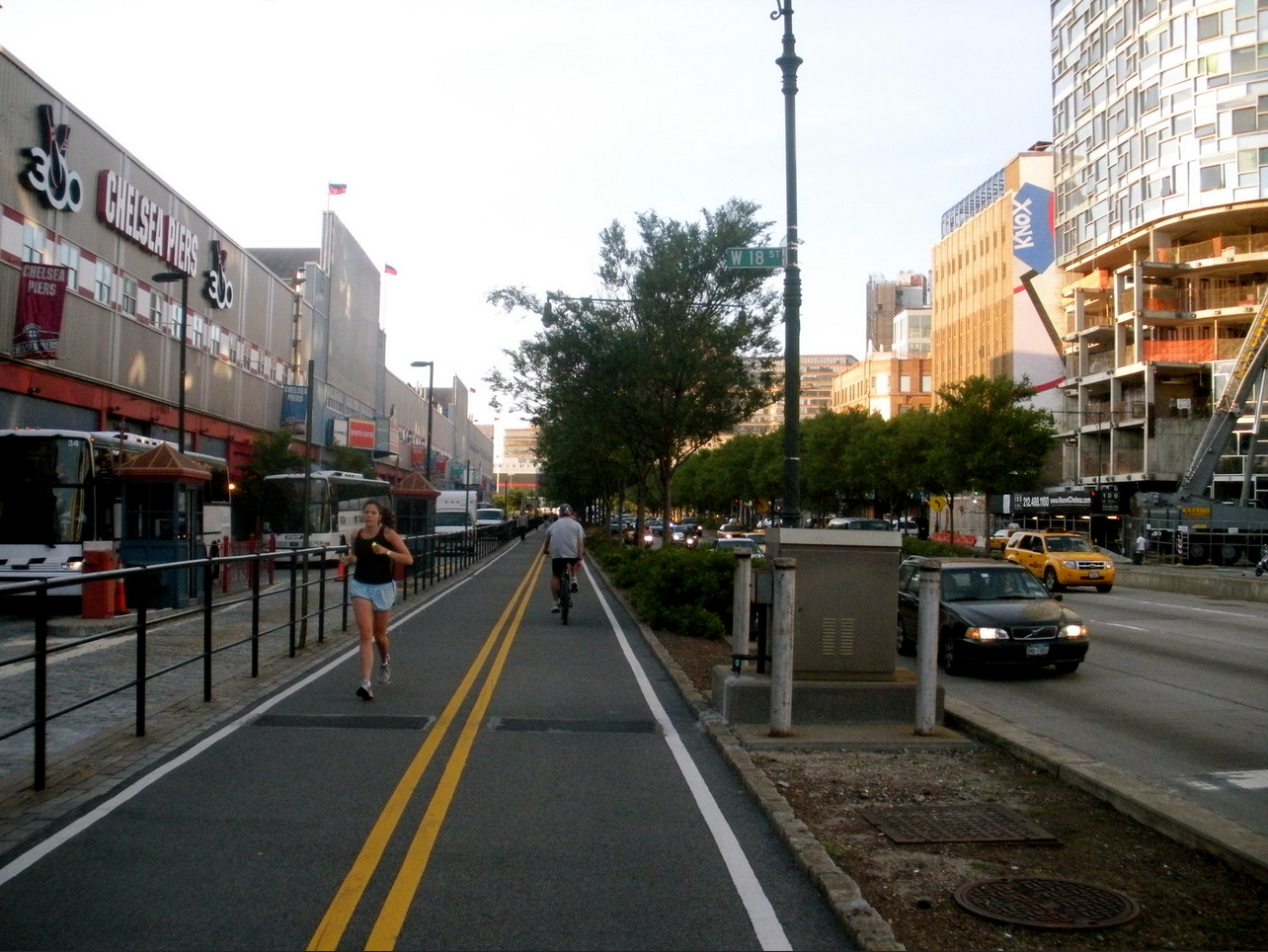
And after a few years of that, the pandemic hit. And when the pandemic hit, my life, like all of our lives, came to a stop. And I lived in Chelsea at the time. And right before it all happened, I had met a man at my CrossFit gym who became a friend. And I had a big crush on him. And within the first month or two, he asked me to go on a bike ride down the West Side Highway. And because I worked so much, I never went to the West Side Highway.
I literally would wake up, go to the newsroom, work all day, then go to The Advocate, which Out Magazine too, and we do that all day. And then I would just my whole days were just that over and over and over. And when everything got really quiet, I got to really enjoy New York.
I’d never lived in New York before. I’d only gone there for work. But I began to feel kind of the magic of it. And at the time, you know, there was no traffic. No one’s on the street. So it was a very like, it was like being on a movie set at the time. A terrifying movie set because, you know, this pandemic’s raging. But it was a really, really interesting movie set.
And this man who eventually became my partner would take me on bike rides. And we would go bike riding every day on the West Side Highway. And it just was like such a moment of peace for me, of knowing that within all the chaos of life, that it’s really important to find some stillness where you can find it. And that you can find kind of the beauty in a place where you just like take a moment to enjoy it. And New York for me, I had never really seen the beauty in New York. New York was about plugging in and going. But being with him—and we are obviously still together and now we live in L.A.—but it’s like my happy place, you know, whenever you’re stressed, you think about like, “Oh, there’s too much going on in the world,” I can take myself mentally back to those walks on the West Side Highway. And it just really brings me back down to earth.
So I always, so now when I go to New York, I try to go to the West Side Highway every time just to pay respect to a strip of concrete or pavement that really helped me get through a tough time.
Dylan: As your career has evolved, as you have evolved, what does that look like? I know you’ve done a fair amount of travel. Like is there places you go where you can find that peace of mind or maybe sense of getting away from work and self-expectation?
Zach: Oh, yeah. But over the years, I’ve made Mexico City that kind of refuge for myself. I started going with Saeed Jones, who I host the podcast with in like 2016, I think was our first trip. And, you know, I grew up, I think we all grew up in an America where they talked a lot of shit about Mexico.
You know, I grew up hearing like Mexico City is so dangerous. And I forget why I went there, but he and I went on our first trip there in 2016. And it just reshaped my brain again, because it’s a place that I heard all these stories about. But then when I went there, it was radically different than what everyone told me. It was very queer, very modern.
Dylan: Crazy cosmopolitan.
Zach: Crazy cosmopolitan.
Dylan: Like New York kind of looks a little provincial like against Mexico City.
Zach: It’s just down the street, like it’s faster for me to go to Mexico City from L.A. than New York City. And I just met so many people there. And it just expanded my worldview in this way that was really important. It’s very different than going to Europe, because Europe feels like it’s another part of the continent. But these are like neighbors in our hemisphere.
And they think about America differently. They deal with America differently. And it’s all this stuff, and culture is different there. And their relationship to colonialism is really fascinating and how it kind of continues to echo today. But I went there and I think my ability to build community there, because I have a lot of dear friends there now that are local Mexicans and have businesses and lives and families.
And it just has become a place where I go to hide and not be wrapped up in work. I really find myself drawn to places where I can kind of disappear and not be working or not be on and kind of return to that original love of mine, which is just meeting a stranger and talking to them without really any expectation at all.
Dylan: Yeah. Are there any places within Mexico City that you really love? Any specific cafes, bars, areas?
Zach: Yes. I have to shout out a dear friend of mine, Cecilia. She just opened up a bar, like a Mezcal wine bar in the historic district. But it’s one of the only woman-owned Mezcal places in Mexico City.
And whenever I’m in town, I go to her retail space and we’ll have a dinner party there with her friends, my friends. And we just like, it’s after hours and we have quesadillas and drink Mezcal and wine. And it just feels so casual and so fun. So for me, that’s—I’m very drawn to the casualness of Mexico City. And not so much the, I don’t know, the Pujols or like the really famous big restaurants. I like going to a city where I can just be anonymous and be a part of the fabric really easily. So, yeah.
Dylan: It’s funny. It’s the theme that runs through these places we’ve talked about. Obviously, you’ve moved around a lot for work and done a lot of different stuff. But talking about Boys Town, talking about the West Side Highway, where you’re taking a bike ride with a romantic partner and that’s evolving. And then Mexico City is this place where you can kind of just like—these are all places where you’re unencumbered by a sense of, “Oh, here’s what I need to be doing. Here’s what I need to be, you know, here’s how, this is important because this opens up this thing.”
These are places where you’re basically able to sort of wander, move freely, just like experience the place and yourself in a kind of non-structured or non-judgmental way. Is that true? Is that like a, it seems like—yeah.
Zach: Yeah. Thank you for reflecting that back. Because as I was saying all of this, I’ve been tracking my mind and that is a reoccurring theme over and over. That sense of wonder is really important, which I don’t think I’ve ever really identified before.
And that also helps me. Thank you for saying that, I should send you a payment for therapy instead of my therapist. Because that helps me understand with my partner when we travel, you know, I’m the one that just books the place and gets our air tickets or whatever, however we’re getting there. And then I don’t plan anything in that middle period. I’m like, we’ll just see what happens. And he’s really good at finding the museums, the places, the things that we do.
But my natural inclination with places is just to unfold into them and see where they take me. It’s kind of like getting in a river. And I do think as you’re saying that, I’m like, yeah, that is really important to me just to be able to be somewhere and have no expectation of it all. Because I feel like I have, due to how much I work, I have a lot of expectation all day long.
Dylan: It’s quite hard to escape, right? Like we carry these little devices in our pocket, which can be asking us to do, kind of turn every experience into a version of work. It can be hard, you know, maybe you take a trip because it’s a work trip. And when you find those moments where you don’t have a clear schedule and you are actually free to be sort of uncertain about what is before you, there is a real deep joy and freedom and surprise in what you find is it’s often very affirming of your sense of people and possibility.
And it’s funny, I had a similar—I was in a different city. I was in Guanajuato, which is in central Mexico. But I just found myself there with a day to kill, basically. And I didn’t really have time to make real plans. And I spent most of the day just walking around the city. I went to a couple of—
Zach: That’s so nice.
Dylan: And it, you know, it’s one of my best travel memories of recent time because it was just that and you just let a place kind of—you’re just a person in a space and you don’t really, you don’t know why, you’re just there to sort of experience it as it is. And I think that’s really powerful.
Zach: Yeah, a person in a space. Yeah, we need more of that. Just a person in a space.
Dylan: You’re just there, yeah. Well, Zach, this has been a really, a lovely conversation. It’s really nice to get to meet you.
Zach: Thank you.
Dylan: Go check out Zach’s show, Vibe Check, anywhere you get your podcasts.
Listen and subscribe on Apple Podcasts, Spotify, and all major podcast apps.
This episode was produced by Tomeka Weatherspoon. Our podcast is a co-production of Atlas Obscura and Stitcher Studios. The people who make our show include Doug Baldinger, Chris Naka, Kameel Stanley, Johanna Mayer, Manola Morales, Baudelaire, Gabby Gladney, Amanda McGowan, Alexa Lim, Casey Holford, and Luz Fleming. Our theme music is by Sam Tyndall.





Follow us on Twitter to get the latest on the world's hidden wonders.
Like us on Facebook to get the latest on the world's hidden wonders.
Follow us on Twitter Like us on Facebook